
Outage Checklist · Updated November 2026
Power Outage Kit 2026: The Essentials Checklist and the Supplies Worth Buying
A power outage kit is what gets your household through hours or days without electricity. It covers light, a weather radio, phone charging, safe heat, a battery carbon monoxide alarm, water, food you don’t have to cook, and backup power for anything medical. Ready.gov’s kit list calls for one gallon of water per person per day for several days, a flashlight, extra batteries and a NOAA weather radio. Below is a scannable checklist and three power tiers. The Jackery Explorer 1000 V2 anchors the full kit.
As an Amazon Associate, SolarGenAdvisor earns from qualifying purchases made through links on this page, at no additional cost to you. Scores are AI-synthesized from maker and dealer spec pages, Amazon listing details and logged Amazon prices; we did not test these products.
 By
The Short Version
Build in three layers. Layer 1, for everyone: flashlights for every household member, an AA weather radio such as the Midland ER10VP, a battery CO alarm such as the Kidde COBD, a phone power bank, water, no-cook food and a first aid kit. Layer 2, for comfort: a small DC power station like the Anker SOLIX C300 DC for the router and lamps, plus a 12V heated blanket. Layer 3, for the fridge and medical gear: a 1 kWh station like the Jackery Explorer 1000 V2, or a dedicated fridge battery. For whole-home or multi-day backup, our best solar generators for power outages guide covers bigger stations.
Power Outage Kit List: The Checklist
Ready.gov’s basic kit (Ready.gov: Build a Kit) and its power outage page (Ready.gov: Power Outages) are the baseline. We added the power and heat items that page leaves to you. Items marked “any brand” are things we don’t score. Buy them anywhere.
| Category | Item | Why it’s on the list | Our pick |
|---|---|---|---|
| Light | ☐ Flashlight or headlamp for each person, plus extra batteries | Ready.gov: “Have flashlights for every household member.” The Red Cross advises flashlights, not candles | Any brand; the ER10VP radio has one built in |
| Light | ☐ LED lantern or USB lamp for the room | Hands-free room light; USB lamps run off a power bank or station | Any brand |
| Communication | ☐ Battery or crank radio with NOAA weather channels | Ready.gov kit list item | Midland ER10VP |
| Communication | ☐ NOAA Weather Radio with tone alert | Ready.gov kit list item; wakes you for warnings | Midland WR120B |
| Phone charging | ☐ Power bank and charging cables; car charger | Ready.gov: “Cell phone with chargers and a backup battery” | UGREEN 25,000mAh |
| Power | ☐ Power station sized to your must-run devices | Runs the fridge, router, CPAP and lights indoors with no fumes | Jackery Explorer 1000 V2 |
| CO safety | ☐ Battery CO alarm on every level and outside sleeping areas | CPSC and Ready.gov guidance; outages are when fuel heaters and generators come out | Kidde COBD |
| Heat | ☐ Warm layers, sleeping bags, blankets; a 12V or battery heated blanket | Ready.gov winter guidance: wear layers of warm clothing | Stalwart 12V blanket |
| Water | ☐ One gallon per person per day for several days | Ready.gov kit list, for drinking and sanitation | Any brand (store-bought jugs or sealed containers) |
| Food | ☐ Several days of non-perishable, no-cook food; manual can opener | Ready.gov kit list (both items) | Any brand |
| Food | ☐ Appliance thermometers for the fridge and freezer; a cooler and ice | FDA and CDC: fridge at or below 40°F, freezer at or below 0°F | Any brand; fridge backup in Food |
| Medical | ☐ Prescription medications; a power plan for medical devices | Ready.gov: talk to your medical provider about a power outage plan for medical devices | Freedom CPAP battery |
| Medical | ☐ First aid kit | Ready.gov kit list item | Any brand |
| Internet | ☐ UPS for the modem and router | No reboot when the grid drops; bridges to a power station | CyberPower CP1500PFCLCD |
| Tools | ☐ Whistle; wrench or pliers to turn off utilities; moist towelettes and garbage bags | Ready.gov kit list items | Any brand |
| Paperwork | ☐ Local maps; utility outage number; list of medications and devices | Ready.gov’s kit lists local maps; the outage number and device list are our suggestion | — |
Sources: Ready.gov: Build a Kit; Ready.gov: Power Outages; Ready.gov: Winter Weather; CPSC: Carbon Monoxide Information Center; FDA: Food and Water Safety During Power Outages; American Red Cross: tips following power outages.
Power Outage Essentials, Category by Category
Every product below is already scored on SolarGenAdvisor, and each had a new, in-stock offer in Amazon’s buy box when we checked on November 8, 2026. Scores come from category-specific scoring, so a radio’s score isn’t comparable with a power station’s. Specs come from the maker, a dealer or the Amazon listing, as linked from each product’s guide.
Backup Power: Three Tiers, From Phones to the Fridge
Pick the tier that covers the devices you can’t lose. Battery power stations burn no fuel and make no carbon monoxide, so they can run indoors (see can you use a solar generator indoors?). A gas generator has to run outside: Ready.gov says generators and fuel belong outdoors and “at least 20 feet away from windows, doors and attached garages” (Ready.gov). For hurricane-season sizing see solar generators for hurricanes.
Tier 1 Power: Phones and Small USB Devices
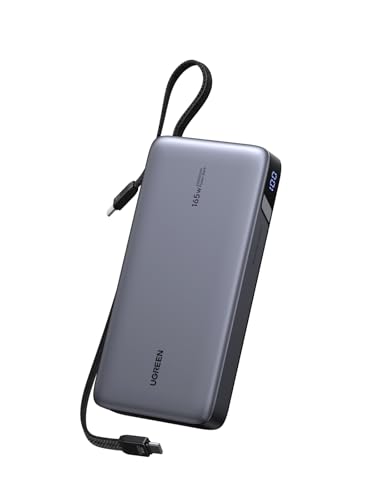
UGREEN Nexode 25,000mAh 165W Power Bank with Built-in Cables
Score 83/100 · 90 Wh · 1.21 lb
Ready.gov’s kit list includes a “Cell phone with chargers and a backup battery.” This UGREEN bank holds 90 Wh (25,000 mAh), with two built-in USB-C cables and 165W total output. In our math that’s about four charges of a 15 Wh phone battery. It can’t run anything that needs a wall outlet.
Stock note: In stock, sold by UGREEN, when we checked on November 8, 2026.
Tier 2 Power: Lights, Router and 12V Gear

Anker SOLIX C300 DC
Score 86/100 · 288 Wh · 6.17 lb
Price: $199.99
A small DC-only power station: 288 Wh of LiFePO4 with USB-C and a 12V car socket, but no AC outlet. That fits a kit built around DC loads: a router with a 12V cable, USB lamps, phones and the 12V heated blanket below. At 6.2 lb it’s easy to move from room to room. If you need a wall outlet for a CPAP brick or a fridge, skip it and go to Tier 3.
Stock note: In stock, sold by AnkerDirect, when we checked.
Tier 3 Power: The Kit Anchor (Fridge, CPAP, Router, Lights)

Jackery Explorer 1000 V2
Score 93/100 · 1,024 Wh · 23.3 lb
Price: $559.00
This is the station we’d build an essentials kit around, and it’s one of the highest-scored stations on the site. It has 1,024 Wh of LiFePO4 storage, 1,500W of AC output (3,000W surge) and weighs 23.3 lb. By our runtime math it can keep a typical fridge, a router, a lamp and a CPAP going through a night and into the next day (see the runtime table). It also takes up to 400W of solar for multi-day outages.
Stock note: In stock, sold by Jackery, when we checked. The Amazon listing gives 1,024 Wh and 23.3 lb, the figures we use; earlier units, still listed by some other retailers, are rated 1,070 Wh.
Other 1 kWh options rated on the site include the Anker SOLIX C1000 Gen 2 (in stock when we checked) and the EcoFlow Delta 3 Plus, which showed an availability date instead of “In Stock.” Bigger homes and longer outages need 2 to 5 kWh or more. Our power outage power station guide, home battery backup guide and winter storm power backup plan cover that.
Communication: Weather Radio, Alerts and Internet
Ready.gov’s kit asks for both a battery or crank radio and a NOAA Weather Radio with tone alert (Ready.gov). Our best emergency radio guide scores six of them. The crank-and-solar Midland ER310PRO that leads it showed “Currently unavailable” on Amazon when we checked on November 8, so it isn’t carded here.
Budget Radio and Flashlight in One

Midland ER10VP E+Ready Emergency Weather Radio
Score 74/100 · 0.3 lb
Price: $29.99
Ready.gov lists a “Battery-powered or hand crank radio and a NOAA Weather Radio with tone alert.” Midland’s ER10VP covers the first half for very little money. It has AM/FM, 7 NOAA weather channels with an alert and an LED flashlight with an SOS beacon, and it runs on three AA batteries (included). It has no crank, solar panel or USB port, so pack spare AAs.
Stock note: In stock, sold by Midland Radio, when we checked.
Bedside Weather Alert Radio (S.A.M.E.)

Midland WR120B NOAA Weather Alert Radio
Score 69/100
Price: $47.80
The “NOAA Weather Radio with tone alert” half of Ready.gov’s line item. Program S.A.M.E. codes for up to 25 counties and it sounds a 90 dB siren only for warnings in those counties. It falls back to three AA cells (not included) when the power goes out. It’s a desktop radio with no light or USB port, so pair it with the ER10VP or a crank radio.
Stock note: In stock, sold by Midland Radio, when we checked.
Keep the Router Online (UPS)

CyberPower CP1500PFCLCD PFC Sinewave UPS (1500VA/1000W)
Score 89/100 · 24.9 lb
Price: $239.95
If you rely on home internet for news, alerts or work, a UPS keeps it up: it takes over the moment the grid drops, with a typical 4 ms transfer per CyberPower, so the modem and router never reboot. This one has six battery-backed outlets, sine-wave output and a user-replaceable battery. A UPS is a short bridge, not a multi-day plan: plug it into a power station to keep it going.
Stock note: In stock, sold by Amazon.com, when we checked.
Heat: Warm the Person First, Then the Room
Plug-in electric space heaters typically draw up to 1,500W on high, which would drain a 1 kWh station in under an hour by our math. In an outage, heat the people with layers, blankets and a low-watt heated blanket first. Our battery powered heater guide runs the numbers. If you need room heat, use only a heater the maker rates for indoor use, and follow its ventilation rules. More detail is in the winter section below.
Safest Heat: 12V Heated Blanket on a Power Station

Stalwart 12V Heated Car Blanket (Navy)
Score 69/100
Price: $24.88
Heating a person takes far less energy than heating a room. Stalwart’s manual rates this 59 by 43 inch fleece blanket at 50W, so by our math it runs about 5 hours on the 288 Wh Anker C300 DC and about 17 hours on the 1,024 Wh Jackery. It burns no fuel and makes no carbon monoxide. It has a single heat level and no published auto shut-off, so unplug it when you’re not using it.
Stock note: In stock, sold by Amazon.com, when we checked.
Indoor-Rated Propane Heat (With a CO Alarm)
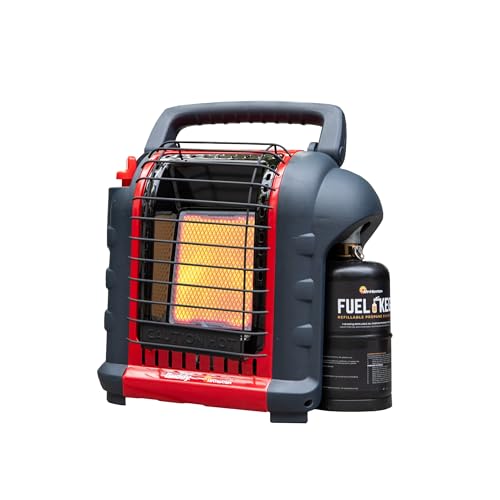
Mr. Heater Portable Buddy MH9BX (4,000-9,000 BTU)
Score 75/100
If you need room heat without electricity, Mr. Heater’s manual describes the Portable Buddy as a heater for “recreational and emergency indoor use.” It is certified to ANSI Z21.103 and has low-oxygen and tip-over shut-offs. It still burns propane in your living space. The manual calls for a 9 sq in fresh-air opening at both ceiling and floor level (MH9BX manual) and says never to use it while sleeping. It isn’t for sale in Massachusetts and isn’t for use in a dwelling home in California. Run it only with a working CO alarm in the room.
Stock note: In stock, sold by Amazon.com ("Available to ship in 1-2 days"), when we checked.
Carbon Monoxide Safety: The One Item You Can’t Skip
CPSC says to “Install battery-operated CO alarms or CO alarms with battery backup on every level of the home and outside sleeping areas,” and to “Never use portable generators inside homes or garages, even if doors and windows are open” (CPSC). CDC adds that you should put battery or battery-backup detectors near every sleeping area and check the batteries each spring and fall (CDC). A hard-wired alarm without battery backup stops working when the power does.
Battery CO Alarm (Non-Negotiable)

Kidde COBD Battery CO Alarm with Digital Display
Score 87/100 · 0.26 lb
It has the top score in our CO-alarm ratings. It’s a UL 2034 (5th Edition) battery alarm that runs on two AA cells, so it keeps working when the power is out, a time when plug-in alarms without battery backup go dark. It has an 85 dB horn, a backlit display and a 10-year limited warranty. Kidde rates it for indoor residential use from 40 to 100°F, so keep it in the heated part of the house.
Stock note: In stock, sold by Amazon.com, when we checked.
Food and Fridge: Keep It Closed, Then Back It Up
FDA says “The refrigerator will keep food cold for about 4 hours if it is unopened,” and a full freezer holds its temperature for about 48 hours (about 24 if half full) with the door closed (FDA). CDC and Ready.gov give the same figures (CDC; Ready.gov). For anything longer, the fridge needs power. A 1 kWh station handles a typical fridge overnight, and a dedicated fridge battery like the one below takes over on its own. Our refrigerator battery backup guide has runtime by fridge type.
Dedicated Fridge Backup Battery

Bluetti Fridge Power
Score 85/100 · 2,016 Wh · 43.4 lb
A slim 2,016 Wh LiFePO4 battery built to sit beside the fridge and take over in about 10 ms when the grid drops, so nobody has to be home to switch it over. It puts out 1,800W (3,600W surge) and expands to 8,064 Wh with BC200 batteries. The main unit has only two AC outlets and no USB ports, so it does one job: protect the food.
Stock note: In stock, sold by Bluetti, when we checked.
The smaller Jackery Fridge Guard (1,024 Wh, wall-mountable) is the other dedicated fridge battery we score. When we checked on November 8, its Amazon offer showed an availability date rather than “In Stock,” so we haven’t carded it. See our review for the comparison.
Medical Devices and Medications
Ready.gov’s first step is to “Talk to your medical provider about a power outage plan for medical devices” (Ready.gov). Know your device’s wattage and whether it needs AC or can run on DC. Our CPAP battery backup guide and oxygen concentrator backup guide cover runtimes. For refrigerated medicines, Ready.gov says that if the power is out for more than a day, “discard any medication that should be refrigerated.” Check the label, and for critical drugs such as insulin, ask your pharmacist first. FDA’s insulin guidance is summarized in our refrigerator guide.
CPAP Battery Backup

Freedom CPAP Battery 160Wh
Score 82/100 · 160 Wh · 2.13 lb
Price: $349.99
A 160 Wh CPAP battery that ships with both a 24V ResMed cable and a 12V DreamStation cable and can sit inline as automatic outage backup. The maker rates it for up to 24 hours on an AirSense 11 with the heated humidifier and tube off. With heat on, expect far less. If you also rely on an oxygen concentrator, size for that first: see our oxygen concentrator battery backup guide.
Stock note: In stock, sold by resplabs, when we checked.
Light, Water and Phone Charging: The Basics
- Light. Ready.gov’s first outage tip is “Have flashlights for every household member” (Ready.gov). The Red Cross says to use flashlights in the dark, not candles (Red Cross). We don’t score flashlights or lanterns, so buy any LED model that takes the same batteries as your radio. The Midland ER10VP has a flashlight built in, and USB lamps run for hours off a power bank.
- Water. Ready.gov’s kit calls for “one gallon per person per day for several days, for drinking and sanitation” (Ready.gov). For a family of four, that’s 12 gallons for three days by our arithmetic. Homes on a well lose water when the pump loses power, so store more, or see our home backup guide for well pumps. FDA says that if you don’t have safe bottled water, you can boil water for 1 minute and let it cool in clean, covered containers (FDA).
- Phone charging. Charge every phone and power bank when a storm is forecast. Turn on low-power mode, and use a car charger only with the car outdoors, never in an attached garage. In our math the UGREEN bank’s 90 Wh delivers about 4.2 charges of a 15 Wh phone battery. The 1,024 Wh Jackery holds roughly 58.
Best Power Outage Supplies Compared
All eleven kit picks side by side. Scores come from each product’s own category scoring on SolarGenAdvisor, so compare them only within a category.
| Product | Kit role | Needs power? | Score | Price |
|---|---|---|---|---|
| UGREEN Nexode 25,000mAh 165W Power Bank with Built-in Cables | Tier 1 Power: Phones and Small USB Devices | Recharge from a wall, car or station | 83/100 | Check price at Amazon → |
| Anker SOLIX C300 DC | Tier 2 Power: Lights, Router and 12V Gear | Recharge from a wall, car or solar | 86/100 | $199.99 |
| Jackery Explorer 1000 V2 | Tier 3 Power: The Kit Anchor (Fridge, CPAP, Router, Lights) | Recharge from a wall, car or solar | 93/100 | $559.00 |
| Midland ER10VP E+Ready Emergency Weather Radio | Budget Radio and Flashlight in One | 3 x AA (included) | 74/100 | $29.99 |
| Midland WR120B NOAA Weather Alert Radio | Bedside Weather Alert Radio (S.A.M.E.) | AC; 3 x AA backup | 69/100 | $47.80 |
| CyberPower CP1500PFCLCD PFC Sinewave UPS (1500VA/1000W) | Keep the Router Online (UPS) | AC; internal battery | 89/100 | $239.95 |
| Stalwart 12V Heated Car Blanket (Navy) | Safest Heat: 12V Heated Blanket on a Power Station | 12V socket (station or car) | 69/100 | $24.88 |
| Mr. Heater Portable Buddy MH9BX (4,000-9,000 BTU) | Indoor-Rated Propane Heat (With a CO Alarm) | None (1 lb propane) | 75/100 | Check price at Amazon → |
| Kidde COBD Battery CO Alarm with Digital Display | Battery CO Alarm (Non-Negotiable) | 2 x AA (included) | 87/100 | Check price at Amazon → |
| Bluetti Fridge Power | Dedicated Fridge Backup Battery | Wall or solar | 85/100 | Check price at Amazon → |
| Freedom CPAP Battery 160Wh | CPAP Battery Backup | Recharge from a wall or station | 82/100 | $349.99 |
Which Power Station Anchors Your Kit? Runtime Math
Runtime is battery Wh × 0.85 ÷ average load in watts, the same formula we use on every power station page. These are estimates, not measurements. A cold room, an older fridge or frequent door openings will cut them.
| Load (average watts) | Anker SOLIX C300 DC (288 Wh) | Jackery Explorer 1000 V2 (1,024 Wh) | Anker SOLIX C1000 Gen 2 (1,024 Wh) | Bluetti Fridge Power (2,016 Wh) |
|---|---|---|---|---|
| Modem + router (~20W) | ~12 h | ~44 h | ~44 h | ~86 h |
| LED lamp (10W, illustrative) (~10W) | ~24 h | ~87 h | ~87 h | ~171 h |
| CPAP, machine only, no humidifier (~7W) | No AC outlet | ~124 h | ~124 h | ~245 h |
| 12V heated blanket (Stalwart, 50W) (~50W) | ~4.9 h | ~17 h | ~17 h | ~34 h |
| Fridge, ENERGY STAR median bottom-freezer/French-door (~64W) | No AC outlet | ~14 h | ~14 h | ~27 h |
| Essentials combined: fridge + router + lamp + CPAP (~101W) | No AC outlet | ~8.6 h | ~8.6 h | ~17 h |
| AC output / weight | DC only / 6.17 lb | 1,500W / 23.3 lb | 2,000W / 24.9 lb | 1,800W / 43.4 lb |
| Our score | 86/100 | 93/100 | 92/100 | 85/100 |
| Price | $199.99 | $559.00 | $529.99 | Check price at Amazon → |
Load sources: modem + router ~20W, as in our winter storm guide. CPAP ~7W is ResMed’s machine-only figure from our CPAP guide; a heated humidifier adds a lot, and a CPAP on a DC-only station needs the maker’s DC cable. The 50W blanket rating is from Stalwart’s manual. The 64W fridge figure is the median ENERGY STAR certified bottom-freezer/French-door model, from our refrigerator guide; top-freezer models average about 41W. The 10W lamp is illustrative. The Bluetti Fridge Power has no USB ports, so DC loads need its AC outlets and their own chargers.
How to read it: the Jackery runs the combined essentials (fridge, router, lamp and CPAP, about 101W) for ~8.6 h by our math. That covers a typical overnight outage. Solar input (up to 400W) or a car charger can stretch it further. The Bluetti Fridge Power roughly doubles that, but it’s built to sit beside the fridge rather than move around the house. For outages that last days, or for a well pump or furnace, size up with our solar generator size calculator.
Winter Power Outage Essentials
A winter outage is the hardest case, because the furnace usually stops too: most gas furnaces need electricity for the blower and controls. Ready.gov’s winter guidance is to “Gather supplies in case you need to stay home for several days without power” and to keep “extra batteries for radios and flashlights” (Ready.gov: Winter Weather). Add these to the checklist above:
- Warm layers and bedding for each person, plus sleeping bags. Close off rooms you don’t need and gather everyone in one room.
- Low-watt electric warmth from a battery: the 50W Stalwart 12V blanket above, or a heated throw from our cordless heated blanket guide. This is the only heat in this kit that makes no combustion gases.
- Fuel heat, only if it’s rated for indoor use: an indoor-rated propane heater such as the Mr. Heater Buddy, used by the manual’s ventilation rules (indoor propane heater guide). A kerosene heater needs 1-K kerosene, fresh air, outdoor refueling once it’s cool, and a check of your local rules (kerosene heater guide). Diesel heaters must vent their exhaust outdoors; they suit garages, RVs and workshops (diesel heater guide).
- Never heat with a gas oven or stovetop. Ready.gov says to “never heat your home with a gas stovetop or oven” (Ready.gov), and CDC says “Never heat your house with a gas oven” (CDC).
- A battery CO alarm in every room with a fuel heater, and on every level of the home. CPSC and Ready.gov both say to put alarms on every level (CPSC; Ready.gov).
- A plan to leave. Ready.gov advises checking with local officials about heating and cooling locations open near you (Ready.gov). It also warns that a body temperature below 95 degrees is an emergency (Ready.gov).
- Pipes. Ready.gov tells you to learn how to keep pipes from freezing. Know where your main water shut-off is before the storm.
Cold also affects batteries. Many LiFePO4 stations won’t accept a charge below freezing, so keep the station in the heated room. Our winter storm power backup plan covers that, plus furnace-blower sizing.
Cooking Safely When the Power Is Out
Carbon monoxide poisoning is a real outage risk, and cooking indoors with fuel is one way it happens. CDC says, “Never use a portable gas camp stove indoors,” “Never burn charcoal indoors,” and “Don’t cook or burn anything on a stove or fireplace that isn’t vented” (CDC). Ready.gov adds: “Only use generators and grills outdoors and away from windows” (Ready.gov). Your safest options, in order:
- No-cook food first. Eat what’s in the fridge before it warms up, then switch to shelf-stable food. Keep a manual can opener in the kit.
- Electric, from a power station. A kettle or hot plate works if the station’s AC output is above the appliance’s rating. A 1,000W kettle running 5 minutes uses about 83 Wh by our math, or roughly 10% of the Jackery’s usable energy. Check your appliance’s label for its real wattage.
- Fuel stoves and grills outdoors only, away from windows, doors and vents, never in a garage or on a covered porch.
Which Kit Tier Do You Need?
The basic kit is enough if
- ✓ Outages where you live are short, a few hours at most
- ✓ Nobody in the house depends on a powered medical device
- ✓ You rent, or have no room to store a power station
- ✗ Skip a power station for now, but don’t skip the CO alarm, radio and water
Add a 1 kWh power station if
- ✓ Someone uses a CPAP or other powered medical device
- ✓ You can’t afford to lose a fridge of food or refrigerated medicine
- ✓ You work from home and need the router and laptop up
- ✗ It won’t run a furnace, well pump or electric heat for long; see our power outage guide for that
Power Outage Kit FAQ
What should be in a power outage kit?
Start with Ready.gov’s basic kit: one gallon of water per person per day for several days, several days of non-perishable food, a flashlight, extra batteries, a battery or hand-crank radio and a NOAA weather radio with tone alert, a first aid kit, and a phone with chargers and a backup battery. For an outage specifically, add a flashlight for each person, a battery-powered carbon monoxide alarm, warm layers, prescription medications and a power plan for any medical device. A power station sized to your fridge and medical devices is the optional top layer.
What are the power outage essentials?
Light (flashlights, not candles, as the Red Cross advises), a weather radio, a way to charge phones, a battery carbon monoxide alarm, water, no-cook food, and medications. Those cover most short outages. For longer ones, add safe heat and backup power for the fridge and any medical device. In our scoring, the Kidde COBD is the top-rated CO alarm and the Midland ER10VP is the lowest-priced radio in our emergency radio scoring, with a built-in flashlight.
What are the best power outage supplies to buy?
In our scoring, the Jackery Explorer 1000 V2 is the best kit anchor: 1,024 Wh and 1,500W of AC output, enough by our math to run a typical fridge, router, lamp and CPAP for about 9 hours. Pair it with a battery CO alarm such as the Kidde COBD, a weather radio such as the Midland ER10VP or WR120B, and a UGREEN 25,000mAh power bank for phones. On a smaller budget, the DC-only Anker SOLIX C300 DC covers the router, lights and a 12V heated blanket.
What are the winter power outage essentials?
Warm layers and bedding for everyone, a low-watt heated blanket you can run from a battery, a battery CO alarm on every level of the home, and a plan to reach a warming location. If you use a fuel heater, use only one the maker rates for indoor use and follow its ventilation rules. Never heat with a gas oven or stovetop, which Ready.gov and CDC both warn against. Keep the power station in a heated room, because most lithium batteries won’t charge below freezing.
How long does food last in the fridge during a power outage?
FDA says the refrigerator keeps food cold for about 4 hours if it stays unopened, and a full freezer holds its temperature for about 48 hours (about 24 if half full) with the door closed. Keep appliance thermometers inside: the fridge should be at or below 40°F and the freezer at or below 0°F. Ready.gov says to throw out food that reaches 40 degrees or higher, and “When in doubt, throw it out!”
Is it safe to use a propane heater indoors during a power outage?
Only one designed and certified for indoor use, used exactly as its manual says. For example, Mr. Heater’s Portable Buddy manual calls for a 9 sq in fresh-air opening at ceiling and floor level and says never to use it while sleeping. Run it with a battery CO alarm in the room. Never use outdoor patio heaters, camp stoves, grills or a gas oven for heat indoors. A 12V heated blanket on a power station is the option that makes no combustion gases.