
Brand Guide · Updated October 2026
Jackery Solar Generator Guide 2026: Complete Brand Review & Best Picks
Jackery is the most recognized brand in portable power stations, and for good reason. Their Explorer series has dominated the market for years with a winning formula: reliable LiFePO4 batteries, class-leading portability, and an accessory ecosystem that no competitor has matched. This guide covers every Jackery power station available in 2026, with side-by-side specs, real-world buying recommendations, and honest comparisons with competing brands. Already sure you want a Jackery and just need to pick a model? Go straight to which Jackery should I buy.
As an Amazon Associate, SolarGenAdvisor earns from qualifying purchases made through links on this page, at no additional cost to you.
 By
By Not sure which model? See Which Jackery Should I Buy?
Our dedicated decision guide matches each Explorer model to your use case, with a sizing method and runtime table. This page is the brand overview: lineup specs, competitor comparisons and the solar panel ecosystem.

Is Jackery a Good Brand? Why Jackery Leads the Category
Jackery was founded in 2012 and launched its first portable power station in 2016, giving it the longest track record of any major brand in the market. Over the past decade, Jackery has sold millions of units worldwide and built a reputation for reliability that competitors are still working to match. The brand's Explorer series covers everything from a 288 Wh ultralight unit to a 5,040 Wh whole-home system, all sharing the same design philosophy: make power simple, portable, and dependable.
In 2025, Jackery completed a full transition to LiFePO4 (lithium iron phosphate) battery chemistry across every Explorer model. This was a defining moment for the brand: LiFePO4 delivers 4,000–5,000 charge cycles to 80% capacity — more than quadruple the lifespan of older NMC (nickel manganese cobalt) batteries. For buyers, that means a Jackery power station purchased today will still be holding 80%+ of its original capacity in 2036. The upfront cost is an investment in a decade-plus of reliable power.
Jackery's other major advantage is its ecosystem. The brand offers the widest range of compatible solar panels (SolarSaga series in 50W, 100W, 200W configurations), expansion batteries that seamlessly stack with Explorer units, and accessories from car chargers to carrying cases. Everything works together out of the box — no adapters, no compatibility research. For buyers who want a complete solar generator system that just works, Jackery is the default recommendation.
Jackery Lineup: Side-by-Side Comparison
Every Jackery power station currently available, compared across the specs that matter. Prices are live from Amazon and updated every 6 hours.
| Model | Capacity | Output | Weight | Solar Input | Chemistry | Price | Shop |
|---|---|---|---|---|---|---|---|
| Jackery Explorer 300 | 292 Wh | 300W | 7.1 lb | 100W | LiFePO4 | $259.00 Price → | View → |
| Jackery Explorer 1000 V2 | 1,070 Wh | 1,500W (3,000W surge) | 23 lb | 400W | LiFePO4 | $499.00 Price → | View → |
| Jackery Explorer 2000 Plus | 2,042 Wh | 3,000W (6,000W surge) | 61.5 lb | 1,400W | LiFePO4 | Check price at Amazon → | View → |
| Jackery HomePower 3600 Plus | 3,584 Wh | 3,600W (7,200W surge) | 78 lb | 1,200W | LiFePO4 | $2,549.00 Price → | View → |
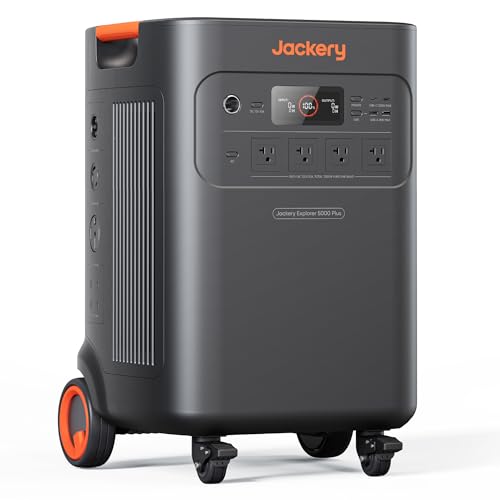
| Jackery Solar Generator 5000 Plus | 5,040 Wh | 7,200W (14,400W surge) | 105 lb | 3,000W | LiFePO4 | $3,149.00 Price → | View → |
Prices update automatically from Amazon — last checked 9:17 PM ET
Best Jackery Power Station by Use Case
A quick summary of our pick for each common use case, from ultralight camping to whole-home backup. Choosing between models is covered in depth on its own page — for the sizing method, runtime table and Wh-per-pound comparison, see Which Jackery Should I Buy?

Jackery Explorer 300
Under 8 lbs with 292 Wh capacity — perfect for weekend camping, CPAP machines, and charging phones, lights, and small electronics. The most affordable Jackery for first-time buyers.
Jackery Explorer 1000 V2
The sweet spot of capacity (1,070 Wh), weight (23 lb), and price. Ideal for camping, RV trips, and light home backup. Jackery's best-selling model for good reason.

Jackery Explorer 2000 Plus
2,042 Wh base capacity expandable to 24 kWh with add-on batteries. Scales from RV power to serious home backup on the same base unit. 3,000W output handles most appliances.

Jackery HomePower 3600 Plus
3,584 Wh with 3,600W output and 7,200W surge — covers essential home circuits. Expandable to 21 kWh. Transfer switch ready for professional installation.
Jackery Solar Generator 5000 Plus
5,040 Wh, 7,200W 120/240V output, expandable to 60 kWh — Jackery's most powerful system. Whole-home backup with split-phase capability for well pumps, AC units, and EV charging.
Jackery vs. The Competition
How does Jackery compare to other major brands in the portable power station market? Here's an honest assessment across the factors that matter most.
vs. EcoFlow
EcoFlow wins on charging speed and output variety — their X-Stream fast charging and wide range of AC/DC outlets are industry-leading. But Jackery wins on portability (lighter units for the same capacity), build quality, and customer support. EcoFlow has had more reliability complaints in user forums. If you want the fastest charging and most outlets per dollar, choose EcoFlow. If you want the lightest, most reliable unit for camping, choose Jackery.
vs. Anker SOLIX
Anker SOLIX is Jackery's closest competitor in the premium portable space. Anker offers faster AC charging (49 minutes for the C1000 Gen 2 vs. Jackery's 1.8 hours) and higher AC output for the same capacity class. But Jackery has a much broader product lineup (5 models vs. Anker's 4), better portability across the board, and a more mature solar panel ecosystem. Anker's E10 whole-home system is impressive, but for most portable use cases, Jackery's Explorer series offers better value per pound.
vs. Bluetti
Bluetti is the value king — their Elite 200 V2 delivers 2,074 Wh for significantly less per watt-hour than Jackery's equivalent. Bluetti also offers better solar input specs and more outlet variety at lower price points. The trade-off is weight (Bluetti units are heavier for the same capacity) and a less polished app experience. Jackery wins on portability, brand trust, and ecosystem breadth. Bluetti wins on raw value and solar charging speed.
Jackery Solar Panels: The SolarSaga Ecosystem
A solar generator is only as good as its panels. Jackery's SolarSaga series includes portable solar panels in three sizes — 50W, 100W, and 200W — all designed to pair seamlessly with the Explorer lineup. Each panel folds into a compact carrying case with a built-in kickstand for optimal sun angle, and uses a proprietary 8mm barrel connector that plugs directly into any Explorer power station without adapters.
The SolarSaga 200W is the sweet spot for most buyers: it folds to the size of a large laptop, weighs 14.3 lb, and can charge the Explorer 1000 V2 from empty in about 7 hours of full sun at realistic panel output. Two 200W panels in parallel (400W total, the unit's maximum solar input) cut that time to roughly 3.5–4 hours. For the Explorer 2000 Plus (up to 1,400W of solar input) and larger units, we recommend at least 400–600W of solar panels to keep up with daily power needs during extended off-grid use. Jackery also offers an adapter cable for third-party MC4 panels, giving you the flexibility to expand your solar array later.
Shopping Seasonally?
Jackery Deal Season Tracking
Jackery runs its strongest Amazon promotions of the year during October Prime Day and the Black Friday–Cyber Monday window. We track which Explorer and HomePower models to watch and their current prices:
Frequently Asked Questions About Jackery Solar Generators
Is Jackery a good brand?
Yes. Jackery is the most established brand in portable power stations, with over a decade of market presence and millions of units sold. They consistently rank among the most reliable brands in user surveys and independent testing. Their customer support is widely considered best-in-class, and their full transition to LiFePO4 chemistry across all models in 2025 was a major quality upgrade. For buyers who prioritize reliability and long-term support over raw specs, Jackery is the safest choice in the market.
Which Jackery should I buy?
For most people, the Explorer 1000 V2 — the smallest Jackery that runs a refrigerator overnight. Go smaller for phones and laptops, larger for multi-day outages or home circuits. Our Which Jackery Should I Buy? guide matches every model to your needs.
Which Jackery power station is best for camping?
The Jackery Explorer 1000 V2 is the best all-around choice for camping. At 23 lb with 1,070 Wh capacity, it hits the sweet spot between portability and power — enough to run a portable fridge, charge devices, and power campsite lights for a weekend. For ultralight backpacking or short trips, the Explorer 300 (about 7.1 lb, 292 Wh) is a great budget option. For basecamp or group camping, the Explorer 2000 Plus provides enough capacity for a full group campsite.
Can a Jackery power a house?
Yes, but it depends on the model. The Jackery HomePower 3600 Plus (3,584 Wh, expandable to 21 kWh) and Jackery Solar Generator 5000 Plus (5,040 Wh, expandable to 60 kWh) are both capable of powering essential home circuits during an outage. These units support transfer switch integration for professional installation and can run refrigerators, lights, internet routers, and medical devices. The Explorer 1000 V2 and 2000 Plus can provide light home backup (fridge + essentials) but aren't designed for whole-home coverage. See our home backup guide for detailed sizing recommendations.
How long do Jackery batteries last?
All current Jackery Explorer models use LiFePO4 battery chemistry rated for 4,000–5,000 charge cycles to 80% capacity. With daily use (one full charge/discharge per day), that translates to roughly 11–14 years before the battery drops to 80% of its original capacity. With weekly or occasional use (typical for a camping power station), the battery will outlast most other components. This is a major improvement over older Jackery models that used NMC chemistry (1,000 cycles / 3–5 years lifespan).
Can I expand a Jackery power station later?
Yes, most Jackery Explorer models support expansion batteries. The Explorer 2000 Plus can expand from 2,042 Wh to a maximum of 24 kWh using additional battery packs. The HomePower 3600 Plus expands to 21 kWh, and the Solar Generator 5000 Plus expands to an impressive 60 kWh. The Explorer 1000 V2 and Explorer 300 do not support expansion — they are fixed-capacity units designed for portable use. If expandability is important, choose the 2000 Plus or one of the larger home backup models.
Does Jackery work with third-party solar panels?
Yes, but you'll need an adapter. Jackery uses a proprietary 8mm barrel connector on its SolarSaga panels. Third-party panels with standard MC4 connectors require a Jackery MC4-to-8mm adapter cable (sold separately). The built-in MPPT charge controller works with any 12–60V solar panel array within the unit's wattage limit. For most users, we recommend sticking with Jackery's SolarSaga panels for true plug-and-play compatibility, especially since they fold into compact carrying cases designed to pair with each Explorer model.