
Generator Sizing · Updated November 2026
What Can a 5000 Watt Generator Run?
The short answer
- Yes, together
- A refrigerator, a freezer, a 1/3 HP sump pump, a furnace blower, LED lights and a router: about 2,755 W running on conservative chart figures, plus one motor start [3][2][1].
- One at a time
- A microwave, coffee maker, space heater or window AC, added to the essentials while the big motors are idle [1][3].
- No
- Central air, an electric range, an electric water heater or an electric dryer alongside anything else [11][12][5][6].
Jump to the appliance watts chart, the three outage load plans or 5,000 W from a battery.
As an Amazon Associate, SolarGenAdvisor earns from qualifying purchases made through links on this page, at no additional cost to you.
 By
Running vs Starting Watts
Every generator chart uses two numbers. Running watts are the steady power an appliance needs once it is going. Starting watts are the extra power some appliances need for a moment to switch on, mostly anything with a motor or compressor: fridges, freezers, pumps, blowers and air conditioners. Champion estimates starting watts at 1–2 times running watts [3]. Lights, chargers and heating elements have no meaningful start-up spike.
EWEB, Lowe’s and Champion all size a generator the same way [1][2][3]:
Step 2 adds only one starting figure because motors rarely start at the same instant. Lowe’s says its totals assume “intermittent starting of devices” [2]. That is why the load plans below start motors one at a time.
Rated vs Running Watts on a Gas Generator
A gas generator’s spec sheet carries the same two numbers. The continuous figure is called rated or running watts. The short-burst figure is called starting, surge, peak or maximum watts. A model name or headline number can be either one, so “5000 watt generator” can mean two different machines:
| If the label says | Your running total must stay under | Running total + one start must stay under |
|---|---|---|
| 5,000 starting / 4,000 runningThe “5,000” is the peak figure (example, not a specific model) | 4,000 W | 5,000 W |
| 5,000 runningThe starting figure is higher; read it on the spec sheet | 5,000 W | Whatever its starting rating is |
The load plans on this page are checked against the tighter first row, so they also fit a generator rated 5,000 W running. The dual and tri fuel models we cover all list a lower rating on propane than on gasoline; our best propane generator guide shows the gap for each model it covers. Use the figure for the fuel you will actually burn.
Appliance Watts Chart for a 5000 Watt Generator
Running and additional starting watts from generator makers’, retailers’ and utilities’ published charts, and from appliance spec sheets where a chart has no row. These are planning figures, not measurements of your appliance; the nameplate or a plug-in meter beats any chart. Fridge and freezer figures match our appliance wattage chart and the refrigerator and freezer wattage guides.
| Appliance | Running watts | Additional starting watts | Volts | On 5,000 W? |
|---|---|---|---|---|
| Kitchen | ||||
| Refrigerator (full-size)Averages about 41 W over a day (median ENERGY STAR top-freezer, 363 kWh a year) [7] | 80–200 while running (charts: Honda 132–192, Champion 400) [9][4][3] | +1,200 (Honda) to +2,200 (Champion) | 120 | Yes |
| Freezer (chest or upright)A chest freezer averages about 25 W (median ENERGY STAR full-size chest, 218 kWh a year) [8] | 60–145 while running (chest, service sheets); charts 132–192 (Honda) to 700 (Lowe’s) [10][4][2] | +1,200 (Honda) to +2,200 (Lowe’s) | 120 | Yes |
| Microwave ovenUse the input watts on the label, not the cooking power | 625–1,500 [1][6] | — (Champion lists +2,000) [3] | 120 | Yes, in turns |
| Coffee maker | 800–1,200 [3][1][6] | — | 120 | Yes, in turns |
| Electric range, one burner | 1,300–2,400 per burner (Champion: electric stove 2,000) [6][3] | — | 240 | Only through a 240 V hookup |
| Electric range, whole (oven + burners) | 12,100 rated (GE JB645 at 240 V); DTE lists 12,200 [12][6] | — | 240 | No |
| Heating, cooling and water | ||||
| Furnace blower, 1/3 HPGas or propane furnace; the blower and controls run on 120 V | 700–750 [1][5] | +1,400 [1] | 120 | Yes |
| Sump pump, 1/3 HP | ~800 [1] | +1,300 | 120 | Yes |
| Sump pump, 1/2 HP | ~1,050 [1][2] | +2,200 (EWEB; Lowe’s +2,150) | 120 | Yes |
| Well pump, 1/3 HP (120 V)Many deep-well pumps are 240 V; read the motor plate | ~1,000 [1] | +2,000 | 120 or 240 | Yes; 240 V pumps need a 240 V outlet |
| Window ACOur wattage chart lists ~800–1,140 W running for current 12,000 BTU models | 1,200 (Champion, window unit) to 3,250 (EWEB, 12,000 BTU) [3][1] | +2,000 to +3,950 | 120 | One small unit, with fewer other motors |
| Space heater | 750–1,500 [1][6] | — | 120 | Yes, in turns |
| Central air conditioner, 3 ton | ~3,080 (Goodman 3-ton at 95 °F); DTE lists 6,000 [11][6] | Locked-rotor 87.4 A at 208/230 V (~20,100 VA for an instant, our arithmetic); DTE: 3× running | 240 | No |
| Electric water heater | 4,500–5,500 [5][1][6] | — | 240 | No, not with anything else |
| Laundry, lights and electronics | ||||
| Washing machine | 350–500 (Champion: 500) [3] | +1,200 | 120 | Yes, in turns |
| Electric clothes dryer | 1,800–5,000 (DTE: 4,850) [5][6] | varies | 240 | No, not with anything else |
| LED light bulb | 15 each (60–75 incandescent) [1] | — | 120 | Yes |
| LED TV | 80–120 (Champion: 80) [3] | — | 120 | Yes |
| Laptop / phone charger | 50–75 / 10–20 (EWEB: 60 / 20) [1] | — | 120 | Yes |
Ranges are as published; where sources disagree we show both. “Yes, in turns” means it fits on top of the essentials only while the big motors are not starting. The central AC start figure is locked-rotor amps × 230 V, the draw if the compressor started straight across the line; Goodman lists hard-start kits for this unit, which change that figure. Nothing on this page was measured by us.
Three Outage Load Plans Under 5,000 W
Each plan uses the most conservative published chart figure for every load (refrigerator 400 W running and +2,200 starting from Champion; freezer 700 and +2,200 from Lowe’s; sump pump and furnace blower from EWEB), so a modern ENERGY STAR fridge or freezer leaves more room than shown [3][2][1][4]. Each is checked against the tighter “5,000 starting / 4,000 running” label.
Plan 1: Storm night (fridge, freezer, sump pump)
- Refrigerator: 400 W (+2,200 to start)
- Chest or upright freezer: 700 W (+2,200 to start)
- Sump pump, 1/3 HP: 800 W (+1,300 to start)
- Six 15 W LED bulbs: 90 W
- Wi-Fi router: 15 W
- Phone charger: 20 W
Running total: 2,025 W (under 4,000)
Plus one start: 2,025 + 2,200 = 4,225 W (under 5,000)
Fits a 5,000 W generator
Adding a 1,000 W microwave raises the start check to 5,225 W, over a 5,000 W starting rating. Run the microwave while the sump pump is idle, or use a generator rated 5,000 W running.
Plan 2: Winter outage (furnace blower, fridge, freezer)
- Furnace blower, 1/3 HP: 750 W (+1,400 to start)
- Refrigerator: 400 W (+2,200 to start)
- Chest or upright freezer: 700 W (+2,200 to start)
- Six 15 W LED bulbs: 90 W
- Wi-Fi router: 15 W
- LED TV: 80 W
Running total: 2,035 W (under 4,000)
Plus one start: 2,035 + 2,200 = 4,235 W (under 5,000)
Fits a 5,000 W generator
Only a gas or propane furnace qualifies: its blower and controls are a 120 V load. An electric furnace or heat pump is far bigger (DTE lists a heat pump at 6,000 W running).
Plan 3: All five essentials at once
- Refrigerator: 400 W (+2,200 to start)
- Chest or upright freezer: 700 W (+2,200 to start)
- Sump pump, 1/3 HP: 800 W (+1,300 to start)
- Furnace blower, 1/3 HP: 750 W (+1,400 to start)
- Six 15 W LED bulbs: 90 W
- Wi-Fi router: 15 W
Running total: 2,755 W (under 4,000)
Plus one start: 2,755 + 2,200 = 4,955 W (under 5,000)
Fits a 5,000 W generator
This is the edge of a 5,000 W starting rating and fits only if one motor starts at a time. If the fridge and freezer compressors happened to start together, the moment would need about 7,155 W.
Stagger the starts
- With the generator running and nothing plugged in or switched on, start the largest motor load first (in Plan 3, the fridge or freezer) and let it settle for a minute.
- Add the other motor loads one at a time, then lights and electronics last.
- Run kitchen heaters (microwave, coffee maker, toaster) one at a time and not while a pump is cycling.
- Leave central air, an electric range, the electric water heater and the dryer switched off at the breaker for the whole outage.
To build your own list, the solar generator size calculator adds running and starting watts for you. If your total lands near 3,500 W or past 10,000 W, those are different size classes: compare the 3,000 W and 10,000 W classes instead.
What a 5000 Watt Generator Can’t Run
- Central air conditioning. A 3-ton Goodman condenser draws about 3,080 W running at 95 °F, which looks possible, but its compressor’s locked-rotor current is 87.4 A at 208/230 V [11], roughly 20,000 VA for the instant it starts (our arithmetic). DTE’s generator guide puts a 3-ton system at 6,000 W running with a starting factor of 3, and tells GenerLink users not to turn on central air or a heat pump at all [6]. Use a window unit for one room instead.
- An electric range as a whole. GE rates its JB645 30-inch range at 12.1 kW at 240 V on a 40 A breaker [12], and DTE lists a range with oven at 12,200 W [6]. A single 1,300–2,400 W burner fits the budget, but only if the generator feeds the range’s 240 V circuit through an interlock or transfer switch.
- An electric water heater. 4,500–5,500 W on 240 V [5][1][6], nearly the whole generator, so nothing else could run. Switch its breaker off for the outage.
- An electric clothes dryer. 1,800–5,000 W on 240 V by VCE’s range and 4,850 W in DTE’s guide [5][6]. Same problem: it crowds out the fridge, freezer and pump.
- Electric heat. DTE lists an electric heat pump at 6,000 W running [6]. A 5,000 W generator keeps a gas or propane furnace running; it does not run electric heat.
If one of these is non-negotiable, you are shopping for the 9,500–10,500 running-watt dual and tri fuel class in our propane generator guide, or a permanently installed standby generator. Our guide to what a 10000 watt generator can run shows which of these loads that class can add, one at a time.
120/240 V Outlets and House Hookup
Wattage is only half the question; the outlets decide what you can connect. Check the generator’s panel for these:
- 120 V household outlets run plug-in appliances through outdoor-rated extension cords. Each 20 A outlet tops out at 2,400 W (20 A × 120 V), so spread big loads across outlets. CPSC says each cord’s wattage rating must exceed the total of everything plugged into it [15].
- A 30 A L14-30R (four-prong, twist-lock, 120/240 V) is the outlet for feeding the house. It pairs with a 30 A L14-30 inlet box such as the Reliance PB30, rated 125/250 VAC and for generators up to 7,500 running watts [13], so a 5,000 W generator is well inside it. Only a generator with 240 V output can run a 240 V well pump.
- A 120 V-only generator can only feed 120 V circuits, even through an inlet.
To power hardwired loads such as a furnace blower or well pump, the generator must reach your panel through approved transfer equipment. NEC Article 702 requires equipment that keeps the utility and the generator from ever being connected together [14]. That means a generator transfer switch or a generator interlock kit with an inlet box, installed by a licensed electrician. Never plug a generator into a wall outlet to backfeed the house: CPSC warns it can electrocute utility workers and neighbors on the same transformer [15].
Carbon Monoxide: Where to Put It
At least 20 feet from the house
CPSC says to operate a portable generator outside only, at least 20 feet from the house, with the exhaust pointed away from your home and other buildings’ entrances, and never on a porch or in a carport [16]. CDC gives the same 20 feet from any doors, windows or vents [17]. Never run one inside a home, garage, basement, crawlspace or shed, even with doors and windows open, and install battery-operated or battery-backup CO alarms [15].
That distance sets the length of the cord between the generator and an inlet box; our interlock guide covers matching L14-30 cords. A battery system has no exhaust and sits indoors, which is the main reason people look at the battery option further down; our solar generator vs gas generator comparison covers the trade-offs in fuel, noise and runtime.
Fuel Generators Near 5,000 W
Three fuel-burning generators in our database sit in this class and were in stock on Amazon when we last checked (November 16, 2026). They are listed in no particular order. Each card checks the three load plans above against the maker’s own running and starting figures on gasoline. All three have 120 V outlets only, so none can feed a 240 V well pump or 240 V circuits.
Gas and propane inverter generators

Westinghouse iGen5000DFc Dual Fuel Inverter Generator
3,900 running / 5,000 starting watts on gasoline · 3,500 running / 4,500 starting on propane · Two 120 V household outlets and a 120 V TT-30R; no 240 V outlet · CO sensor with automatic shutdown [18][19]
Price on Amazon: $999.00
Load plans: Plan 1 fits; Plan 2 fits; Plan 3 fits.

Champion 4500-Watt Electric Start Dual Fuel Inverter Generator
3,500 running / 4,500 starting watts on gasoline · 3,150 running / 4,500 starting on propane · 120 V 5-20R duplex and a 120 V TT-30R; no 240 V outlet · CO Shield automatic shutoff [20]
Price on Amazon: $983.83
Load plans: Plan 1 fits; Plan 2 fits; Plan 3 over its starting rating (4,955 W).
Smart generator (built to recharge a battery)

Anker SOLIX Smart Generator 5500 (Tri-Fuel) · Our score 83/100
3,600 W rated AC / 5,500 W starting · runs on gasoline, propane or natural gas (one at a time) · One 120 V 5-20R and one 120 V TT-30R; no 240 V outlet listed · 110 lb [21][22]
Price on Amazon: $1,999.00
Anker designed it to recharge its SOLIX E10 home battery over DC and start itself on battery level, but it also has its own 120 V outlets. On Anker’s 3,600 W rated and 5,500 W starting figures it covers all three load plans. Our database notes that Anker’s spec table also lists 4,500 W starting; on that figure, Plan 3 (4,955 W) would not fit. Its own CO protection is not a substitute for indoor CO alarms, Anker says.
Need 240 V output or room for a well pump on top of the essentials? Our best propane generator guide covers 9,500–10,500 running-watt dual and tri fuel units with L14-30R outlets. Quieter 2,000–4,000 W models are in our best inverter generator comparison.
5,000 W From Batteries: How Many Hours?
A battery system rated 5,000 W or more runs the same appliance list, but it stops when the battery is empty rather than when the fuel runs out. Watts decide what it can run at once; watt-hours decide for how long. The systems we rate in this output class that Amazon listed as in stock when we last checked (November 16, 2026) are all EcoFlow TITAN home batteries, each holding 5,017 Wh [24][23]. For portable 5,000 W stations, see our best 5000 watt solar generator guide.
The 0.85 is our planning allowance for inverter losses, not a measured figure. A fridge and freezer cycle on and off, so their daily average is far below their running watts; the first row uses ENERGY STAR medians from our fridge and freezer guides.
| Load | Average watts | EcoFlow TITAN 50005,017 Wh / 7,200 W | EcoFlow TITAN 5000 Plus5,017 Wh / 7,200 W | EcoFlow TITAN 5000 Classic5,017 Wh / 4,000 W |
|---|---|---|---|---|
| Essentials average (fridge + chest freezer + router + six LED bulbs 5 h a day) | ~100 W | ~43 h | ~43 h | ~43 h |
| 500 W steady | ~500 W | ~8.5 h | ~8.5 h | ~8.5 h |
| 1,000 W steady | ~1,000 W | ~4.3 h | ~4.3 h | ~4.3 h |
| 2,500 W steady | ~2,500 W | ~1.7 h | ~1.7 h | ~1.7 h |
| 5,000 W steady | ~5,000 W | ~51 min | ~51 min | Over its 4,000 W rating |
Our arithmetic: 5,017 Wh × 0.85 = about 4,264 Wh usable. Essentials average = 41 W fridge + 25 W chest freezer + 15 W router + 90 W of LED lights for 5 hours a day [7][8]. A sump pump or furnace blower adds whatever it actually runs, which depends on the weather. Each TITAN expands in 5 kWh steps to 30 kWh [25][23], which multiplies these hours. These are estimates, not test results.
7,200 W at 120/240 V

EcoFlow TITAN 5000 · Our score 91/100
5,017 Wh · 7,200 W continuous · 120/240 V · 4,000 W solar input · LiFePO4 [23][24][25]
Price on Amazon: $3,199.00
The straight answer to “5,000 W from a battery”: 7,200 W of 120/240 V output, so it covers every load plan on this page with room to spare, including Plan 3’s 4,955 W start check, which sits below its continuous rating. At a steady 5,000 W its 5,017 Wh battery lasts ~51 min; on an essentials average of about 100 W it lasts ~43 h by our math. It expands in 5 kWh steps to 30 kWh and accepts 4,000 W of solar.
Skip it if: You want something you can carry or plug in yourself. TITAN is an installed home battery: it feeds your circuits through EcoFlow’s Smart Home Panel 10, which a licensed electrician installs, and it is rated for dry indoor locations only (IP20).
Solar-First, 10 kW With PV
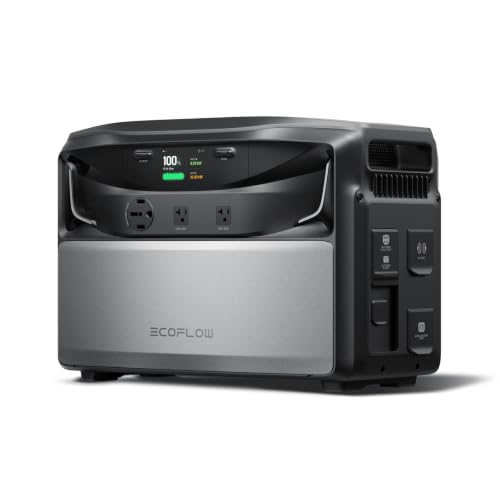
EcoFlow TITAN 5000 Plus · Our score 91/100
5,017 Wh · 7,200 W continuous · 120/240 V · 8,000 W solar input · LiFePO4 · 121.3 lb [23][24]
Price on Amazon: $3,699.00
Same 5,017 Wh battery and 7,200 W of 120/240 V output, but it takes up to 8,000 W of solar through two inputs, and pv magazine USA reports output rising to 10 kW while solar is feeding it. That is the version to pick if you have, or plan, a large array to refill it between outage days.
Skip it if: You have no solar plans: the second solar input and the solar boost are its main differences from the TITAN 5000. At 121.3 lb it is also an indoor, wired-in unit, not a portable one.
120 V Essentials, 4,000 W

EcoFlow TITAN 5000 Classic · Our score 87/100
5,017 Wh · 4,000 W continuous · 120 V only · 3,200 W solar input · LiFePO4 [23][24]
Price on Amazon: $2,199.00
The 120 V-only version of the same 5,017 Wh battery if every circuit you need is 120 V. Its 4,000 W covers the running watts of all three load plans (the largest is 2,755 W), and it accepts 3,200 W of solar.
Skip it if: You need 240 V for a well pump or anything else, or you want certainty on compressor starts: the start checks in Plans 1–3 (4,225–4,955 W on the conservative chart figures) are above its 4,000 W rating, and we found no published surge figure. Ask EcoFlow before relying on it for a fridge, freezer and pump together.
Side by side
| System | Output | Volts | Usable energy | Essentials (~100 W) | Price | Link |
|---|---|---|---|---|---|---|
| EcoFlow TITAN 5000 | 7,200 W | 120/240 V | ~4,264 Wh | ~43 h | $3,199.00 | View on Amazon → |
| EcoFlow TITAN 5000 Plus | 7,200 W | 120/240 V | ~4,264 Wh | ~43 h | $3,699.00 | View on Amazon → |
| EcoFlow TITAN 5000 Classic | 4,000 W | 120 V only | ~4,264 Wh | ~43 h | $2,199.00 | View on Amazon → |
What we could not confirm: none of the sources we found lists a surge rating for any TITAN model [24]. The TITAN 5000 and 5000 Plus clear every start check on this page within their continuous rating; for the 4,000 W Classic, ask EcoFlow how it handles compressor starts before you rely on it. Our EcoFlow guide places TITAN within the rest of the brand’s range.
Verdict: Essentials Yes, Big 240 V Loads No
A 5,000 W generator is an essentials machine. On the most conservative chart figures it runs a refrigerator, a freezer, a 1/3 HP sump pump, a furnace blower, lights and a router together (2,755 W running, 4,955 W with one motor starting) as long as you start motors one at a time. Kitchen appliances and a window AC fit in turns. Central air, an electric range, water heater, dryer and electric heat do not. Check whether the “5,000” is the running or starting figure, connect hardwired loads only through a transfer switch or interlock, and keep a gas unit 20 feet from the house. If you want the same list without fuel or exhaust, the EcoFlow TITAN 5000 (our score 91/100) delivers 7,200 W at 120/240 V from an installed battery. Currently $3,199.00 on Amazon, it runs the essentials for ~43 h by our math before it needs sun or the grid.
A 5,000 W generator suits you if
- Your heat is gas or propane and your water heater is not electric.
- You need the fridge, freezer, sump pump and lights through a storm.
- You can place it 20 feet from the house and store fuel safely.
Look bigger if
- You need central air, electric heat or a 240 V well pump plus everything else.
- You want to cook on an electric range during the outage.
- You want the whole house on automatically, which is a standby generator’s job.
Shopping for the generator itself? Quiet 2,000–4,000 W models are compared in our best inverter generator guide, and large dual and tri fuel units in the best propane generator guide.
5000 Watt Generator FAQ
What can a 5000 watt generator run?
The essentials of a house during an outage: a refrigerator, a freezer, a 1/3 HP sump pump, a gas furnace's blower, LED lights and a router at the same time. On the most conservative chart figures that is about 2,755 W running and 4,955 W with one motor starting, so start motors one at a time. A microwave, coffee maker, space heater or small window AC can be added in turns. It cannot run central air, an electric range, an electric water heater or an electric dryer alongside anything else.
Can a 5000 watt generator run a refrigerator and a freezer?
Yes, easily. Chart figures put a refrigerator at 80-400 W running and a freezer at 60-700 W, with up to 2,200 W extra for a moment when a compressor starts. Even on the most conservative figures, both running plus one start is 3,300 W. Modern ENERGY STAR models average only about 41 W (fridge) and 25 W (chest freezer) over a day.
Can a 5000 watt generator run central air?
No. A 3-ton Goodman condenser draws about 3,080 W while running at 95 °F, but its compressor's locked-rotor current is 87.4 A at 208/230 V, roughly 20,000 VA for the instant it starts. DTE's generator guide rates a 3-ton system at 6,000 W running with a starting factor of 3 and tells users not to turn on central air or a heat pump on its 40 A GenerLink. A window unit for one room is the realistic option.
Can a 5000 watt generator run a well pump?
A 1/3 HP 120 V well pump, yes: EWEB lists it at about 1,000 W running and 2,000 W extra to start. Many deep-well pumps are 240 V, which needs a generator with a 240 V outlet (such as an L14-30R) and a transfer switch or interlock. Read the pump's motor plate for its horsepower, voltage and amps before you size.
Can a 5000 watt generator run an electric water heater, dryer or stove?
Not alongside anything else. An electric water heater draws 4,500-5,500 W and an electric dryer 1,800-5,000 W, both on 240 V. GE rates its JB645 electric range at 12.1 kW, so a whole range is out of reach. A single 1,300-2,400 W range burner fits the budget, but only if the generator feeds the range's 240 V circuit through approved transfer equipment.
What is the difference between running and starting watts?
Running (or rated) watts are what a generator supplies continuously; starting (surge or peak) watts are a brief extra burst for motors to start. To size, add the running watts of everything on at once, then add the single highest starting figure. A generator sold as 5,000 W may be rated 5,000 W starting and less running, so check both numbers on the spec sheet.
Is a 5000 watt generator enough to power a house?
Enough for the essentials, not the whole house. It covers food storage, a sump pump, a gas furnace's blower, lights, electronics and kitchen appliances in turns. A house with central air, electric heat, an electric water heater or a 240 V well pump that must run with everything else needs a 9,500 W-plus generator or a standby system.
How far from the house should a 5000 watt generator be?
At least 20 feet, according to both CPSC and CDC, with the exhaust pointed away from doors, windows and vents. Never run it in a garage, basement, crawlspace, shed, carport or on a porch, even with doors open, and keep battery-backed CO alarms inside.
How long does a 5,000 W battery run a house?
It depends on the battery's watt-hours, not its watts. Hours = battery Wh x 0.85 / average watts. A 5,017 Wh EcoFlow TITAN gives about 4,264 usable Wh: about 43 hours on a fridge, chest freezer, router and some LED lights (about 100 W average), 4.3 hours at a steady 1,000 W, or under an hour at 5,000 W.
Sources
Appliance figures come from generator makers’, a retailer’s and utilities’ published sizing charts, a university extension guide, ENERGY STAR’s certified-model datasets and appliance spec sheets, as cited. Load plans, start checks, the central AC start estimate and runtimes are our arithmetic on those figures. Battery specs come from our product database, cross-checked against the listings below. Nothing here was measured by us. Last reviewed November 18, 2026.
- EWEB (Eugene Water & Electric Board), Generator Sizing Considerations: running and additional starting watts by appliance; total the running watts, then add the single highest starting figure
- Lowe’s, Portable generator wattage worksheet (04/2017): estimated running and additional starting watts; “total wattage requirements assumes intermittent starting of devices”
- Champion Power Equipment, Choosing a generator: definitions of running and starting watts, quick-reference wattage chart, add the highest single starting figure to total running watts
- Honda Power Equipment, Generator wattage estimation guide: refrigerator or freezer (ENERGY STAR) 132–192 W running, 1,200 W starting
- Virginia Cooperative Extension, Estimating Appliance and Home Electronic Energy Use (Feb 2020): clothes dryer 1,800–5,000 W; water heater (40 gal) 4,500–5,500 W; furnace 750 W
- DTE Energy / GenerLink, Appliance Usage Guide: central A/C 3 ton 6,000 W running with a starting factor of 3; range with oven 12,200 W (burners 1,300–2,400 W); water heater 4,500–5,000 W; clothes dryer 4,850 W
- ENERGY STAR Certified Residential Refrigerators dataset (median top-freezer model 363 kWh a year, as used on our refrigerator wattage page)
- ENERGY STAR Certified Residential Freezers dataset (median full-size chest model 218 kWh a year, as used on our freezer wattage page)
- Service data sheet A16319701, automatic-defrost top-mount refrigerators (18–20 cu ft): 82–90 W running (iFixit copy)
- Service data sheet 297010500/297010501, chest freezer: 65–140 W running at 70 °F, 70–145 W at 90 °F (AJ Madison copy)
- Goodman GSXN3 split-system air conditioner specification sheet (SS-GSXN3, 06/23): 3-ton GSXN3N3610A* compressor RLA 14.1 A, LRA 87.4 A, 208/230 V; 3,080 total watts at 95 °F outdoors; hard-start kits listed as accessories
- GE Appliances, JB645DK 30″ free-standing electric range dimensions and installation sheet (rev. 6/18): 12.1 kW at 240 V, 40 A breaker
- Reliance Controls PB30 power inlet box spec sheet (Elliott Electric copy): 30 A, 125/250 VAC, L14-30, generator input running rate 7,500 W
- EC&M, Installation and operation of optional standby systems (NEC Article 702 transfer equipment)
- CPSC Safety Alert 5123, Portable Generator Hazards: never run a generator in a home, garage, basement, crawlspace or shed; never backfeed house wiring through a wall outlet; battery-backed CO alarms
- CPSC, Winter weather safety tips (2026): operate portable generators outside only, at least 20 feet from the house, exhaust directed away
- CDC, Use a generator safely: keep it outside at least 20 feet from any doors, windows or vents
- Norwall PowerSystems, Westinghouse iGen5000DFc listing: gasoline 3,900 running / 5,000 starting watts, propane 3,500 / 4,500; two 120 V household outlets, TT-30R, CO sensor with shutdown
- Westinghouse, iGen5000DFc EFI inverter generator product page: 5,000 peak / 3,900 running watts on gasoline, TT-30R and two 20 A household outlets
- Champion Power Equipment, 4500-Watt Electric Start Dual Fuel Inverter (201319): 4,500 starting / 3,500 running on gasoline, 3,150 running on propane; TT-30R, 5-20R; CO Shield
- Anker SOLIX, Smart Generator 5500 product page: 3,600 W rated AC at 120 V, 5,500 W starting; 5-20R and TT-30R; gasoline, LPG or natural gas; CO protection
- Off Grid Source, Anker SOLIX Smart Generator 5500 listing: 3,600 W AC, 5,500 VA starting power, one TT-30R and one 5-20R at 120 V
- pv magazine USA, EcoFlow launches 5–30 kWh residential storage system (Oct 14, 2026): TITAN 5000 and 5000 Plus 7.2 kW; Plus 120/240 V, 10 kW with solar; Classic 4 kW at 120 V with 3.2 kW solar; IP20 indoor
- Backup Power Hub, EcoFlow TITAN review (5000 Plus, 5000 and Classic): 5,017.6 Wh each; 7,200 / 7,200 / 4,000 W; 120/240 V on the 5000 and Plus, 120 V only on the Classic; surge not listed; Smart Home Panel 10 installed by a licensed electrician
- Solar Power World, EcoFlow releases new 5 kWh energy storage system (Oct 2026): 7.2 kW, expandable to 30 kWh, under-20 ms switchover with Smart Home Panel 10
Have solar, or planning it? The TITAN 5000 Plus is currently $3,699.00 on Amazon and takes up to 8,000 W of solar.
Check Price on Amazon →Save to cart