
Buying Guide · Updated November 2026
Best Propane Generator 2026: Dual & Tri Fuel Picks for Home Backup
Short answer
The best propane generator for most home-backup buyers is the Westinghouse WGen9500DFc. It is a dual fuel unit rated at 9,500 running watts on gasoline and 8,500 on propane, with a CO sensor that shuts the engine down automatically and outlets for a transfer switch. If you have natural gas at the house, the Champion 12,500-Watt Tri Fuel also runs on natural gas, at 8,000 running watts. Both weigh over 200 lb and must run outdoors, at least 20 feet from the house (CPSC). Want something smaller and quieter for essentials, RVs or camping? See our best inverter generator picks.
As an Amazon Associate, SolarGenAdvisor earns from qualifying purchases made through links on this page, at no additional cost to you. Ratings are AI-synthesized from manufacturer specs, published figures and logged Amazon prices; we did not test these generators.
 By
Which guide do you need?
This page covers large open-frame dual and tri fuel generators (about 9,500–10,500 running watts) that can run 240V loads like a well pump or central air through a transfer switch. If you only need essentials, an RV or campsite power, and care about noise and weight, a 2,000–4,000W dual fuel inverter is the better tool: lighter, quieter, and easier to store. Those are in our best inverter generator guide, which includes the Westinghouse iGen5000DFc and Champion 2500 and 4500 dual fuel models.
Carbon monoxide: propane is not "safe exhaust"
Propane and natural gas burn cleaner than gasoline, but every engine on this page still makes carbon monoxide, which you cannot see or smell. CPSC says nearly 100 Americans die each year from generator-related CO poisoning (CPSC). Its guidance, which CDC echoes (CDC generator safety; CDC CO prevention):
- Never run a portable generator inside a home, garage, basement, crawlspace, shed or other enclosed space. Opening doors or windows does not make it safe.
- Run it outdoors only, at least 20 feet from the house, and point the exhaust away from doors, windows and vents.
- Install battery-operated or battery-backup CO alarms on every level, and test them monthly.
- CPSC recommends a generator with a CO shut-off safety feature. Three of our five picks list one (the WGen9500DFc, Champion Tri Fuel and DuroMax XP13000HXT). Champion notes that CO Shield is not a substitute for an indoor CO alarm (Champion).
Need power inside the house with no exhaust at all? See our indoor-safe generator guide, or the battery options further down this page.
Propane Generator Comparison: Watts on Every Fuel
All figures come from the manufacturer or the Amazon listing, with retailer spec pages where the maker leaves a gap. Runtimes are at half load on gasoline, the one condition every maker here publishes. Prices are live from Amazon.
| Generator | Gasoline running / starting W | Propane running W | Natural gas running W | Gas runtime (50% load) | Noise | Weight | CO shutoff | Price |
|---|---|---|---|---|---|---|---|---|
| Westinghouse WGen9500DFc Dual Fuel Generator with CO Sensor (70/100) | 9,500 / 12,500 | 8,500 | No | 8 hr (6.6 gal) | 74 dBA | about 212 lb | CO sensor with automatic shutdown | $1,049.00 Check Price → |
| Champion 12,500-Watt Tri Fuel Generator with CO Shield (66/100) | 10,000 / 12,500 | 9,000 | 8,000 | 8 hr (7.7 gal) | 74 dBA at 23 ft | 231 lb | CO Shield automatic shutoff | $1,259.99 Check Price → |
| Westinghouse WGen9500DF Dual Fuel Generator (63/100) | 9,500 / 12,500 | 8,500 | No | 8 hr (6.6 gal) | 74 dBA | 211 lb | None listed (low-oil shutdown only) | $999.00 Check Price → |
| DuroMax XP13000HXT Tri Fuel Generator with CO Alert (60/100) | 10,500 / 13,000 | 9,500–10,000* | 8,500–9,000* | 8.5 hr (8.3 gal) | not published | about 240–246 lb | CO Alert automatic shutdown | $1,499.00 Check Price → |
| DuroMax XP12000EH Dual Fuel Generator (51/100) | 9,500 / 12,000 | 9,025 | No | 8 hr (8.3 gal) | not published | about 224–238 lb | None listed on the Amazon listing | $1,299.00 Check Price → |
*DuroMax XP13000HXT: DuroMax's page lists 9,500W running on propane and 8,500W on natural gas, while Norwall lists 10,000W and 9,000W. Plan on the lower figures until you check the owner's manual. Westinghouse's and Champion's noise figures are both 74 dBA; Champion states 23 feet, and Ferguson lists the Westinghouse figure at 7 m (about 23 ft). DuroMax publishes no noise rating for either model. Sources: Westinghouse WGen9500DF, Norwall WGen9500DFc, Lowe’s WGen9500DFc, Tractor Supply WGen9500DFc, Champion 201438, DuroMax XP13000HXT, Norwall XP13000HXT, Norwall XP12000EH, Bob Vila XP12000EH, plus each Amazon listing.
The 5 Best Propane Generators for Home Backup in 2026
Every pick runs on propane and gasoline, and two also run on natural gas. All five were sold by Amazon.com when we checked. Each is scored with the same gas-generator rubric as our inverter generator guide, explained below. Don't compare these scores with a battery station's score, which comes from our separate power-station matrix.
#1 · Best Propane Generator Overall · 70/100

Westinghouse WGen9500DFc Dual Fuel Generator with CO Sensor
9,500W running / 12,500W starting (gasoline) · Dual fuel · 74 dBA · about 212 lb
Current price on Amazon: $1,049.00
Westinghouse rates it at 9,500 running and 12,500 peak watts on gasoline and 8,500/11,200 on propane, which on paper covers a 240V well pump alongside a fridge, furnace blower and lights (check your own appliance nameplates). What sets the "c" version apart is a CO sensor that shuts the engine down if carbon monoxide builds up. It has remote key-fob start, a 30A L14-30R outlet for a transfer switch and a 50A 14-50R outlet. Westinghouse publishes 12 hours at 25% load on its 6.6-gallon tank, and Norwall lists 7 hours at half load on a 20-lb propane tank. The trade-offs: retailers list it at about 212 lb, it is rated at 74 dBA, and Norwall marks it not for sale in California.
- 9,500 running W (8,500 on propane)
- CO sensor with automatic shutdown
- Remote key-fob + electric start
- L14-30R 30A and 14-50R 50A outlets
- About 212 lb on wheels
- 74 dBA rating
- Not sold in California
Specs: Norwall WGen9500DFc page, Westinghouse WGen9500DF page, Lowe’s, Amazon listing.
#2 · Best Tri Fuel Generator · 66/100

Champion 12,500-Watt Tri Fuel Generator with CO Shield
10,000W running / 12,500W starting (gasoline) · Tri fuel · 74 dBA at 23 ft · 231 lb
Current price on Amazon: $1,259.99
The pick if you have natural gas at the house. Champion rates this model (201438) at 10,000 running watts on gasoline, 9,000 on propane and 8,000 on natural gas, and ships it with both a 25 ft natural gas hose kit and a propane hose. CO Shield shuts the engine off if CO rises, and its 500cc engine has electric start. Champion lists 74 dB(A) at 23 feet and 231 lb. One number to plan around: Champion publishes only 3 hours at half load on a 20-lb propane tank, against 8 hours on its 7.7-gallon gasoline tank, so on propane you will want a bigger cylinder or a natural gas hookup.
- Gas, propane or natural gas
- NG and LP hoses included
- CO Shield automatic shutoff
- 3-year limited warranty (Champion)
- 3 hr on a 20-lb tank at half load (Champion)
- 231 lb
- Natural gas hookup needs a licensed pro
Specs: Champion 201438 page, Tractor Supply, Amazon listing.
#3 · Lowest Price per Running Watt · 63/100

Westinghouse WGen9500DF Dual Fuel Generator
9,500W running / 12,500W starting (gasoline) · Dual fuel · 74 dBA · 211 lb
Current price on Amazon: $999.00
The same 9,500 running watts (8,500 on propane), outlets, 6.6-gallon tank and remote start as the DFc, and it costs less per running watt than anything else on this list. The difference is safety. Westinghouse's spec table lists "CO sensor: No", and the Amazon listing names only a low-oil shutdown. CPSC recommends choosing a generator with a CO shut-off feature, so we rank it below the DFc even though it costs less. Westinghouse lists 211 lb dry and 74 dBA, and says it is not CARB compliant.
- Lowest cost per running watt here
- Same outputs and outlets as the DFc
- 12 hr at 25% load (Westinghouse)
- No CO sensor (Westinghouse spec)
- Not CARB compliant
- 211 lb
Specs: Westinghouse WGen9500DF page, Amazon listing.
#4 · Most Running Watts (Tri Fuel) · 60/100

DuroMax XP13000HXT Tri Fuel Generator with CO Alert
10,500W running / 13,000W starting (gasoline) · Tri fuel · not published · about 240–246 lb
Current price on Amazon: $1,499.00
DuroMax rates it at 13,000 starting and 10,500 running watts on gasoline, the most here. It runs on gasoline, propane or natural gas, has push-button and remote start, and DuroMax and Norwall both say CO Alert shuts it down if carbon monoxide reaches unsafe levels. DuroMax lists 8.5 hours at half load on gasoline and 6.5 hours on a 40-lb propane tank, which is the tank size it recommends. Two cautions. Its propane and natural gas ratings differ between sources (9,500 vs 10,000 W running on propane), so size your loads on the lower figure. And when we checked, Amazon listed it as usually shipping in 1 to 2 months, which is too slow if a storm is in the forecast.
- 10,500 running W on gasoline
- Tri fuel with CO Alert shutdown
- 8.5 hr at half load on gasoline (DuroMax)
- Amazon lists a 1–2 month ship time
- Propane/NG ratings conflict between sources
- No published noise rating
Specs: DuroMax XP13000HXT page, Norwall, Amazon listing.
#5 · CARB-Listed Dual Fuel · 51/100

DuroMax XP12000EH Dual Fuel Generator
9,500W running / 12,000W starting (gasoline) · Dual fuel · not published · about 224–238 lb
Current price on Amazon: $1,299.00
DuroMax rates the XP12000EH at 9,500 running watts on gasoline and 9,025 on propane. That is the smallest propane derate in this group, about 5%. It has an all-metal frame, a 50A transfer-switch-ready outlet plus L14-30R and L5-30R twist-locks, and Norwall lists it as EPA and CARB compliant, which matters if you live in California, where the Westinghouse units and the XP13000HXT are not sold. It scores lowest in our rubric for two reasons: the Amazon listing names no CO shutoff sensor, and DuroMax publishes no noise rating. Some retailers and a Bob Vila review describe a CO detector on recent units. Check the listing before you buy.
- Only about 5% less power on propane
- CARB compliant per Norwall
- L14-30R, L5-30R and 50A outlets
- No CO shutoff named on the Amazon listing
- No published noise rating
- Roughly 224–238 lb (published figures vary)
Specs: Norwall XP12000EH page, Bob Vila review, Amazon listing.
Need more than about 10,000 running watts? Champion and DuroMax also make 12,000–15,000W tri fuel units, but when we checked, the ones on Amazon were either sold through third-party sellers at a much higher price or out of stock, so we left them off this list.
Propane vs Gasoline vs Natural Gas: How Much Power You Lose
A propane generator is almost always a dual fuel generator, meaning it also runs on gasoline. A tri fuel generator adds natural gas. The engine is the same on every fuel, but the makers rate it lower on the gaseous fuels, so size your loads on the propane or natural gas number if that is what you plan to burn:
| Model | Gasoline running W | Propane running W | Natural gas running W | Propane derate |
|---|---|---|---|---|
| Westinghouse WGen9500DFc / DF | 9,500 | 8,500 | Not offered | About 11% |
| Champion 12,500W Tri Fuel | 10,000 | 9,000 | 8,000 | 10% (20% on NG) |
| DuroMax XP13000HXT | 10,500 | 9,500–10,000 (sources differ) | 8,500–9,000 (sources differ) | About 5–10% |
| DuroMax XP12000EH | 9,500 | 9,025 | Not offered | About 5% |
Sources: Westinghouse, Champion 201438, DuroMax XP13000HXT, Norwall XP13000HXT, Norwall XP12000EH, Amazon listings. Derate percentages are our arithmetic from those figures.
Which fuel fits your outage plan?
- Gasoline gives the most watts and the longest runtime per tank on every model here. The catch is storage: gasoline goes stale in cans unless you treat it, and gas stations can lose power in the same outage you are riding out.
- Propane stores in sealed cylinders you can swap without spilling anything. You give up 5–11% of the running watts, and runtime per tank is short on the standard 20-lb grill tank (see the next section).
- Natural gas (tri fuel only) never needs refilling as long as your utility's supply stays on. It is rated lowest (Champion: 8,000W versus 10,000W on gasoline), and connecting it requires a licensed professional. See natural gas hookups below.
Tri fuel vs dual fuel: pay for tri fuel only if you have a natural gas line, or are willing to have a gas fitter add an outdoor connection. Without one, the third fuel option goes unused, and a dual fuel unit like the WGen9500DFc gives you the same propane-and-gasoline flexibility.
How Long Does a 20 lb Propane Tank Run a Generator?
On a 9,500–10,000W generator, not long, and the makers' own figures disagree by more than 2:1. These are the published propane runtimes, all at half load:
| Model | Published propane runtime | Scaled to a 100-lb cylinder* | Gasoline runtime, same load |
|---|---|---|---|
| Westinghouse WGen9500DFc / DF | 7 hr on a 20-lb tank | About 35 hr | 8 hr on 6.6 gal |
| Champion 12,500W Tri Fuel | 3 hr on a 20-lb tank | About 15 hr | 8 hr on 7.7 gal |
| DuroMax XP12000EH | About 7 hr on a 40-lb tank | About 17.5 hr | About 8 hr on 8.3 gal |
| DuroMax XP13000HXT | 6.5 hr on a 40-lb tank | About 16 hr | 8.5 hr on 8.3 gal |
Sources: Westinghouse, Norwall WGen9500DFc, Champion 201438, Tractor Supply, DuroMax, Norwall XP12000EH, Norwall XP13000HXT. *Our arithmetic: a 100-lb cylinder holds five times the propane of a 20-lb tank and 2.5 times a 40-lb tank, so we scaled each maker's own figure. Real runtime depends on load and temperature.
We can't tell you why Westinghouse's 20-lb figure is more than double Champion's on similar-sized engines; the makers don't publish their test loads in enough detail. So plan around the lower number. Three practical rules follow:
- 20-lb tanks are for short outages. Even on Westinghouse's figure, a night-and-day outage at half load needs three or four grill tanks swapped on schedule.
- Size up the cylinder. DuroMax recommends a 40-lb tank for its generators (Norwall, citing DuroMax). For multi-day backup, 100-lb cylinders delivered by a propane supplier are the usual answer.
- Lighter loads stretch every tank. Half load on these units is about 4,250–5,000W. If you are running only a fridge, furnace blower and lights, runtime is longer. Westinghouse publishes 12 hours at 25% load on gasoline versus 8 hours at 50%.
Propane Generators in Cold Weather
Propane sits in the tank as a liquid and has to boil into vapor before the engine can burn it. Its boiling point is about −44°F (Paraco Gas), so it doesn't freeze in a tank. But as temperatures fall, so does tank pressure. Generac, which makes propane standby generators, says "reduced tank pressure may affect generator performance before vaporization stops completely," and that no single temperature affects every system (Generac support). A large engine pulling hard on a small 20-lb tank makes this worse. The tank chills as it vaporizes fuel, and frost can form on the outside of a small cylinder feeding a big engine.
- Keep tanks well filled. Paraco advises keeping a tank at least 30% full in cold weather, and Ferrellgas notes that extreme cold affects vaporization (Ferrellgas).
- Use bigger cylinders in winter. More liquid means more surface area to vaporize from, the same reason DuroMax recommends 40-lb or larger tanks.
- Clear snow and ice from the tank, regulator and valves (Generac).
- Never heat a tank artificially or use an open flame near it. Generac warns against both.
If you are planning for a winter storm, our power station for furnace guide covers keeping a gas furnace's blower running on battery power. In practice that is often the most important cold-weather load.
What Size Propane Generator Do You Need for a House?
Start with the running watts of everything you want on at once. Then add the single biggest starting surge, usually a well pump, AC compressor or fridge, because motors rarely start at the same moment. Keep the running total under about 80% of the generator's rating on the fuel you'll actually use. For a propane plan on the WGen9500DFc, that is about 6,800W (80% of 8,500W), not 7,600W.
| Size class | Typical job | Where to look |
|---|---|---|
| 2,000–4,000W running, 120V | Fridge, freezer, furnace blower, lights, router; RV with a TT-30 hookup | Best inverter generators |
| 8,500–10,500W running, 120/240V | Essentials plus a 240V well pump, a central AC system or an electric range in turns, through a transfer switch | This page |
| Whole house, automatic | Everything at once with no refueling or hookup | A permanently installed standby generator, quoted by a licensed installer (outside this guide) |
Our appliance wattage chart lists typical running and starting watts for common appliances. Use your own appliances' nameplates where you can, because well pumps and AC units vary widely.
Connecting a Propane Generator to Your House: Transfer Switch, Interlock or Cords
There are three ways to get a portable generator's power into your home:
- Heavy-duty extension cords run from the generator's 120V outlets straight to individual appliances. This needs no installation, but it can't power hard-wired loads like a furnace or well pump.
- A manual transfer switch feeds a set of pre-selected circuits through a generator cord and an outdoor inlet. Every pick here has a 30A L14-30R outlet, and the Westinghouse units list it as "transfer switch ready." Our generator transfer switch guide compares kits.
- An interlock kit on your main panel plus a power inlet box lets you choose which breakers to run. Our generator interlock kit guide covers the kits, inlet boxes and cords.
The 50A outlets on these generators (14-50R on the Westinghouse and DuroMax units) can carry more power to a 50A inlet than a 30A L14-30R can. Which one you use depends on the inlet, cord and switch your electrician installs. Transfer switches and interlocks must be installed by a licensed electrician, usually under a permit. We don't publish wiring steps.
Never backfeed. Plugging a generator into a wall outlet or dryer receptacle with a "suicide cord" can push power onto the utility lines and endanger line workers, as well as risk fire in your home. Utilities and state fire officials warn against it (Lake Country Power; Minnesota State Fire Marshal).
Natural Gas Portable Generators: What the Hookup Involves
A tri fuel generator ships with a natural gas hose. Champion's 25 ft kit includes a quick-connect end, a flare fitting end and an NPT adapter (Champion). But the hose is the easy part. Running it needs a dedicated outdoor gas connection with a shutoff valve and quick-connect on your home's gas piping, and that connection is a job for a licensed plumber or gas fitter:
- Generator hose-kit maker Firman says the connection to outdoor gas piping must be made by a certified plumber (Firman manual).
- Many jurisdictions require a plumbing permit to tie a generator into the gas service. Capitola, California, for example, asks for a licensed plumber and a gas line diagram (City of Capitola). Check with your local building department.
- The supply has to keep up. DuroMax specifies 6.0–9.0 inches of water column and 225,000 BTU at full load for the XP13000HXT (DuroMax). Your gas fitter or utility can say whether your meter and piping can deliver that alongside your furnace and water heater.
We don't publish conversion or hookup steps, and we don't recommend aftermarket conversion kits for gasoline-only generators. If natural gas is the plan, buy a generator rated for it from the factory, like the Champion Tri Fuel or DuroMax XP13000HXT.
Propane Generator vs Solar/Battery Backup
We mostly cover battery power stations, so here is the comparison as evenly as we can make it. The full breakdown, including running costs, is in solar generator vs gas generator.
A propane generator wins when…
- Outages last days. By our arithmetic from Westinghouse's figures, one 6.6-gallon gasoline tank at half load delivers about 38,000 Wh (4,750W × 8 hr). That is roughly eight times what a 5 kWh battery holds, and you can refill it.
- You need big 240V loads. A 9,500W unit can run a well pump and central AC that most single batteries can't sustain for long.
- Budget matters. These generators cost a fraction of the battery stations below.
- You can store fuel safely and run it 20 feet from the house.
A battery station wins when…
- Power must be indoors or silent: no exhaust, no 74 dBA engine at night, no HOA complaints.
- Outages are usually under a day. Many stations switch over automatically when the grid drops.
- You don't want an engine to maintain: no oil changes, stale fuel or cold starts, and solar panels can recharge it.
- You want to pair it with a generator: run the gas unit a few hours a day to recharge, and the battery covers the night.
How Long a Whole-Home Battery Runs the Same Loads
Runtime = watt-hours × 0.85 ÷ load in watts. The 0.85 is our assumption for inverter losses.
| Load | EcoFlow Delta Pro 3 (4,096 Wh) | Anker SOLIX S5000 (5,024 Wh) | OUPES Guardian 6000 V2 (4,608 Wh) |
|---|---|---|---|
| Essentials: fridge, furnace blower, lights, router (~500W) | 7.0 hr | 8.5 hr | 7.8 hr |
| Essentials + well pump or microwave running (~1,500W) | 2.3 hr | 2.8 hr | 2.6 hr |
| Heavy: window AC units, electric water heater cycling (~3,000W) | 1.2 hr | 1.4 hr | 1.3 hr |
| Price | $2,799.00 Check Price → | $2,939.00 Check Price → | $2,199.00 Check Price → |
Whole-Home Battery Stations Rated on Our Site
The honest catch is price. At $2,799.00 on Amazon, the EcoFlow Delta Pro 3 costs far more than the Westinghouse WGen9500DFc, and it delivers less than half the running watts. What you are paying for is indoor, silent, fuel-free power. These scores use our 6-dimension power-station matrix:
120/240V in one wheeled unit · 95/100 (power-station score)

4,096 Wh · 4,000W (8,000W peak) · 113.5 lb
Current price on Amazon: $2,799.00
4,096 Wh and 4,000W of 120/240V output per the Amazon listing, expandable with extra batteries. It covers a fridge, furnace blower, lights and Wi-Fi for most of a day indoors and silently. It cannot match a 9,500W gas generator for running central air and a well pump together.
Most capacity in one box · 91/100 (power-station score)

5,024 Wh · 4,500W (8,000W peak) · 97 lb
Current price on Amazon: $2,939.00
5,024 Wh with 4,500W rated 120/240V output, UL 9540 certification noted in our S5000 review, and battery expansion. It is the closest thing here to a fuel-free answer for a 240V well pump through an overnight outage.
Most output per dollar (battery) · 89/100 (power-station score)
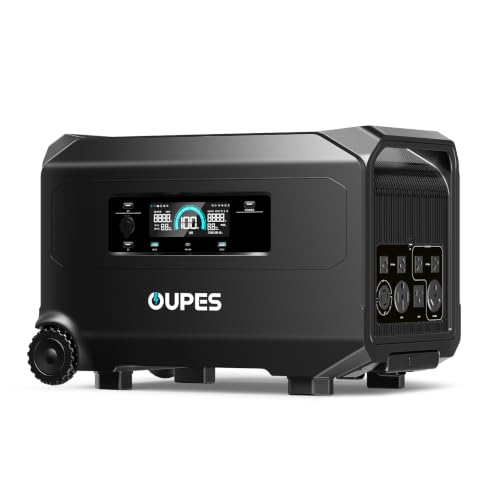
4,608 Wh · 6,000W (9,000W peak) · 95 lb
Current price on Amazon: $2,199.00
4,608 Wh and 6,000W of 120/240V output (9,000W surge), transfer-switch ready and expandable to 41 kWh per its listing. Its output comes closest to the gas units here, though it holds about one day of essentials, not an unlimited fuel supply.
More options, including multi-battery systems, are in our best whole-home solar generators guide.
Who Should Buy a Propane Generator, and Who Should Skip It
Buy one if…
- You get multi-day outages and need a well pump, central AC or other 240V loads.
- You can store propane cylinders (or have natural gas) and have a spot 20+ feet from the house.
- You'll have an electrician install a transfer switch or interlock and inlet.
- You can move a 210–250 lb wheeled unit in and out of storage.
Skip it if…
- You only need a fridge, lights and Wi-Fi. A dual fuel inverter generator or battery station is lighter, quieter and cheaper to run.
- You live in an apartment, condo or tight lot with no safe spot 20 feet from openings.
- You live in California and want the Westinghouse or XP13000HXT, which are marked not for sale there.
- You need power for a CPAP or medical device beside the bed. Use a battery for that.
How We Score Propane Generators
We use the same six dimensions and weights as our inverter generator rubric, with the same scales, so all 10 gas generators we rate can be compared directly. The output scale runs from 1,800 to 10,500 running watts, so these open-frame units score high on output and low on noise and portability. Scores are AI-synthesized from manufacturer specifications, published figures and Amazon prices logged on November 1, 2026. We did not test or measure these generators, and we don't use Amazon star ratings. A spec the maker doesn't publish earns no credit, which is why both DuroMax models score zero on noise. Value is measured against the lowest price per running watt across all 10 gas generators we rate, which happens to be the WGen9500DF on this page. Runtime uses the published gasoline runtime at 25% load; where the maker publishes only a half-load figure, as Champion and DuroMax do for these models, that figure is used.
| Dimension | Weight | Westinghouse WGen9500DFc | Champion 12,500W Tri Fuel | Westinghouse WGen9500DF | DuroMax XP13000HXT | DuroMax XP12000EH |
|---|---|---|---|---|---|---|
| Running & starting output Gasoline running watts on one scale for every gas generator we rate: 1,800W = 55, 3,900W = 88, 10,500W = 95, straight-line in between |
20% | 93.9 | 94.5 | 93.9 | 95 | 93.9 |
| Value (price per running watt) 90 × the lowest Amazon price per running watt among all 10 gas generators we rate (Westinghouse WGen9500DF) ÷ this one’s (prices checked Nov 1, 2026) |
20% | 85.7 | 75.1 | 90 | 66.3 | 69.2 |
| Runtime & fuel flexibility 60% published gasoline runtime at 25% load (90 × hours ÷ 18, the longest we found; if the maker publishes only a 50%-load figure, that figure is used), 40% fuel options (tri fuel 90, dual fuel 80, gas only 40) |
20% | 68 | 60 | 68 | 61.5 | 56 |
| CO safety features Automatic CO shutoff stated by the maker or Amazon listing = 90; none listed = 40 |
15% | 90 | 90 | 40 | 90 | 40 |
| Noise (published dBA) 90 minus 2.5 points per dBA above 52, using the lowest figure the maker publishes; no published figure = 0 |
15% | 35 | 35 | 35 | 0 | 0 |
| Portability 90 × the lightest generator we rate (43.2 lb) ÷ this one’s weight |
10% | 18.3 | 16.8 | 18.4 | 15.8 | 16.3 |
| Weighted score | 100% | 70/100 | 66/100 | 63/100 | 60/100 | 51/100 |
Why these scores land in the same range as our inverter picks: open-frame generators lose most of their noise and portability points (74 dBA, over 200 lb), but they win points back on output and value, because they deliver more than twice the running watts at a far lower price per watt. If those two dimensions don't matter to you, compare on output, value and CO safety, where the WGen9500DFc and Champion Tri Fuel lead.
Propane Generator FAQ
What is the best propane generator for home backup?
For most homes we rate the Westinghouse WGen9500DFc highest. It is a dual fuel generator rated at 9,500 running watts on gasoline and 8,500 on propane, with a CO sensor that shuts the engine down automatically, remote start, and both 30A and 50A outlets for a transfer switch. If you have natural gas at the house, the Champion 12,500-Watt Tri Fuel adds a natural gas option at 8,000 running watts. For smaller, quieter units under 5,000 watts, see our best inverter generator guide.
Is a tri fuel generator worth it?
Only if you have, or will install, a natural gas line you can connect to outdoors. A tri fuel generator runs on gasoline, propane or natural gas, and natural gas means no refueling during a long outage. The trade-off is power: Champion rates its 12,500-Watt Tri Fuel at 10,000 running watts on gasoline but 8,000 on natural gas. Connecting it to your gas piping is a job for a licensed plumber or gas fitter under a local permit. Without natural gas, a dual fuel (gasoline + propane) model does the same job for less.
How long will a 20 lb propane tank run a generator?
Only a few hours on a large home-backup generator, and manufacturers' own figures vary widely. At half load, Westinghouse and Norwall list about 7 hours on a 20-lb tank for the WGen9500DFc, while Champion lists 3 hours for its 12,500-Watt Tri Fuel. DuroMax recommends a 40-lb tank and lists about 6.5 to 7 hours on it. For multi-day outages, plan on 100-lb cylinders or several tanks, and size your plan on the lower published figure.
Do generators lose power on propane?
Yes. Every model on our list is rated lower on propane than on gasoline. Westinghouse rates the WGen9500DFc at 9,500 running watts on gasoline and 8,500 on propane (about 10% less), and Champion rates its tri fuel at 10,000 on gasoline, 9,000 on propane and 8,000 on natural gas. DuroMax's XP12000EH has the smallest gap in this group: 9,500 versus 9,025 running watts, about 5%.
Can I connect a portable generator to my natural gas line?
Only a tri fuel (or natural-gas-ready) generator can run on natural gas, and the connection to your home's gas piping should be made by a licensed plumber or gas fitter. Many jurisdictions require a plumbing permit for it. Hose-kit makers such as Firman say the connection must be done by a certified plumber, and the generator needs enough gas pressure and volume. DuroMax, for example, specifies 6 to 9 inches of water column and 225,000 BTU at full load for the XP13000HXT. We do not publish conversion or hookup steps.
Does a propane generator work in cold weather?
Usually, but cold reduces propane tank pressure, and a small tank feeding a large engine can struggle to vaporize fuel fast enough. Generac says reduced tank pressure can affect generator performance before vaporization stops completely. Propane suppliers advise keeping tanks well filled; Paraco suggests at least 30%. Use larger cylinders in winter, keep snow and ice off the tank and regulator, and never heat a tank artificially, which Generac also warns against.
How far from the house should a propane generator be?
At least 20 feet, according to CPSC and CDC, with the exhaust pointed away from doors, windows and vents. Never run any generator in a garage, basement, crawlspace or shed, even with the door open. Propane burns cleaner than gasoline but still produces deadly carbon monoxide. Install battery-backed CO alarms on every level, and prefer a model with automatic CO shutoff.
Propane generator vs solar generator: which is better for home backup?
A propane generator wins on sustained power and cost per watt. A 9,500-watt dual fuel unit costs a fraction of a 4,000 to 6,000-watt battery station, and you can keep refueling it. A battery power station wins when you need power indoors, silently and with no fuel, for outages of about a day. Many households pair them: the generator runs a few hours a day to recharge the battery, and the battery covers the overnight hours quietly.
Multi-day outages and 240V loads? Get a dual fuel generator with CO shutoff. Short outages, or power needed indoors? Get a battery station.
Check live prices on both paths, or compare smaller units in our best inverter generator guide first.