
Comparison Guide · Updated November 2026
Battery Backup vs Generator: Which Home Backup Fits Your Outages?
Battery backup vs generator comes down to one trade-off. A home battery is silent and burns no fuel, but it runs only as long as its stored energy plus whatever solar puts back. A natural gas standby generator, such as a Generac or Kohler, keeps running as long as the gas supply holds, but it costs money to fuel, needs yearly maintenance and makes carbon monoxide. Below: dated cost ranges, permits, runtime math, noise, safety, 2026 tax credits, and the Amazon-sold alternatives to a Generac.
As an Amazon Associate, SolarGenAdvisor earns from qualifying purchases made through links on this page, at no additional cost to you.
 By Morgan Chen
Reviewed & approved by Juhi Sahni
|
Published: November 9, 2026
|
Updated:
|
Home battery backup guide
The Short Answer: Who Should Choose Which
This page compares permanently connected home backup: a whole-home battery (installed, or a large power station wired in through a transfer switch) against a standby generator, with a portable inverter generator as the budget fuel option. If you are choosing between two portable units for camping and short outages, our solar generator vs gas generator comparison is the better fit. To pick a specific battery, see the home battery backup buying guide.
✓ A battery backup fits if you
- Mostly see outages of hours to about a day
- Want silent backup that needs no fuel, oil or weekly exercise
- Have, or plan to add, solar panels that can recharge it
- Want no exhaust near windows, which matters on tight lots
- Would use the stored energy daily, for example with time-of-use rates
✓ A standby generator fits if you
- Lose power for several days at a time, especially in winter when solar output is low
- Already have natural gas service, or a large propane tank
- Need to run central air, electric heat or several 240V loads at once
- Have room for the clearances (see installation below) and accept yearly service
A third route sits between them: a portable inverter generator plus a transfer switch or interlock. It costs the least upfront, but you start it by hand, refuel it, and run it outdoors, and the inverter models we track in the 3,500–5,000W class are 120V only. Our portable generator transfer switch guide covers the switch kits, 30A vs 50A sizing and installation costs for that route.
Home Battery Backup vs Generator: Side by Side
| Whole-home battery | Standby generator (natural gas or propane) | Portable inverter generator + switch | |
|---|---|---|---|
| Energy source | Stored electricity; recharges from the grid or solar | Natural gas line or propane tank | Gasoline or propane, refilled by you |
| How long it runs | Capacity ÷ load, plus solar recharge | Natural gas: as long as the supply holds. Propane: limited by tank size | One tank at a time (e.g. 14–18 hrs at 1/4 load, published) |
| Switchover | Under 20 ms with a brand smart panel (maker figure); manual with a basic transfer switch | Automatic; Generac lists 15 seconds to about 3 minutes | Manual: start the engine, flip the switch |
| Noise | No engine; cooling fans only | 64–69 dB(A) at 7 m for a Kohler 20RCA (published) | Low 50s to low 60s dBA (published) |
| Exhaust / CO | None | Yes; installed outdoors with code clearances | Yes; outdoors only, at least 20 ft from the house (CPSC) |
| Maintenance | No oil or filters; keep firmware updated | Yearly service; oil every 200 hours or 2 years (Generac) | Oil changes, fuel stabilizer, periodic test runs |
| Typical output | 7,680–12,000W for the two Amazon whole-home kits here | 18,000–21,000W on natural gas for 20–24 kW models | 3,500–3,900W running (two picks below) |
| Who sells it | Installers (Powerwall) or Amazon (kits below) plus an electrician | Authorized dealers and installers | Amazon and retailers; an electrician installs the switch |
Sources: switchover per Generac support, start-up time and EcoFlow’s Smart Home Panel 3 Amazon listing; noise per Kohler 20RCA(L) spec sheet G4-272 and Generac 9–22 kW Guardian spec sheet (rev. A, 07/2016); standby output per Generac 24kW product page (21,000W NG) and the Kohler sheet (18 kW NG); maintenance per Generac support, yearly maintenance; CO guidance per CPSC (Mar. 2026). Battery and inverter generator specs come from our product data.
Cost: What Each Option Costs Upfront
Published cost guides disagree, sometimes by thousands of dollars, so we show each figure with its source and date rather than averaging them. None of these is a quote.
Standby generator
- •Unit price: Generac lists its 24kW Wi-Fi standby generator at “MSRP Starting At: $6,559” (Generac 24kW product page, checked Nov. 9, 2026). Generac says the unit price does not include installation, and that a quote typically covers the generator, automatic transfer switch, installation labor, electrical work and fuel connections (Generac quote page).
- •Installed estimates: EnergySage says installing a generator for home backup “typically” costs around $7,000 (EnergySage, batteries vs. generators, updated July 13, 2026). Bob Vila, citing Angi and HomeAdvisor data, gives $1,524–$8,658 with an average of $5,090, and $1,500–$5,000 for installation alone (Bob Vila, updated June 29, 2024). The low ends reflect smaller units; a 20–24 kW whole-house model with a fuel line run, pad and service-rated switch costs more.
- •Ongoing: fuel during outages, plus yearly maintenance. EnergySage’s 20-year example adds $1,000 of maintenance and $9,151 of fuel for 120 hours of running a year on a 10 kW propane unit.
Installed home battery
- •One battery: EnergySage reports that a typical 13.5 kWh home battery costs $15,647 before incentives (EnergySage battery cost guide, updated July 13, 2026). SolarReviews puts one installed Tesla Powerwall 3 at $15,300–$16,200 before incentives, about $6,100 of it labor (SolarReviews). Our Tesla Powerwall 3 cost breakdown goes line by line.
- •Whole-home coverage: the same EnergySage guide puts whole-home backup at about $34,000, because covering a whole house usually takes more than one battery.
Batteries and generators sold on Amazon
Here the hardware has a visible retail price. Add an electrician for the connection. One licensed contractor quotes roughly $400 to $2,500 or more for a transfer switch installation, with simple manual jobs at the low end (Brandon Electric, July 20, 2026). Whole-home kits that need an inlet box or a smart panel cost more to connect, and permits add a local fee.
| Option | Type | Output | Amazon price (hardware only) |
|---|---|---|---|
| EcoFlow DELTA Pro Ultra X | 12,288 Wh battery | 12,000W | $7,899.00 |
| Anker SOLIX E10 Prime Off-Grid Kit | 12,000 Wh battery | 7,680W | $5,999.00 |
| Champion 4500-Watt Electric Start Dual Fuel Inverter Generator | Dual fuel inverter generator, 120V | 3,500W running | $999.00 |
| Westinghouse iGen5000DFc Dual Fuel Inverter Generator | Dual fuel inverter generator, 120V | 3,900W running | $999.00 |
The rows are not like-for-like with the installed figures above: Amazon prices are hardware only, before the electrician, permit, inlet, switch or smart panel.
Installation and Permits
Standby generator
A dealer sets the unit on a pad, runs the gas line, and wires an automatic transfer switch. Generac notes that installs may need “permits, inspections, and site preparation,” and that timelines depend on permitting, site conditions and utility coordination (Generac quote page). Placement follows NFPA 37: Generac’s support guidance calls for 5 ft from openings in walls, including windows, doors and vents, and allows 18 in. from a wall only on models marked with the SwRI logo. Local codes take precedence (Generac support, clearance requirements).
Installed battery
A residential energy storage system must be listed to UL 9540 under IRC Section R328 and NFPA 855. Those codes cap individual units at 20 kWh and limit the total to 40 kWh in utility closets and basements and 80 kWh in garages, unless a UL 9540A test report supports more (UL Code Authority Q&A). There is no gas line or exhaust clearance to plan for, but your building department decides which code edition applies.
Power station or kit + transfer switch
The permanent part is an inlet box with a manual transfer switch, a panel-specific generator interlock kit, or the brand’s smart panel. That work normally needs an electrical permit, and it prevents backfeeding onto utility lines. UL notes that combining separately certified products in the field “does not result in a certified (Listed) system,” so ask your inspector before you stack a portable unit into a large permanent bank.
Portable inverter generator + switch
Same switch or interlock, but match the plug. The inverter generators below have a 120V TT-30R outlet, which needs a 120V inlet and a TT-30P to L5-30R cord and can only power 120V circuits. A 240V L14-30 kit will not run from them; for 240V circuits you need a generator with an L14-30R or 50A outlet. Our transfer switch guide has the cord-and-inlet table.
Fuel and Runtime: How Long Each One Lasts
Batteries: battery Wh × 0.85 ÷ average load in watts = hours. The 0.85 allows for inverter losses. The average US home used 865 kWh a month in 2024 (EIA), an average draw of roughly 1,185W. Base capacity, before solar or expansion batteries:
| Battery | Essentials (fridge, router, LED lights, phones) (~300W) | Average US home (~1,185W) |
|---|---|---|
| EcoFlow DELTA Pro Ultra X (12,288 Wh) | ~34.8 hrs | ~8.8 hrs |
| Anker SOLIX E10 Prime Off-Grid Kit (12,000 Wh) | ~34.0 hrs | ~8.6 hrs |
| Jackery HomePower 3600 Plus (3,584 Wh) | ~10.2 hrs | ~2.6 hrs |
| Bluetti Apex 300 (2,765 Wh) | ~7.8 hrs | ~2.0 hrs |
Our estimates from rated capacity. Cold weather, idle draw and motor starts reduce real hours.
Standby generators: a unit on a natural gas line keeps running for as long as the gas supply holds; Generac’s spec sheet says its Guardian units run “for as long as necessary until utility power returns” (Generac 9–22 kW Guardian spec sheet (rev. A, 07/2016)). On propane, the tank sets the limit. Published fuel use at half load:
| Generator | Natural gas, 50% load | Propane, 50% load | Hours per 100 gal propane (our math) |
|---|---|---|---|
| Generac 24kW standby (7209) | 203 ft³/hr | 2.53 gal/hr | ~40 hrs |
| Kohler 20RCA standby | 161 ft³/hr | 82 ft³/hr (~2.25 gal/hr) | ~44 hrs |
| Westinghouse iGen5000DFc Dual Fuel Inverter Generator | n/a | Gasoline: 18 hrs at 25% load per 3.4-gal tank (published) | |
| Champion 4500-Watt Electric Start Dual Fuel Inverter Generator | n/a | Gasoline: 14 hrs at 1/4 load per tank (published) | |
Sources: Generac 24kW product page (203 ft³/hr NG and 2.53 gal/hr LP at 50%); Kohler 20RCA(L) spec sheet G4-272 (161 cfh NG, 82 cfh LPG at 50%; Kohler’s conversion is 36.39 ft³ per gallon). Hours per 100 gallons is our arithmetic, not a maker figure; usable tank volume depends on tank size and fill level.
Readers who depend on powered medical equipment need a plan that does not rely on a single source. Our guide to the generator for oxygen concentrator backup covers battery and gas options and utility medical-priority programs.
Solar Battery Backup vs Generator
Solar is what lets a battery compete on long outages. Without it, the battery stops when it is empty. With it, a sunny day refills part or all of what you used overnight. The two whole-home kits here accept a lot of solar: 10,000W for the DELTA Pro Ultra X kit and 9,000W for the E10 kit (maker ratings). Those are ceilings, not what you will get. As an illustration, an array that averages 1,000W across five hours of good sun returns about 5 kWh, which is roughly 14 hours of 300W essentials after losses (5,000 × 0.85 ÷ 300).
The weak spot is a long winter storm, when days are short and panels may be covered in snow. That is the case where a generator, or a battery plus a generator, still makes sense. EcoFlow and Anker both sell gas-and-propane smart generators that start automatically when the battery runs low, which gives you a battery’s silence most of the time and fuel as a reserve. If you already have rooftop solar, check that it was designed to work with a battery during an outage.
Whole House Battery Backup vs Generator: Can a Battery Run Everything?
Two numbers decide it: output (how many watts at once) and capacity (for how long).
- •Output: Generac rates its 24kW standby at 21,000W on natural gas (24,000W on propane), and Kohler rates the 20RCA at 18 kW on natural gas. The DELTA Pro Ultra X kit puts out 12,000W, and the E10 kit 7,680W continuous with 10,000W surge (turbo). A large standby generator can usually start central air, a well pump and an electric range at the same time; a battery may need load management (a smart panel that drops lower-priority circuits) to do the same.
- •Capacity: at the 1,185W US average draw, a 12 kWh kit lasts under 9 hours without solar (table above). That is why most battery setups back up essential circuits, and why EnergySage’s whole-home battery figure is more than twice its single-battery figure.
So a whole home battery backup can replace a generator if your outages are short or you have solar to refill it, and if you size output for the loads that start together. If you want everything running, including electric heat, through a multi-day outage with no sun, a standby generator is easier to size. For a wider range of large home batteries, see our best whole home solar generators roundup.
Noise, Maintenance and Switchover
Noise
Kohler’s 20RCA spec sheet lists 64 dB(A) during weekly exercise and 69 dB(A) in normal operation, measured at 7 meters with no load (Kohler 20RCA(L) spec sheet G4-272). Generac’s 2016 Guardian spec sheet lists 66–67 dB(A) at normal operating load for its 16–22 kW models (Generac 9–22 kW Guardian spec sheet (rev. A, 07/2016)); Generac’s current 24kW product page gives no decibel figure. The portable inverter generators below publish 52 and 61 dBA. A battery has no engine, so the only sound is its cooling fans.
Maintenance
Generac says its home standby generators need yearly maintenance: a water-intrusion, battery, fuel-leak and corrosion check, and an oil and filter change every 200 hours of running, every 100 hours in very hot or cold climates, and at least every 2 years (Generac support, yearly maintenance). Standby units also run a short self-test on a schedule; Kohler’s controller can exercise every week or every two weeks. A battery has no oil, spark plugs or fuel to go stale; keep its firmware current and follow the maker’s storage guidance.
Switchover
Generac’s support page gives 15 seconds to 194 seconds from a utility outage until the generator powers the home, depending on crank attempts and cold-start settings (Generac support, start-up time). A battery with the brand’s smart panel is faster: EcoFlow’s Amazon listing for the Smart Home Panel 3 says under 20 ms. With a basic manual transfer switch or interlock, either a battery or a portable generator waits for you to flip the switch. If even a short gap matters, for example for network gear, a small UPS bridges it; see our power station vs UPS guide.
Carbon Monoxide Safety
Every fuel-burning generator makes carbon monoxide. The CPSC says an average of nearly 100 people die in the US each year from CO poisoning caused by portable generators, and tells owners to run them outside only, at least 20 feet from the house, and to look for models with a CO shut-off (CPSC (Mar. 2026)). The CDC says to use generators only outside, more than 20 feet from windows, doors and vents, never in a home or garage even with doors open, and to keep a battery-powered or battery-backup CO detector inside (CDC). Standby generators are installed outdoors with the clearances above; keep those openings clear after installation.
A battery burns nothing, so it adds no CO risk, which is one reason it can sit in a garage or utility space within the code limits. Whatever you choose, a working CO alarm is cheap insurance; see our carbon monoxide detector picks.
Incentives and Tax Credits in 2026
There is no federal residential tax credit for a home battery or a generator installed in 2026. The Section 25D Residential Clean Energy Credit covered battery storage of at least 3 kWh from 2023 (IRS Residential Clean Energy Credit page), but it does not apply to expenditures made after December 31, 2025, and the IRS treats an expenditure as made when the original installation is completed (IRS FAQs on P.L. 119-21; Congressional Research Service). Fuel-burning generators were not on the 25D list of qualified property. Many cost guides written before the change still subtract 30% from battery prices; ignore that step.
State and utility programs are what remain. EnergySage names California’s SGIP and Connecticut’s Energy Storage Solutions program as examples for batteries (EnergySage battery cost guide). Rules and funding change often, so we don’t list amounts; ask each installer which programs apply at your address. Our tax credit guide has more detail. This is general information, not tax advice.
Emissions
A generator burns fossil fuel every hour it runs, so it emits exhaust gases, including carbon monoxide, at your house; EnergySage describes generators as causing “significant local pollution” (EnergySage, batteries vs. generators). A battery emits nothing where it sits. Its footprint depends on how it is charged: solar-charged energy is close to emission-free in use, while grid-charged energy carries whatever mix your utility generates. Over a year with few outages, the bigger difference is that a generator only produces backup, while a battery can also store solar for daily use.
Generac Alternative: Home Backup You Can Buy on Amazon
Standby generators from Generac and Kohler are sold and installed through dealers. If you would rather see the hardware price upfront, these are the Amazon-sold options we rate, in order of current availability. Batteries and inverter generators are scored on separate rubrics in our scoring, so compare ratings within each type. Each card links to the full review or comparison.

1. Closest to a Standby System
EcoFlow DELTA Pro Ultra X
12,288 Wh · 12,000W output · LiFePO4 · Our rating 91/100
Current price on Amazon: $7,899.00
The kit pairs one inverter with two 6,144 Wh batteries, and its 12,000W of 120/240V output is the most of any battery we track on Amazon, so it can carry big 240V loads that start together. For standby-style automatic switchover, EcoFlow sells the Smart Home Panel 3, which its Amazon listing says switches to battery in under 20 ms (details in our smart home panel guide). EcoFlow’s published weights don’t agree, so plan for a multi-piece system that stays where it is installed.
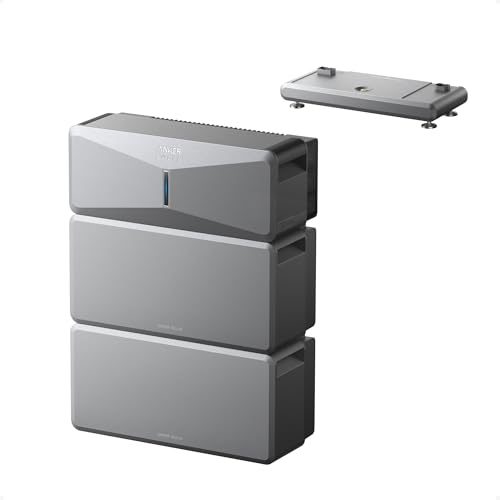
2. Weather-Rated Stackable Kit
Anker SOLIX E10 Prime Off-Grid Kit
12,000 Wh · 7,680W output · LiFePO4 · Our rating 92/100
Current price on Amazon: $5,999.00
The E10 kit starts at 12 kWh in a weather-rated, stackable enclosure that can sit in a garage or a sheltered outdoor spot, roughly where a standby generator would go. Anker states it is UL 9540 certified, which is the listing inspectors look for on an installed battery. Anker says a professional electrician must make the grid connection through its Smart Inlet Box or Power Dock, so budget for that the way you would for a standby install.

3. Gas Option: Dual Fuel Inverter Generator
Champion 4500-Watt Electric Start Dual Fuel Inverter Generator
3,500 running / 4,500 starting W (gasoline) · TT-30R 30A RV, 5-20R duplex, 12V DC · Our rating 65/100
Current price on Amazon: $999.00
If you want fuel-based backup without a standby install, a dual fuel inverter generator and a transfer switch is the Amazon route. This Champion has electric start, a CO Shield shutoff and a published 14 hours at 1/4 load. Its 30A outlet is a TT-30R, which is 120V only, so it connects through a 120V inlet and switch and cannot feed a 240V well pump or central AC. It must run outdoors, away from the house (see the CO section below).

4. Longest Published Inverter Runtime
Westinghouse iGen5000DFc Dual Fuel Inverter Generator
3,900 running / 5,000 starting W (gasoline) · TT-30R 30A RV, 5-20R duplex, 2 USB · Our rating 73/100
Current price on Amazon: $999.00
Amazon showed “Usually ships within 8 to 13 days” when we checked on Nov 9, 2026.
Westinghouse publishes 18 hours at 25% load on a 3.4-gallon tank, the longest runtime among the inverter generators we track, and it has a CO sensor that shuts the engine down. Like the Champion, its 30A outlet is a 120V TT-30R. Norwall’s listing notes it is not for sale in California.

5. Essentials Battery
Jackery HomePower 3600 Plus
3,584 Wh · 3,600W output · LiFePO4 · Our rating 89/100
Amazon listed this unit as currently unavailable when we checked on Nov 9, 2026.
For a 120V transfer switch that covers the fridge, furnace blower, lights and internet, the HomePower 3600 Plus does the job with 3.6 kWh and a 7,200W surge for compressor starts. A single unit is 120V only; Jackery sells a two-unit setup for 240V.

6. Modular Bluetti Option
Bluetti Apex 300
2,765 Wh · 3,840W output · LiFePO4 · Our rating 90/100
Current price on Amazon: $1,847.80
Amazon listed this unit as currently unavailable when we checked on Nov 9, 2026.
The Apex 300 starts smaller, at about 2.8 kWh, but puts out 120V and 240V from one unit and has a long expansion path, so you can buy the base now and add batteries later. At about 84 lb with no wheels, it is built to sit in one place, which suits a home backup role.
For the full portable generator field, including quieter and parallel-capable models, see our best inverter generator comparison.
When a Standby Generator Is the Better Choice
Be honest about your outages. If your area loses power for several days at a time, particularly in winter ice storms when solar output is low, and you have natural gas service, a standby generator is the more practical answer. It runs for days without refueling, it starts on its own, and a 20–24 kW model carries more of the house at once than the battery kits on Amazon. That is the case where we would get a dealer quote for a Generac, Kohler or similar unit.
A battery is the better fit when outages are short or infrequent, when you have solar (or plan to), when the lot is too tight for generator clearances, or when you want backup that also shifts solar into the evening every day. Plenty of homes end up with both: a battery for silent, instant coverage, and a generator held in reserve for the rare long outage.
Verdict: Battery Backup or Generator?
For short outages and homes with solar, a battery is quieter, cleaner and lower-maintenance, and with a smart panel it switches over faster. For long multi-day outages on natural gas, a standby generator is still the stronger choice. If you want battery backup without an installer-only product, the EcoFlow DELTA Pro Ultra X kit is the closest Amazon-sold match to a standby system, rated 91/100 in our scoring, and the weather-rated Anker SOLIX E10 Prime Off-Grid Kit is rated 92/100. Compare either one’s Amazon price plus an electrician’s quote against a standby dealer’s installed quote.
Battery Backup vs Generator FAQ
Which is better, battery backup or a generator?
It depends on how long your outages last. A home battery is silent, burns no fuel, needs no oil changes and, with an automatic panel, takes over within milliseconds, but it runs only as long as its stored energy plus whatever solar panels put back. A natural gas standby generator keeps running as long as the gas supply holds, which makes it the stronger choice for long, multi-day outages, but it costs money to fuel, needs yearly maintenance and makes carbon monoxide, so it must be installed outdoors with set clearances. Many homes with short outages are well served by a battery; homes that lose power for days at a time in winter often still choose a standby generator.
How much does a home battery backup cost compared with a generator?
Published estimates differ, so treat these as planning numbers, not quotes. EnergySage (July 2026) says installing a generator typically costs around $7,000, and Generac lists its 24kW standby unit from $6,559 MSRP before installation. For batteries, EnergySage reports $15,647 for a typical 13.5 kWh home battery before incentives and about $34,000 for whole-home backup. A battery sold on Amazon, such as the EcoFlow DELTA Pro Ultra X or Anker SOLIX E10 kit, costs its retail price plus an electrician and permit.
Can a whole house battery backup replace a generator?
For many homes, yes, as long as it is sized for your loads. A 12 kWh kit runs about 300W of essentials for well over a day by our math, but an average US home drawing about 1,185W empties it in under 9 hours without solar. Standby generators also put out more continuous power: Generac rates its 24kW unit at 21,000W on natural gas, against 12,000W for the DELTA Pro Ultra X kit. To cover central air or several 240V loads at once, you need a high-output battery system, load management, or both.
How long does a battery backup last compared with a generator?
A battery lasts its usable capacity divided by your load. By our math (Wh x 0.85 / watts), a 12,288 Wh kit runs 300W of essentials for about 35 hours, and solar can refill it during the day. A natural gas standby generator runs as long as the gas supply holds. A propane standby is limited by the tank: Generac lists 2.53 gallons per hour at half load for its 24kW unit, or roughly 40 hours per 100 gallons. A portable inverter generator runs one tank at a time; Westinghouse publishes 18 hours at 25% load for the iGen5000DFc.
Is there a tax credit for battery backup or a generator in 2026?
Not a federal residential credit for systems installed in 2026. The Section 25D Residential Clean Energy Credit, which covered battery storage of at least 3 kWh from 2023, does not apply to expenditures made after December 31, 2025, and the IRS treats an expenditure as made when installation is complete. Fuel-burning generators were not on the 25D list of qualified property. Some state and utility programs still offer battery incentives, so ask your installer which ones apply at your address. This is general information, not tax advice.
What is the best Generac alternative?
If you want whole-home backup without a fuel line, the closest systems sold on Amazon are the EcoFlow DELTA Pro Ultra X kit (12,288 Wh, 12,000W of 120/240V output) and the Anker SOLIX E10 kit (12 kWh in a weather-rated enclosure). Both need an electrician to connect them to your panel. If you want fuel-based backup without a standby install, a dual fuel inverter generator with a 120V transfer switch is the lower-cost route. For long multi-day outages with natural gas service, a standby generator is still the stronger choice.