
Cost Guide · Updated November 2026
Tesla Powerwall 3 Price & Installed Cost: What a Quote Includes (2026)
The Tesla Powerwall 3 price is about $11,500 to $16,500 for one installed unit before incentives, based on published 2026 cost guides. EnergySage reports $13,473 as typical (May 2026). Tesla publishes no list price. Powerwall is sold through Tesla and Tesla Certified Installers, who quote each home by address, and it is not sold on Amazon. The 30% federal tax credit ended after 2025, so don’t subtract it. Below: what drives the quote, the specs, Expansion units, Powerwall vs a generator, and whole-home batteries you can buy outright.
As an Amazon Associate, SolarGenAdvisor earns from qualifying purchases made through links on this page, at no additional cost to you.
 By Morgan Chen
Reviewed & approved by Juhi Sahni
|
Published: November 8, 2026
|
Updated:
|
Home battery backup guide
Tesla Powerwall Cost: Published Installed Prices
Three cost guides publish Powerwall 3 figures based on real quotes. They don’t agree exactly because they draw on different markets and dates, but they land in the same band. None of them is a Tesla price: your figure comes from a quote for your address.
| Source | Tesla Powerwall installed cost (one unit, before incentives) | Date |
|---|---|---|
| EnergySage | $13,473 typical, about $998 per kWh, from quotes on its marketplace | May 15, 2026 |
| Joule | $11,500–$16,500 installed, most homeowners $12,000–$15,000; add $1,500–$3,500 if the panel needs an upgrade | May 22, 2026 |
| SolarReviews | $15,300–$16,200 depending on location, about $6,100 of it labor | No exact date given (2026 page) |
Our summary: plan on about $11,500 to $16,500 for one installed Powerwall 3 before any state or utility incentive, with $13,473 as a typical middle figure. We don’t quote a hardware-only price, because Tesla sells Powerwall as an installed system and the published hardware estimates conflict with each other. For the wider question of whether you need an installed battery at all, start with our home battery backup guide, which compares Powerwall with batteries you plug in.
Cost of Installing a Tesla Powerwall: What Drives the Quote
Two homes can get very different quotes for the same battery. These are the factors the cost guides name, each with its source:
- •Labor and project planning. EnergySage says equipment is usually 50–60% of a home battery’s price, with labor and project planning making up most of the rest (EnergySage battery cost guide, updated July 13, 2026). SolarReviews puts Powerwall 3 labor at about $6,100 for one unit (SolarReviews). Joule says labor runs higher in California, New York and Washington and lower in the Southeast and Midwest (Joule).
- •Electrical upgrades. Joule adds $1,500–$3,500 if your main panel needs an upgrade and says this is common in homes with 100A or 150A service (Joule). SolarReviews notes that some homes need a separate backup-loads panel, and that Tesla’s Backup Switch needs less electrical work but is only available in certain states (SolarReviews). EnergySage says the electrical work for a critical-loads panel “can add up” (EnergySage battery cost guide).
- •Permits and utility rules. Joule gives $100–$1,000 for permits, varying by jurisdiction, and notes that some utilities require upgraded metering or a utility-side disconnect (Joule). EnergySage says installers in some states face permitting bottlenecks that can raise prices (EnergySage battery cost guide).
- •Number of units. More storage raises the total, but each added unit costs less than the first, because much of the equipment and labor is shared. Joule says a second Powerwall on the same job costs less than the first, and SolarReviews says Expansion units cost less than a full Powerwall 3 because they have no inverter (Joule; SolarReviews).
- •Solar pairing. EnergySage says installing storage at the same time as solar saves money because the electrical work is done once, while adding a battery later means extra labor and wiring (EnergySage battery cost guide). If you already have solar with its own inverter, Joule says that system usually keeps its existing inverter and connects to the Powerwall as AC-coupled solar (Joule).
- •Incentives. The federal 30% credit no longer applies to 2026 installs (see below). State and utility battery programs vary by location, so ask each installer which ones they include in the quote. Programs change often, so we don’t list rebate amounts here.
All figures are published estimates, not quotes. Ask for two or three itemized quotes that show the battery, gateway or backup switch, panel work, permits and labor on separate lines.
Tesla Powerwall 3 Specifications
Published figures for the US (North American) model. Each row is confirmed by at least two of the sources listed under the table.
| Usable capacity | 13.5 kWh per unit |
| Continuous output | 11.5 kW (US) |
| Chemistry | Lithium iron phosphate (LFP) |
| Solar inverter | Built-in hybrid inverter, up to 20 kW of solar across six MPPT inputs (US) |
| Battery charge rate | 5 kW for a single Powerwall 3 |
| Maximum system | Four 13.5 kWh units, 54 kWh (for example, one Powerwall 3 plus three Expansion units) |
| Warranty | 10 years, 70% capacity retention |
| Without solar | Charges from the grid to cover outages (local grid-charging rules apply) |
| Where to buy | Tesla and Tesla Certified Installers, not Amazon |
Sources: Tesla Powerwall 3 specifications (US install manual) (13.5 kWh, 11.5 kW, 20 kW solar / six MPPTs, 5 kW charge, 10-year warranty); EnergySage Powerwall 3 review (capacity, output, LFP, integrated hybrid inverter, four units/54 kWh, 10 years/70%); SolarReviews (capacity, output, LFP, one Powerwall + three Expansions = 54 kWh, 10 years/70%, installed by certified Tesla installers); Clean Energy Reviews (20 kW solar via six MPPTs, 5 kW charge, US vs Australian versions); Tesla support, “Combining Systems with Powerwall” (grid charging without solar); Tesla support (Certified Installers). Tesla’s US design guide also describes larger multi-Powerwall layouts, up to seven units in total when Expansions are added (Tesla system design guide, Expansion units), so ask your installer what fits your home.
Tesla Powerwall 3 Expansion Pack: What It Is
The Powerwall 3 Expansion is a battery with no inverter. Tesla describes it as “only additional storage (kWh)” (Tesla system design guide, Expansion units). It adds 13.5 kWh per unit, up to three units on one Powerwall 3, and Tesla launched it in the US in late 2024 (pv magazine USA, October 31, 2024). One Powerwall 3 plus three Expansions gives 54 kWh of storage. Because the Expansions have no inverter of their own, they add hours of backup, not more output.
- •Connects only to the lead Powerwall 3, through Tesla’s Expansion Harness. Tesla says Expansions on a follower unit “will not function” (Tesla system design guide, Expansion units).
- •Check compatibility if you already have a Powerwall 3. Tesla lists which Powerwall 3 part numbers accept Expansion units (Tesla system design guide, Expansion units), so ask your installer to confirm yours before you get a quote to add one.
- •Expansion vs a second Powerwall 3. An Expansion adds storage only. A second Powerwall 3 adds both storage and another inverter, so it raises output as well as capacity.
- •Price. Published Expansion prices disagree with each other and some date from the 2024 launch, so we don’t quote one. Ask for it as its own line item in your quote.
Powerwall 3 vs Plug-In Alternatives You Can Buy on Amazon
If you’d rather buy the hardware at a visible retail price and hire an electrician to connect it, these are the closest systems sold on Amazon. Specs come from our product data and Powerwall figures from the sources above. The price row is not like-for-like: the Powerwall figure includes installation, while the Amazon prices are hardware only, before an electrician, permit or smart panel. We don’t say which costs less overall, because that depends on your quotes.
| Tesla Powerwall 3 | EcoFlow DELTA Pro Ultra X | Anker SOLIX E10 Prime Off-Grid Kit | EcoFlow Delta Pro 3 | |
|---|---|---|---|---|
| Capacity | 13.5 kWh usable | 12,288 Wh | 12,000 Wh | 4,096 Wh (base unit) |
| Continuous output | 11.5 kW | 12,000W | 7,680W10,000W surge/turbo | 4,000W8,000W surge/turbo |
| Solar input | Up to 20 kW (built-in inverter) | 10,000W | 9,000W | 2,600W |
| Chemistry | LFP | LiFePO4 | LiFePO4 | LiFePO4 |
| Our rating | Not rated (not sold on Amazon) | 91/100 | 92/100 | 95/100 |
| How you buy it | Quote from Tesla or a Tesla Certified Installer; installation included | Amazon, sold by EcoFlow; an electrician connects it through EcoFlow’s Smart Home Panel 3 or a transfer switch | Amazon; Anker says a professional electrician must handle the grid connection (Smart Inlet Box or Power Dock) | Amazon; plugs into an electrician-installed inlet and transfer switch, or EcoFlow’s Smart Home Panel 2 |
| Price | About $11,500–$16,500 installed, before incentives | $7,899.00hardware only | $5,999.00hardware only | Check price at Amazon →hardware only |
Amazon prices are pulled live and change often. Ratings are AI-synthesized from published specs, logged Amazon prices and Amazon customer reviews, using our awards methodology; they are not hands-on tests. Installation notes: EcoFlow DELTA Pro Ultra X; Anker SOLIX E10 (FAQ: “A professional electrician is required” for the grid connection).
Closest to a Powerwall That Amazon Sells

EcoFlow DELTA Pro Ultra X
91/100 in our scoring · 12,288 Wh · 12,000W
Price: $7,899.00
Weather-Rated Stackable Kit
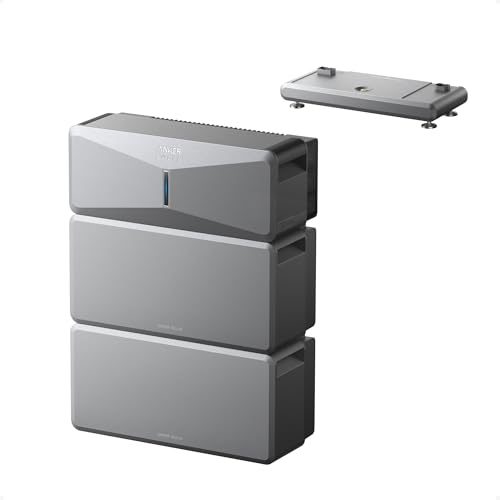
Anker SOLIX E10 Prime Off-Grid Kit
92/100 in our scoring · 12,000 Wh · 7,680W
Price: $5,999.00
Highest-Rated Expandable Unit

EcoFlow Delta Pro 3
95/100 in our scoring · 4,096 Wh · 4,000W
Amazon listed the Delta Pro 3 and its 8 kWh bundle as currently unavailable on Nov 8, 2026.
How long would each one run your house?
Our runtime math: rated Wh × 0.85 ÷ average load in watts. The 0.85 allows for conversion losses. The average US home used about 865 kWh a month in 2024 (EIA), an average draw of roughly 1,185W.
| Battery | Essentials (fridge, router, lights) (~300W) | Average US home (~1,185W) |
|---|---|---|
| Tesla Powerwall 3 (13,500 Wh) | ~38.3 hrs | ~9.7 hrs |
| EcoFlow DELTA Pro Ultra X (12,288 Wh) | ~34.8 hrs | ~8.8 hrs |
| Anker SOLIX E10 Prime Off-Grid Kit (12,000 Wh) | ~34.0 hrs | ~8.6 hrs |
| EcoFlow Delta Pro 3 (4,096 Wh, base unit) | ~11.6 hrs | ~2.9 hrs |
Estimates from rated capacity. Cold weather, inverter idle draw and motor start-ups reduce real hours. To size for your own appliances, see what it takes for a battery to power a house.
Get a Powerwall quote if…
- ✓You want one installer to size, permit and install the whole job, with automatic switchover
- ✓You are adding solar at the same time, which EnergySage says saves on electrical work
- ✓You own the home, plan to stay, and a state or utility battery program applies to you
Consider a retail system if…
- ✓You want to see the hardware price up front and get a separate electrician quote
- ✓You may move and want to take the battery with you (the inlet or transfer switch stays)
- ✓You only need essential circuits covered, where a smaller unit may be enough
Plug-in systems connect through an inlet and a transfer switch for battery backup, or the brand’s own smart panel, installed by an electrician. For the full range of picks, from essentials-only units to whole-house systems, see our best solar generators for home backup.
Tesla Powerwall vs Generator for Home Backup
A battery and a fuel generator both keep the lights on, but they trade off in different ways:
| Powerwall 3 (battery) | Fuel generator (portable or standby) | |
|---|---|---|
| Energy source | Stored energy; recharges from the grid or solar | Gasoline, propane or natural gas |
| How long it runs | Limited by capacity: about 9.7 hours for an average US home per 13.5 kWh unit by our math, longer with solar recharging | As long as fuel lasts |
| Exhaust and placement | No combustion, so no exhaust | Produces carbon monoxide; CPSC warns gasoline portable generators must run outdoors, away from windows and doors |
| Upkeep | No fuel or oil changes | Standby units need yearly maintenance (Generac guidance) |
| Use outside outages | Can store solar for use at night | Backup only |
Sources: CO hazard per CPSC; standby maintenance per Generac; runtime is our math (13,500 Wh × 0.85 ÷ 1,185W).
Can you have both? Tesla’s support documentation says Powerwall and a generator are not directly integrated (Tesla support, “Combining Systems with Powerwall”), and Clean Energy Reviews notes that Powerwall 3 isn’t certified for off-grid use with an external generator (Clean Energy Reviews). If you want a generator for very long outages as well as a battery, ask your installer how they would wire the two before you sign. For the battery-vs-fuel question with portable units, see our solar generator vs gas generator comparison; for whole-home batteries against natural gas standby generators, including installed-cost ranges and runtime, see battery backup vs generator.
Tesla Powerwall Reviews: What Independent Reviewers Report
We don’t rate Powerwall 3, because it isn’t sold on Amazon and our ratings are built from Amazon price and customer-review data. Here is what three independent reviewers publish, in their own terms:
EnergySage (updated May 15, 2026)
EnergySage gives Powerwall 3 its own score of 100/100 and names it the best battery overall. It calls the battery “the benchmark against which everything else is measured.” It credits the high continuous output, which can run large loads like air conditioners and heat pumps, and the integrated inverter. It notes that the battery isn’t the right fit for every roof, that output can be reduced on shaded or complex roofs, and that some markets have installation lead times (EnergySage).
SolarReviews
SolarReviews puts Powerwall first in its best solar batteries list and calls it “absolutely worth it” if you have already decided to add battery storage. It notes that batteries “aren’t for everyone.” It also says Powerwall 3 has fewer sizing steps than modular competitors and takes more planning to pair with an existing solar system (SolarReviews).
Clean Energy Reviews (Jason Svarc, updated November 2024)
Clean Energy Reviews calls Powerwall 3 “a well-engineered, feature-packed system from Tesla.” It says the battery is best suited to new installations and larger homes that need substantial backup. It points to the 5 kW battery charge rate as the spec to know if you want fast recharging (Clean Energy Reviews).
These are summaries of each publication’s own review, linked so you can read the full text. Scores belong to the publication that gave them.
Does the 30% Tax Credit Still Lower the Powerwall Cost?
Not for a Powerwall installed in 2026. The One Big Beautiful Bill Act ended the Section 25D Residential Clean Energy Credit for expenditures made after December 31, 2025. The IRS treats the expenditure as made when installation is completed, so a battery paid for in 2025 but installed in 2026 doesn’t qualify (IRS FAQs; Congressional Research Service). Many Powerwall cost pages written before the change still subtract 30%, so check that a quote or calculator isn’t doing it. State and utility programs are what remain. Our home battery and solar generator tax credit guide covers what 2025 buyers can still claim. This is general information, not tax advice.
Bottom Line on Powerwall 3 Cost
Budget about $11,500 to $16,500 for one installed Powerwall 3 before incentives, with $13,473 as a typical figure. Panel upgrades, permits, extra units and whether you add solar move it from there, and there’s no 30% federal credit to subtract in 2026. Get two or three itemized quotes from Tesla or Tesla Certified Installers.
If you’d rather buy the battery yourself, the EcoFlow DELTA Pro Ultra X is the closest Powerwall-class system on Amazon: 12,288 Wh and 12,000W of output, rated 91/100 in our scoring. The weather-rated Anker SOLIX E10 Prime Off-Grid Kit starts at 12,000 Wh. Compare either one’s Amazon price plus an electrician’s quote against the Powerwall installed quote, not the Amazon price alone.
Tesla Powerwall 3 Cost FAQ
How much is a Tesla Powerwall 3?
About $11,500 to $16,500 for one installed unit before incentives, based on published 2026 cost guides. EnergySage reports $13,473 as typical (May 2026), Joule gives $11,500 to $16,500 (May 2026), and SolarReviews gives $15,300 to $16,200 depending on location. Tesla publishes no list price: Powerwall is sold through Tesla and Tesla Certified Installers, who quote each home by address.
How much does it cost to install a Tesla Powerwall?
Installation is built into the quote rather than priced separately, and it is a large share of it. SolarReviews puts labor for a single unit at about $6,100, and EnergySage says equipment is usually 50 to 60% of a home battery's price, with labor and project planning making up most of the rest. Joule adds $1,500 to $3,500 if your electrical panel needs an upgrade. Permits, extra units and whether you add solar at the same time also change the total.
What is the Tesla Powerwall 3 Expansion pack?
It is a storage-only battery with no inverter that connects to a Powerwall 3 to add capacity. Each Expansion adds 13.5 kWh, and Tesla allows up to three on the lead Powerwall 3, which together with the Powerwall 3 itself reaches 54 kWh. Published Expansion prices disagree, so ask your installer to list it as a separate line item.
What are the Tesla Powerwall 3 specifications?
For the US model: 13.5 kWh of usable capacity, 11.5 kW of continuous output, lithium iron phosphate (LFP) cells, a built-in hybrid solar inverter that accepts up to 20 kW of solar across six MPPT inputs, and a 10-year warranty with 70% capacity retention. A system can reach four 13.5 kWh units (54 kWh).
Tesla Powerwall vs generator: which is better for backup?
They solve different problems. A Powerwall runs silently on stored energy, needs no fuel and can recharge from solar, but its runtime is limited by capacity: by our math one 13.5 kWh unit runs an average US home for roughly 9.7 hours, or about 300W of essentials for more than a day and a half. A fuel generator runs as long as it has fuel, but gasoline portable generators must run outdoors away from the house because of carbon monoxide, and standby units need yearly maintenance. Tesla says Powerwall and a generator are not directly integrated, so ask your installer before planning both.
Can you buy a Tesla Powerwall on Amazon?
No. Powerwall is sold and installed through Tesla and Tesla Certified Installers. The closest whole-home systems sold on Amazon are the EcoFlow DELTA Pro Ultra X kit (12,288 Wh, 12,000W) and the Anker SOLIX E10 kit (12,000 Wh). Both still need an electrician to connect them to your home.