
Cost Guide · Updated November 13, 2026
How Much Does a Whole House Solar Generator Cost?
A whole-house solar generator costs about $899 to $7,899 for the battery system on Amazon today, before solar panels and installation. That spans a 2 kWh starter that runs a fridge and lights on extension cords, a 4 kWh 240V unit such as the EcoFlow Delta Pro 3 that powers essential circuits through a transfer switch, and 12 kWh kits that come closest to a Tesla Powerwall. Add panels and an electrician (one licensed contractor quotes $400 to $2,500+ for a transfer switch install), then compare with $15,647 for a typical installed 13.5 kWh home battery (EnergySage battery cost guide, first half of 2026).
As an Amazon Associate, SolarGenAdvisor earns from qualifying purchases made through links on this page, at no additional cost to you.
 By
Whole-House Solar Generator Cost by Tier
“Whole house” covers three very different purchases. The table shows each tier with today’s Amazon price for the battery system alone. Cost per kWh is our arithmetic: the live price divided by the rated capacity.
| Tier | System | Capacity / output | Amazon price | Cost per kWh |
|---|---|---|---|---|
| Essentials starter About 2 kWh, 120V |
Bluetti Elite 200 V2 | 2,074 Wh / 2,600W | $898.99 | $434/kWh |
| Essential circuits About 4 kWh, 120/240V |
EcoFlow Delta Pro 3 | 4,096 Wh / 4,000W | Check price at Amazon → | — |
| Anker SOLIX F3800 Plus + Home Power Panel | 3,840 Wh / 6,000W | $3,199.99 | $833/kWh | |
| Whole-home kit 12 kWh and up, 120/240V |
Anker SOLIX E10 Prime Off-Grid Kit | 12,000 Wh / 7,680W | $5,999.00 | $500/kWh |
| EcoFlow DELTA Pro Ultra X | 12,288 Wh / 12,000W | $7,899.00 | $643/kWh | |
| Installed home battery 13.5 kWh typical |
Tesla Powerwall 3 and similar | 13.5 kWh (LBNL 2025 median) | $15,647 typical, installed | $1,130/kWh median, installed |
Amazon prices are live and change often. The F3800 Plus row is a bundle that includes Anker’s Home Power Panel. Installed-battery figures: EnergySage battery cost guide (typical 13.5 kWh cost before incentives, quotes from the first half of 2026, updated July 13, 2026); EnergySage H1 2026 market report (battery prices at $1,130/kWh, updated October 7, 2026) and Mercom (median $1,130/kWh in 1H 2026, October 6, 2026); Berkeley Lab, U.S. Distributed Solar and Storage 2026 Data Update (median residential battery 13.5 kWh in 2025, August 2026).
Essentials starter
About 2 kWh, 120V
Fridge, router, lights, phones and a CPAP through extension cords. No electrician needed.
Essential circuits
About 4 kWh, 120/240V
Selected home circuits, including 240V loads such as a well pump, through a transfer switch or smart panel.
Whole-home kit
12 kWh and up, 120/240V
Most of a house for a day or more, wired in by an electrician. The closest Amazon match to an installed Powerwall-class battery.
Not sure which tier you need? Add up your appliances in the solar generator size calculator first; it is the quickest way to avoid paying for capacity you will not use. For the full ranked list of 240V systems, see our best whole-home solar generators.
What You Pay For: Battery, Panels, Hookup, Permit
The Amazon price is only the first line of the bill. A whole-house setup has four parts, and the last two are where quotes vary most.
| Line item | What it is | Cost |
|---|---|---|
| 1. Battery and inverter | The power station or home battery kit itself. | See the tier table above |
| 2. Extra batteries | Same-brand expansion packs that add hours, not output. Only expandable units take them. | Varies by brand; see our extra battery guide |
| 3a. Portable solar panels | Folding panels you set out in an outage. Plan on two to four for a 2–4 kWh unit. | EcoFlow 220W: $549.00 Bluetti PV200: $399.00 |
| 3b. Rooftop solar (optional) | An installed array that recharges the battery every day. | $2.57/W median, about $30,712 for a 12 kW system before incentives |
| 4a. Transfer switch hookup | Inlet box plus a manual transfer switch or interlock, installed by an electrician. | About $400 to $2,500+ (one contractor’s published range) |
| 4b. Smart panel (optional) | Automatic switchover and per-circuit control, e.g. EcoFlow Smart Home Panel 2 for the Delta Pro 3. Installation is extra. | Check price at Amazon → |
| 5. Permit | Most panel work needs one. Your electrician usually pulls it. | Set locally; ask for it on the quote |
Rooftop solar: EnergySage marketplace data for the first half of 2026, reported by Mercom (October 6, 2026) and the EnergySage H1 2026 market report (October 7, 2026). Transfer switch: Brandon Electric (posted July 20, 2026), which puts many professional installs around $1,200 to $1,600 and simpler manual or interlock jobs toward the low end. We found no national average we could confirm from a second independent source, so get an itemized local quote.
The cheapest whole-house setup skips line 4 entirely: a starter unit and extension cords. The moment you want hardwired loads (a well pump, furnace or 240V circuits) you need the hookup. Our transfer switch for solar generators guide explains which switch fits which station.
How Much Does a Solar Battery Cost?
A solar battery costs about $1,130 per kWh installed, the median across home battery quotes in the first half of 2026 (EnergySage H1 2026 market report; Mercom). For the typical 13.5 kWh size, EnergySage reports $15,647 before incentives, and says equipment is usually 50–60% of the price with labor and project planning making up most of the rest (EnergySage battery cost guide, updated July 13, 2026). Berkeley Lab puts the median residential battery at 13.5 kWh in 2025, “the size of a single Tesla PowerWall” (Berkeley Lab, U.S. Distributed Solar and Storage 2026 Data Update).
A plug-in battery bought on Amazon is priced differently: you see the hardware price, and installation is a smaller electrician job. The cost-per-kWh column above is our arithmetic from today’s live prices, so the two numbers are not like for like. The installed figure includes labor, permits and a hybrid inverter, while the Amazon figure needs a hookup added. Even so, the gap is usually wide enough to matter.
Installed home battery
Quoted by an installer
- •Price includes design, labor and permit
- •Switches over automatically, wall-mounted, often outdoors
- •Stays with the house
Line-by-line Powerwall pricing is in our Tesla Powerwall 3 cost guide.
Plug-in solar generator
Bought at a visible retail price
- •Electrician cost is added separately
- •Manual switchover unless you add the brand’s smart panel
- •Moves with you, and doubles as camping or RV power
Our home battery backup guide compares the two side by side.
Cost of a battery for solar panels you already have: if you have rooftop solar, an installer-quoted battery is the one that ties into your existing inverter. A plug-in station charges from its own portable panels or from the wall, and it does not connect to a grid-tied rooftop array. If you are weighing a battery against a standby gas generator instead, our battery backup vs generator comparison covers installed costs for both.
Solar Panels and Battery Cost Together
If you want rooftop solar and a battery in one project, the published 2026 numbers look like this:
- •Solar alone: median $2.57 per watt in the first half of 2026, or $30,712 for a median-sized 12 kW system before incentives (Mercom, citing EnergySage’s marketplace report; EnergySage H1 2026 market report).
- •Adding a battery: among cash-purchased home systems installed in 2025, median prices were $2.1 per watt of solar higher for solar-plus-storage than for solar alone. About 80% of that pricing data comes from California (Berkeley Lab, U.S. Distributed Solar and Storage 2026 Data Update, August 2026).
- •How common it is: 37% of new home solar systems were paired with a battery in 2025, up from 25% in 2024 (Berkeley Lab, U.S. Distributed Solar and Storage 2026 Data Update; pv magazine, October 3, 2026).
- •No federal tax credit now: the IRS says the Residential Clean Energy Credit “is not available for any property placed in service after December 31, 2025” (IRS). Many older cost guides still subtract 30%; ignore that step. Details are in our solar generator tax credit guide.
A plug-in solar generator with portable panels avoids the rooftop project altogether. You give up daily bill savings, since it is a backup system rather than a grid-tied array, but you can see the full hardware cost before you commit. Whether that trade is worth it depends on how often your power goes out; our are solar generators worth it analysis works through it.
What Each Tier Runs: Runtime Math
Price only makes sense next to runtime. We use two loads. Essentials at 300W average is our assumption for a fridge, a freezer, a router, some lights and phone charging. Average home at about 1,232W is the EIA figure of 10,791 kWh a year for a U.S. household (2022) spread over 8,760 hours (EIA). Runtime = rated Wh × 0.85 (inverter loss) ÷ load. Your own home may use far more or less; our guide to how much electricity a house uses breaks the EIA figures down by state, home size and heating fuel.
| System | Capacity | Essentials (300W) | Average home (1,232W) |
|---|---|---|---|
| Bluetti Elite 200 V2 | 2,074 Wh | ~5.9 hours | ~1.4 hours |
| EcoFlow Delta Pro 3 | 4,096 Wh | ~11.6 hours | ~2.8 hours |
| Anker SOLIX F3800 Plus + Home Power Panel | 3,840 Wh | ~10.9 hours | ~2.6 hours |
| Anker SOLIX E10 Prime Off-Grid Kit | 12,000 Wh | ~34.0 hours | ~8.3 hours |
| EcoFlow DELTA Pro Ultra X | 12,288 Wh | ~34.8 hours | ~8.5 hours |
The pattern: a 2 kWh unit gets an essentials load through a night, a 4 kWh unit through a day, and only the 12 kWh kits carry an average home’s full use for most of a day. Central air, an electric range or electric heat shorten every number here. Solar panels stretch them, because each sunny day refills part of the battery.
Delta Pro 3 vs Elite 200 V2: Which Cost Tier Fits?
These two cover the price range most buyers end up choosing from. Specs come from our product data.
| Spec | EcoFlow Delta Pro 3 | Bluetti Elite 200 V2 |
|---|---|---|
| Amazon price | Check price at Amazon → | $898.99 |
| Capacity | 4,096 Wh | 2,073.6 Wh |
| Cost per kWh (our arithmetic) | — | $434/kWh |
| AC output / surge | 4,000W / 8,000W | 2,600W / 3,900W |
| 240V output | Yes | No (120V outlets) |
| Expansion batteries | Yes, up to 12,288 Wh per unit | No |
| Max solar input | 2,600W | 1,000W |
| Weight | 113.5 lb | 53.4 lb |
| Runtime, essentials (300W) | ~11.6 hours | ~5.9 hours |
| Our rating | 95/100 | 91/100 |
Pay for the Delta Pro 3 if…
- •You have a well pump, furnace or other hardwired or 240V loads.
- •You want to add batteries later instead of buying a second unit.
- •You plan to have it wired to your panel.
Save with the Elite 200 V2 if…
- •Your list is a fridge, internet, lights and phones.
- •You do not want an electrician or a permit.
- •You want one unit that also goes camping. At 53.4 lb it can be carried.
Full write-ups: EcoFlow Delta Pro 3 review and Bluetti Elite 200 V2 review.
Best Solar Battery Backup System for Home, by Budget
Each system below was in stock on Amazon when we checked on November 12, 2026. Ratings come from our scoring method, built from published specs and live prices.
Best value for whole-home backup

4,096 Wh · 4,000W output · LiFePO4 · 95/100 in our scoring
The middle tier is where most households land, and the Delta Pro 3 is our top-rated unit there. One 4,096 Wh unit with 4,000W of 120/240V output covers a fridge, furnace blower, well pump and lights through a transfer switch, and it grows to 12,288 Wh per unit with two of EcoFlow’s Delta Pro 3 extra batteries. Our Delta Pro 3 home backup setup guide prices the three ways to connect it.
Lowest cost per kWh to start

2,074 Wh · 2,600W output · LiFePO4 · 91/100 in our scoring
Current price on Amazon: $898.99
If “whole house” really means keeping the fridge, internet and lights on, this is the cheapest way in. 2,073.6 Wh and 2,600W through four 120V outlets, with no hookup cost because you run extension cords. It is not expandable (The Gadgeteer spec table; StorageReview describes 120V outlets only), so buy it for essentials, not as the first piece of a larger system.
Smart panel included in the price

Anker SOLIX F3800 Plus + Home Power Panel
3,840 Wh · 6,000W output · LiFePO4
Current price on Amazon: $3,199.99
This listing bundles the 3,840 Wh, 6,000W Anker SOLIX F3800 Plus with Anker’s Home Power Panel kit, so the automatic-switching hardware is part of the Amazon price instead of a separate line item. Amazon says installation by a licensed electrician is required. The bundle itself is unrated; the F3800 Plus station is rated 90/100 in our scoring.
Lowest cost per kWh at 12 kWh
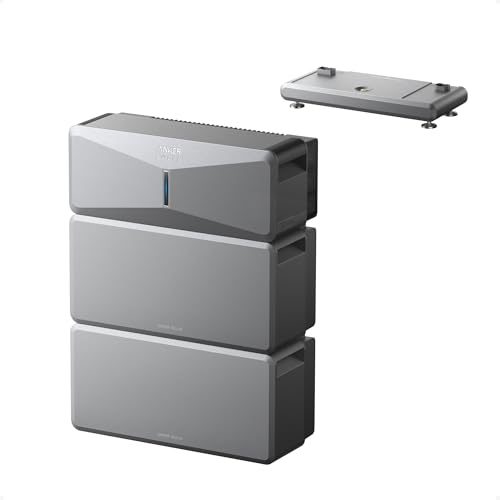
Anker SOLIX E10 Prime Off-Grid Kit
12,000 Wh · 7,680W output · LiFePO4 · 92/100 in our scoring
Current price on Amazon: $5,999.00
The Prime Off-Grid Kit is the E10 module with two batteries for 12 kWh, rated for 7,680W continuous and 9,000W of solar input, and it expands to 90 kWh. It is a stationary system that an electrician connects to your panel, so add that quote to the Amazon price.
Highest output for the money

12,288 Wh · 12,000W output · LiFePO4 · 91/100 in our scoring
Current price on Amazon: $7,899.00
One inverter plus two 6,144 Wh batteries (12,288 Wh) with 12,000W of 120/240V output, the most output of any system on this page. It connects through EcoFlow’s Smart Home Panel 3 or a transfer switch, both extra. Amazon showed limited stock in our November 12 check.
Verdict: What Most Homes Should Budget
For most households, a whole-house solar generator means the middle tier: one 4 kWh, 240V-capable unit wired to essential circuits, plus two to four portable panels. The EcoFlow Delta Pro 3 is our pick there, rated 95/100 in our scoring. It leaves room in the budget for an electrician’s transfer switch install and still comes in well under a typical installed home battery. If you only need essentials on extension cords, the Bluetti Elite 200 V2 costs far less and needs no hookup. Choose a 12 kWh kit only if you truly want most of the house running for a day or more.
Whole-House Solar Generator Cost FAQ
How much does a whole house solar generator cost?
The battery system costs about $899 to $7,899 on Amazon today, from a 2 kWh starter to a 12 kWh whole-home kit. Add portable or rooftop solar panels, and an electrician if you want it wired to your panel. One licensed contractor quotes about $400 to $2,500+ for a transfer switch installation. An installed 13.5 kWh home battery typically costs $15,647 before incentives (EnergySage, first half of 2026).
How much is a solar power generator?
It depends on capacity. Small camping units cost a few hundred dollars, 2 kWh home-essentials units such as the Bluetti Elite 200 V2 sit in the next tier up, and 4 kWh 240V units such as the EcoFlow Delta Pro 3 cost more again; the tier table shows the live price of each. Compare by cost per kWh: divide the price by the capacity in kWh. The tier table on this page does that arithmetic for you from live Amazon prices.
How much does a solar battery cost?
An installed home battery costs a median of about $1,130 per kWh, based on EnergySage marketplace quotes for the first half of 2026, and a typical 13.5 kWh system costs $15,647 before incentives. Plug-in batteries bought on Amazon usually cost less per kWh for the hardware, but you add the electrician’s hookup if you want it wired to your home.
What does a solar panels and battery system cost?
For rooftop solar, EnergySage data put the median at $2.57 per watt in the first half of 2026, or $30,712 for a 12 kW system before incentives. Berkeley Lab found that adding a battery raised median prices by $2.1 per watt of solar for cash-purchased systems installed in 2025. A plug-in solar generator with two to four portable panels costs a fraction of that, but it is a backup system and does not lower your electric bill.
Is there a tax credit for a solar generator or home battery in 2026?
Not the federal one. The IRS says the Residential Clean Energy Credit is not available for any property placed in service after December 31, 2025. Check state and utility programs instead. Our tax credit guide covers the details.
Can a solar generator really power a whole house?
A 12 kWh kit can run most of an average home for several hours to a day, longer with solar recharging. A 4 kWh unit runs essential circuits for about a day. Central air, electric heat and an electric range are the loads that drain any battery fastest, so most owners back up selected circuits rather than everything. Our can a solar generator power a house guide works through it appliance by appliance.