
Buying Guide · Updated October 2026
Can a Solar Generator Power a House? What You Actually Need (2026)
Yes, but it depends on size. A 1,000–2,000 Wh solar generator runs essentials like lights, Wi-Fi and a CPAP. Adding a fridge and well pump takes a 120/240V unit of about 4 kWh, such as the EcoFlow Delta Pro 3. Whole-house power with central AC needs 10+ kWh and 7,000 W+ output, and lasts hours, not days, without solar.
This guide breaks down the three levels of home power, gives real appliance wattage numbers, compares building a DIY solar generator with buying one, and recommends the right generator for your situation.
As an Amazon Associate, SolarGenAdvisor earns from qualifying purchases made through links on this page, at no additional cost to you.
 By
By What Size Solar Generator Powers What?
Three levels cover almost every home. Each row shows an example generator from our database and how long it runs that load on one full charge, before any solar recharge.
| Level | What it powers | Daily use | Startup surge / voltage | Example (capacity / output / surge) | Runs about | See picks |
|---|---|---|---|---|---|---|
| Essentials only | LED lights, router, laptop, phones, CPAP | ~1,560 Wh | Low (under 500 W) 120V is fine |
Anker SOLIX C1000 Gen 2 1,024 Wh · 2,000 W · 3,000 W surge |
~13 hours | Home backup picks → |
| Essentials + fridge + well pump | Everything above, plus refrigerator and a ½ HP well pump | ~3,260 Wh | About 1,500–3,000 W (well pump start) 240V if your pump is 240V |
EcoFlow Delta Pro 3 4,096 Wh · 4,000 W · 8,000 W surge |
~26 hours | 3,000-watt picks → Home backup picks → |
| Whole house incl. central AC | Everything above, plus a 3-ton central AC running ~8 h | ~31,260 Wh | About 8,000 W, up to 17,000+ W worst case (compressor start) 120/240V split-phase required |
Anker SOLIX E10 Prime Off-Grid Kit 12,000 Wh · 7,680 W · 10,000 W surge |
~8 hours | 5,000-watt picks → Whole-home picks → |
Runtime = rated Wh × 0.85 (inverter losses) ÷ average hourly draw from the daily-use column, which comes from the appliance table below (central AC assumed at ~3,500 W for 8 hours). Surge ranges are rules of thumb from generator-sizing guides for well pumps (Industrial Monitor Direct) and 3-ton central AC (Quality Home Air Care: 3,500–4,000 W running, 8,000–9,000 W starting; RenewableWise: worst case 17,000 W+ at startup). For your own equipment, check the nameplate: running amps × volts gives running watts, and locked-rotor amps (LRA) set the startup surge. A compressor surge above the generator's surge rating will trip it even if the running watts fit.
Understanding How Solar Generators Power a House
120V vs. 240V: Most portable solar generators output 120V only, which powers standard household outlets. Whole-home-capable generators output 120/240V split-phase, which is required for well pumps, furnace blowers, electric dryers, EV chargers, and any large hardwired appliance. If your home has 240V circuits you need to back up, your generator must support split-phase output.
Running watts vs. surge watts: Every motor-driven appliance draws a startup surge that can be 3–8x its running wattage. A refrigerator that draws 150W running may spike to 1,200W on startup. Your generator must be able to handle the largest single surge in your home. Surge capacity is often listed separately from continuous output.
Battery capacity (Wh): A watt-hour measures how much energy the battery stores. A 1,000 Wh generator running a 100W load will last about 8 hours after accounting for inverter efficiency losses (~85–90%). Higher is better for longer outages, but capacity also means more weight and cost.
Solar recharging: The key advantage of solar generators is extendable runtime. With sufficient solar panels, a solar generator can run indefinitely during daylight hours. The larger the battery, the more solar input you need to recharge within a single day. Most whole-home systems accept 1,600–6,400W of solar input.
Appliance Wattage Reference Table
Use this table to estimate your total power needs. Running watts are what the appliance draws during normal operation. Surge watts are the startup spike. Daily Wh estimates assume typical cycling or usage patterns.
| Appliance | Running Watts | Surge Watts | Daily Usage | Daily Wh |
|---|---|---|---|---|
| Refrigerator (modern) | 150 W | 1,200 W | 8 hrs (cycling) | 1,200 |
| Freezer (chest) | 200 W | 1,500 W | 8 hrs (cycling) | 1,600 |
| LED Lights (10 bulbs) | 100 W | 100 W | 6 hrs | 600 |
| Router / Modem | 15 W | 15 W | 24 hrs | 360 |
| TV (55" LED) | 100 W | 100 W | 4 hrs | 400 |
| Laptop | 60 W | 60 W | 6 hrs | 360 |
| Well Pump (½ HP) | 1,000 W | 2,500 W | 30 min | 500 |
| Furnace Fan | 500 W | 1,000 W | 6 hrs | 3,000 |
| Sump Pump | 800 W | 1,500 W | 1 hr | 800 |
| Window AC (10k BTU) | 1,200 W | 2,000 W | 8 hrs | 9,600 |
| Microwave (1,000W) | 1,000 W | 1,000 W | 15 min | 250 |
| Coffee Maker | 800 W | 800 W | 15 min | 200 |
| CPAP Machine | 30 W | 60 W | 8 hrs | 240 |
| Electric Water Heater | 4,500 W | 4,500 W | 2 hrs | 9,000 |
Tier 1: Powering Essential Circuits (1,000–2,000 Wh)
Essential circuit backup covers the bare minimum: a refrigerator, a few LED lights, your internet router, and device charging. This is enough to keep food from spoiling and stay connected during an overnight outage.
Daily energy budget: ~2,000–2,500 Wh (fridge 1,200 + lights 600 + router 360 + laptop 360).

Anker SOLIX C1000 Gen 2
1,024 Wh · 2,000 W · 24.9 lb
1,024 Wh with 2,000W output and 49-minute fast charging — enough for fridge + lights + router for 10–14 hours.

Jackery Explorer 1000 V2
1,070 Wh · 1,500 W · 23 lb
1,070 Wh with 1,500W output and 23 lb portability — reliable Jackery ecosystem for weekend outages.
More options: Best Solar Generators for Home Backup →
Tier 2: Partial Home Backup (2,000–5,000 Wh)
Partial home backup covers everything in Tier 1 plus a freezer, sump pump, furnace fan, and TV. This is the sweet spot for most homeowners preparing for multi-day outages — enough to keep the house comfortable without running every appliance.
Daily energy budget: ~6,000–8,000 Wh (fridge 1,200 + freezer 1,600 + furnace 3,000 + lights 600 + router 360 + TV 400).

Bluetti Elite 200 V2
2,074 Wh · 2,600 W · 48.5 lb
2,074 Wh with 2,600W output and 50-minute fast charging. Excellent mid-range with 1,200W solar input.

Anker SOLIX F3000
3,072 Wh · 3,600 W · 91.5 lb
3,072 Wh with 3,600W output and 240V split-phase. Expandable to 24 kWh — grows with your needs.

Jackery Explorer 2000 Plus
2,042 Wh · 3,000 W · 61.5 lb
2,042 Wh with 3,000W output, expandable to 24 kWh. Good for growing your backup over time.
Deeper dive: What Size Solar Generator Do I Need? →
Tier 3: Whole-Home Backup (5,000+ Wh, 240V)
Whole-home backup powers everything in Tier 2 plus 240V appliances: well pumps, window air conditioners, kitchen appliances, and even EV chargers. These systems are larger, heavier, and more expensive — but they come closest to replacing grid power.
Daily energy budget: 10,000–30,000+ Wh depending on AC usage and appliance load.

EcoFlow Delta Pro 3
Best Entry-Level Whole-Home4,096 Wh · 4,000 W · Expandable to 48 kWh
4,096 Wh with 4,000W output and 240V split-phase — the most affordable entry into genuine whole-home backup.

Pecron F5000LFP Power Station
Best Value5,120 Wh · 7,200 W · Expandable to 35.8 kWh
5,120 Wh with 7,200W dual-voltage, 6,400W solar input, expandable to 35.8 kWh — challenger brand value.

Anker SOLIX F3800 Plus
Premier System3,840 Wh · 6,000 W · Expandable to 30+ kWh
3,840 Wh with 6,000W output, expandable to 30+ kWh. Industry-leading 3,200W solar input for fast recharging.
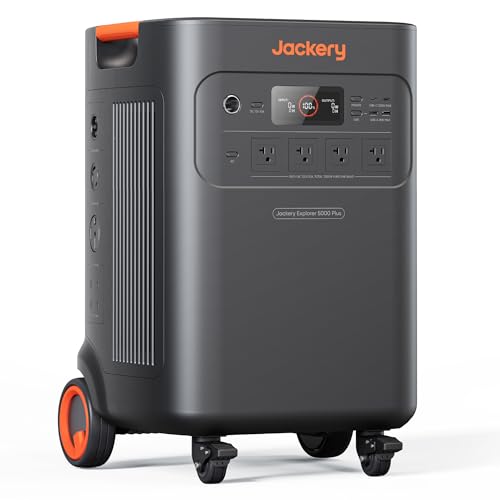
Jackery Solar Generator 5000 Plus
Jackery Flagship5,040 Wh · 7,200 W · Expandable to 60 kWh
5,040 Wh with 7,200W 120/240V output, 10-year LiFePO4 lifespan, expandable to 60 kWh.
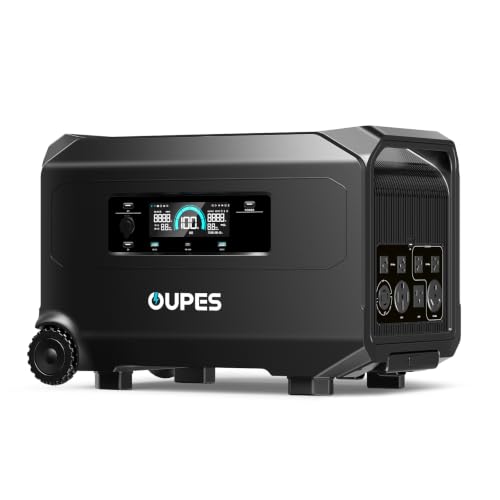
OUPES Guardian 6000
Transfer-Switch Ready4,608 Wh · 6,000 W · Expandable to 41 kWh
4,608 Wh with 6,000W output, built-in transfer switch compatibility, expandable to 41 kWh.
See all whole-home options: Best Whole-Home Solar Generators →
What Size Solar Generator Do You Need? (Sizing Worksheet)
Follow these steps to calculate your exact generator size:
- List your must-run appliances. Be realistic about what you truly need during an outage. Most homes can get by without the electric water heater or clothes dryer for a few days.
- Add running watts. Use the appliance table above. Sum all running watts of the appliances you want to run simultaneously.
- Add the largest surge. Identify the single appliance with the highest startup surge. Your generator's surge rating must exceed this number.
- Calculate daily Wh. Multiply each appliance's running wattage by the hours per day you'll use it, then sum everything.
- Add 20% headroom. Multiply your total daily Wh by 1.2. This accounts for inverter losses and unexpected usage.
Example Calculation
Fridge (150W × 8h = 1,200 Wh) + Freezer (200W × 8h = 1,600 Wh) + Furnace fan (500W × 6h = 3,000 Wh) + Lights (100W × 6h = 600 Wh) + Router (15W × 24h = 360 Wh) = 6,760 Wh daily budget. With 20% headroom: 8,112 Wh minimum capacity. This puts you in Tier 2 territory — look at the Anker SOLIX F3000 (3,072 Wh expandable to 24 kWh) or Bluetti Elite 200 V2 (2,074 Wh).
Full sizing guide: What Size Solar Generator Do I Need? →
DIY Solar Generator vs Buying a Power Station
A do-it-yourself solar power generator is the same machine as a power station, built from separate parts. It can save money and teaches you a lot. It also moves every design, safety and code decision onto you. Here's what a build involves and where the trade-offs land.
What goes into a DIY build
- LiFePO4 battery: 12V, 24V or 48V modules, or individual cells you assemble into a pack. LiFePO4 is the chemistry nearly every commercial unit now uses.
- Battery management system (BMS): protects cells from over-charge, over-discharge, over-current and temperature extremes. Built into most drop-in batteries; a separate board if you build from cells.
- Inverter: a pure sine wave inverter sized for your running watts and startup surge. For 240V loads like a well pump you need a split-phase inverter.
- Solar charge controller: an MPPT controller matched to your panel array's voltage and current. Some hybrid inverters include one.
- Fusing, breakers and disconnects: overcurrent protection on the battery and every branch, DC-rated, with an interrupting rating high enough for the current a lithium bank can deliver into a short. Add a battery disconnect.
- Wiring, enclosure and monitoring: correctly sized cable, lugs, bus bars, a ventilated enclosure, and a shunt or monitor so you know the state of charge.
| Factor | DIY build | Buying a power station |
|---|---|---|
| Cost | Parts can cost less per kWh, especially at large sizes. Tools, spares and mistakes add up. | You pay for engineering, integration and support. Current prices are on our home backup and whole-home pages. |
| Time | Research, sourcing, assembly and testing: days to weeks. | Unbox, charge, use. |
| Safety certification | Parts may each be certified, but UL notes that combining individually certified products in the field does not create a certified (listed) system. | Look for certification to UL 2743, the standard for portable power packs, on the product or its listing. |
| Connecting to your home | The NEC (Article 706) requires a home energy storage system to be listed, and model codes point to UL 9540. A home-built bank won't have that listing. | Connect through an inlet and interlock or a transfer switch installed by a licensed electrician. Whole-home units with manufacturer panels are designed for this. |
| Warranty | Each part has its own warranty, if any. Nobody warrants the system as a whole. | One manufacturer warranty covers battery, inverter and charger together. Check the term for each model. |
| Best for | Experienced builders powering an off-grid cabin, shed or van, with no connection to the home's wiring. | Most households that want outage backup without becoming their own electrical engineer. |
Code and fire-safety cautions
- Listing: NFPA 855 Chapter 15 and IRC Section R328 call for residential energy storage systems of 1 kWh or more to be listed and labeled to UL 9540. UL states that UL 2743 power packs are not certified as stationary home storage systems.
- Size and location limits: in the model code, individual residential storage units are capped at 20 kWh. The total is capped at 40 kWh in utility closets, basements and storage spaces, and 80 kWh in garages and outdoors. Your state or city may change these numbers, so check with your local building department.
- Overcurrent and disconnects: Article 706 requires a readily accessible disconnect for the storage system. Overcurrent devices on DC circuits must be listed for DC use, with an interrupting rating that covers the battery's available fault current.
- Never backfeed an outlet. Whatever you build or buy, connect it to the house only through an interlock or transfer switch installed by a licensed electrician.
Sources: UL Question Corner, IAEI Magazine (UL 2743 vs UL 9540, field-combined products); UL Code Authorities: residential ESS limits (NFPA 855 / IRC R328); Massachusetts ESS guidance for one- and two-family dwellings (example of a state amendment); ExpertCE summary of NEC Article 706 (listing, disconnects, DC overcurrent protection).
Our take: build if you enjoy the project and the system stays off-grid and away from living space. If the goal is to keep your house running during outages, a listed power station connected by an electrician is usually worth the premium once you count your time, and it is the setup building inspectors expect.
Can a Solar Generator Replace a Gas Generator for House Power?
For most homeowners, a solar generator is the superior choice for occasional outage backup. Here's how they compare:
| Factor | Solar Generator | Gas Generator |
|---|---|---|
| Fuel Cost | Free (sunlight) | $10–$30/day (gasoline) |
| Noise | Silent | 60–80 dB (very loud) |
| Emissions | Zero | CO, NOx, fumes |
| Indoor Safe | Yes | No — CO poisoning risk |
| Maintenance | Minimal | Oil changes, carb cleaning, fuel stabilizer |
| Runtime | Limited by battery (extendable with solar) | Unlimited with fuel supply |
Full comparison: Solar Generator vs Gas Generator →
More Buying Guides
Best Whole-Home Solar Generators
Premium systems for full-house backup
Best Solar Generators for Home Backup
Top picks for essential circuit coverage
What Size Solar Generator Do I Need?
Detailed sizing calculator with use-case matching
What Can a Solar Generator Run?
Appliance runtime guide for every capacity tier
Frequently Asked Questions
Can a solar generator power a house?
Yes, but how much of the house depends on size. A 1,000–2,000 Wh unit runs essentials like lights, Wi-Fi and a CPAP. Adding a fridge and well pump takes a 120/240V unit of about 4 kWh, such as the EcoFlow Delta Pro 3. Whole-house power with central AC needs 10+ kWh and 7,000 W+ output, and even then lasts hours, not days, without solar.
Is it cheaper to build a DIY solar generator than to buy a power station?
Often on parts alone, but not always once you count everything. A DIY build means buying a LiFePO4 battery, inverter, charge controller, fuses, breakers, cabling and an enclosure separately, plus tools and your time. You also lose the single system warranty and the safety listing a finished power station carries. For most people who just want backup power, buying is the better value.
Can I connect a DIY solar generator to my house wiring?
Not safely or legally on your own in most places. The NEC requires energy storage systems connected to a home to be listed, which in practice means UL 9540, and combining individually certified parts in the field does not create a listed system. Use a listed product and have a licensed electrician install an inlet and interlock or a transfer switch.
Can a solar generator power a whole house?
Yes, if it has sufficient capacity (5,000+ Wh), AC output (4,000+ W), and 120/240V split-phase capability. Smaller portable units can power essential circuits but not a full electrical panel. For genuine whole-home backup, look at systems like the EcoFlow Delta Pro 3, Anker SOLIX F3000, or Jackery 5000 Plus.
Will a solar generator run a refrigerator?
Yes. Most solar generators over 500 Wh can run a modern refrigerator for 6–24 hours depending on battery capacity. A typical fridge draws ~150W running with ~1,200W startup surge — well within the range of most portable power stations.
Can a solar generator run central air conditioning?
Only the largest whole-home systems. Central AC needs 2,000–5,000W running with a startup surge that can reach 8,000–15,000W — beyond most portable solar generators. A window AC unit (10,000 BTU) is more feasible at ~1,200W running. For central AC, you need a system like the Anker SOLIX E10 Prime (10kW turbo output).
Can a solar generator power a well pump?
Yes, with a 240V-capable generator if your pump is 240V. A ½ HP well pump draws ~1,000W running with up to 2,500W startup surge. Generators with 240V split-phase output like the EcoFlow Delta Pro 3 or Anker SOLIX F3000 can handle this.
How long will a solar generator power my house?
A 4,096 Wh generator (EcoFlow Delta Pro 3) powering a fridge (150W), freezer (200W), furnace fan (500W), and lights (100W) = ~950W total load. 4,096 Wh ÷ 950W = approximately 4.3 hours of continuous runtime. With solar panels, runtime extends indefinitely during daylight hours. Most homes cycle appliances, stretching runtime significantly.
Do I need an electrician to connect a solar generator to my house?
For plug-in appliances like a fridge or space heater: no, just plug them directly into the generator. For connecting to your home's electrical panel via a transfer switch or interlock kit: yes, you should hire a licensed electrician to ensure safe and code-compliant installation.