
Battery Tech Explainer · Updated November 2026
Sodium-Ion Batteries: How They Work and Whether They’re Coming to Power Stations
The short answer (November 2026)
- What it is
- A rechargeable battery that shuttles sodium ions instead of lithium ions between its electrodes, made from more abundant materials [1][3].
- Versus LiFePO4
- Lower energy density today (about 175 Wh/kg at best vs about 205 Wh/kg for LFP cells), with better cold-weather performance claimed by its makers [5][7][4].
- In power stations
- Only one so far: BLUETTI’s 900 Wh Pioneer Na, sold since October 2025 [12][13]. Every other mainstream station we track uses LiFePO4.
- What to get today
- A LiFePO4 power station, unless you need to charge outdoors well below freezing.
As an Amazon Associate, SolarGenAdvisor earns from qualifying purchases made through links on this page, at no additional cost to you. Chemistry figures are published maker and research figures, cited inline; product scores are AI-synthesized from specs and logged Amazon prices, not from testing.
 By
How a Sodium-Ion Battery Works
A sodium-ion battery works on the same principle as the lithium-ion batteries in your phone and power station. Pacific Northwest National Laboratory describes it as an intercalation battery “similar to” lithium-ion [1]: when you charge it, sodium ions leave the cathode, cross the electrolyte and tuck into the anode, while electrons travel the outside circuit. Discharging reverses the trip and powers your load [2]. The difference is the charge carrier, sodium, which comes from abundant materials such as ordinary salt; Argonne notes the US produces a large share of the world’s sodium chloride [3].
Cathode (positive)
Three main families: layered sodium metal oxides, polyanionic compounds (phosphates and similar), and Prussian blue analogues [2]. BLUETTI’s Pioneer Na uses a layered sodium iron manganese oxide [14]; Argonne’s DOE-funded work targets iron- and manganese-rich cathodes with no cobalt [3].
The catch is size. Sodium ions are heavier and larger than lithium ions, and Argonne says sodium-ion batteries “store less energy per unit weight and volume”; the DOE LENS consortium’s goal is first to match, then exceed, the energy density of phosphate-based lithium-ion, which is LiFePO4 [3]. Like LiFePO4, sodium-ion packs need a battery management system (BMS) to balance cells and cut off charging and discharging at safe limits.
Sodium-Ion vs LiFePO4
LiFePO4 (lithium iron phosphate) is the chemistry in nearly every current power station; our LiFePO4 guide covers it in depth and our LiFePO4 vs NMC comparison covers the older alternative. Here is how sodium-ion lines up, using only figures a maker, regulator or analyst has published. Columns are not a lab comparison.
| Factor | Sodium-ion | LiFePO4 (LFP) |
|---|---|---|
| Cell energy density | Up to about 175 Wh/kg in the best mass-produced cells (CATL Naxtra, April 2025) [7][5] | About 205 Wh/kg for current LFP cells, per the IEA analysis [5]. Finished packs and power stations weigh more per Wh than bare cells. |
| Rated cycle life | Maker claims vary: 4,000+ cycles for the Pioneer Na station [12][14]; over 10,000 for CATL’s passenger-car cell [7] | Power station makers typically rate 3,000 to 6,000 cycles to 80% (see our LiFePO4 guide) |
| Charging below freezing | Maker claimPioneer Na charges at -15°C (5°F) [12][15] | Consumer lithium-ion should not be charged below 0°C (32°F) because lithium plates on the anode [16][14]; some stations add battery heaters to work around this. |
| Key materials | No lithium or graphite; the leading chemistries still use nickel and manganese [6][4] | Lithium, iron, phosphate and a graphite anode; no cobalt or nickel in the cathode |
| Upfront cost (grid storage) | About $229/kWh global average, Wood Mackenzie, Nov 2026 [9] | About $200/kWh, same analysis [9] |
| Shipping rules | Regulated like lithium-ion under new UN3551/UN3552 entries (US adoption proposed Feb 2026) [17][18] | UN3480/UN3481 lithium ion battery rules |
| Power stations on sale | One: BLUETTI Pioneer Na [12][13] | Essentially every current model from Jackery, EcoFlow, BLUETTI, Anker and others |
Reading the table: on a cell-level basis, the best sodium-ion is now in LFP’s neighborhood, which is why CATL calls Naxtra “comparable” to LFP [7]. But that 175 Wh/kg cell went into cars, not power stations. The one sodium-ion power station on sale is noticeably heavier per watt-hour than its LiFePO4 sibling (see the comparison below). The IEA’s view is that sodium-ion still trails lithium-ion on energy density and is already good enough for specific jobs, most notably cold climates [4][5].
Cold-Weather Performance
Cold is where sodium-ion makes its strongest case, and also where most of the numbers come from the makers themselves. Read everything in this section as maker claims unless noted.
- Maker claimBLUETTI Pioneer Na: charges at -15°C (5°F) and discharges at -25°C (-13°F); at -25°C it still delivers 80% of its discharge capacity at up to 1,500W; below -10°C (14°F) it recharges only to 60% [12][13].
- Maker figuresHow fast it charges in the cold: BLUETTI’s own table, reported by ESS News, shows about 1,400W of charging at 10–25°C, 245W at 0°C, 159W at -10°C, 132W at -15°C and no charging at -20°C or colder [14]. So it does charge below freezing, but slowly.
- Maker claimCATL Naxtra: retains 90% usable power at -40°C and works from -40°C to +70°C [7][8].
For comparison, Battery University’s guidance is that consumer lithium-ion batteries cannot be charged below 0°C (32°F) [16], and a standard LiFePO4 station follows that rule unless it has a built-in battery heater. TechRadar points out that how sodium-ion cells hold up after many freeze-thaw cycles is still an open question [15].
Runtime math: a 60W load in deep cold
Our arithmetic, using usable Wh × 0.85 inverter efficiency ÷ load watts, on a 60W average load such as a small fridge:
| Station and condition | Usable capacity | Approx. runtime at 60W |
|---|---|---|
| Pioneer Na, mild weather | 900 Wh | about 12.8 h |
| Pioneer Na at -25°C (BLUETTI’s 80% claim) | 720 Wh | about 10.2 h |
| Bluetti Elite 100 V2 (LiFePO4), mild weather | 1,024 Wh | about 14.5 h |
BLUETTI does not publish a matching deep-cold discharge figure for the Elite 100 V2, so we have not estimated one. In ordinary temperatures the LiFePO4 station runs longer because it simply holds more energy. For more on charging in winter, see our cloudy-day and winter charging guide.
Cost and Materials
The long-term pitch is cheaper, less constrained raw materials. Sodium-ion needs no lithium and no graphite [6], uses aluminum instead of copper on the anode side [2], and can use iron- and manganese-based cathodes; PNNL says this combination could help ease supply pressure on lithium, cobalt, nickel and copper [1]. Argonne’s DOE-funded consortium is explicitly working on cathodes without cobalt and, later, without nickel [3].
Two caveats keep this from being a simple “cheaper battery” story:
- The materials win is partial. The IEA says calling sodium-ion a way to cut reliance on critical minerals is “only partially accurate”, because the chemistries closest to market still rely on nickel and manganese, and nearly all sodium-ion factory capacity is in China [4][6][5].
- It isn’t cheaper up front yet. Wood Mackenzie’s November 2026 analysis puts sodium-ion grid storage at about $229/kWh against $200/kWh for LFP, expects cell-level cost parity with LFP around the end of 2026, and module and system parity only after 2030. It does project a 21% lower lifetime cost over a 20-year storage project, and still calls LFP “the bankable choice” for projects being built today [9].
Those are grid-storage figures, not retail power station prices. Nothing published yet shows a sodium-ion power station costing less per watt-hour than a comparable LiFePO4 one.
Safety and Shipping
Sodium-ion is often marketed as the safer battery. The evidence supports a narrower claim.
- Zero-volt storage is real, and it matters for shipping. Faradion says its cells can be fully discharged to zero volts, which it says removes the risk of thermal runaway from a short circuit [19]. The US DOT’s hazmat agency (PHMSA) agrees that sodium-ion “can be discharged to zero volts” and stored and transported fully discharged, “greatly reducing” the hazard [17]. The aluminum anode current collector is what makes this possible [2].
- But regulators still treat it like lithium-ion. In the same proposal, PHMSA says it and the UN dangerous-goods committee agree the lithium-ion rules are appropriate because the two “demonstrate similar risks”; tests at France’s INERIS institute found the gases released in sodium-ion thermal runaway similar to those of some lithium-ion chemistries [17]. The UN created new entries (UN3551 and UN3552), and PHMSA proposed adopting them in the US in February 2026 [17][18].
- Maker safety claims are maker claims. CATL says Naxtra eliminates combustion-supporting factors at the material level [7], and BLUETTI cites thermal stability and less risk of overheating [12]. We found no independent study comparing a sodium-ion power station with a LiFePO4 one.
LiFePO4 already sits at the stable end of lithium chemistries, as our LiFePO4 guide explains, so the practical safety gap between a LiFePO4 station and a sodium-ion one is likely small. For either, buy a unit with recognized safety certification and follow the maker’s charging and storage guidance.
What’s Actually Shipping
As of November 2026, here is what we could confirm from makers’ own pages and dated reporting. We only list a product as sodium-ion if its maker says so.
Portable power stations: one model
BLUETTI’s Pioneer Na is the only portable power station we found whose maker states it uses sodium-ion cells. It was announced at IFA in Berlin in September 2025 and sold through BLUETTI’s own store from October 15, 2025 [13][15]. We don’t score it or link to it on Amazon. Here are BLUETTI’s published figures next to its LiFePO4 sibling from our product data (see our BLUETTI guide for the full lineup):
| Spec | Pioneer Na (sodium-ion) [12] | Bluetti Elite 100 V2 (LiFePO4) |
|---|---|---|
| Capacity | 900 Wh | 1,024 Wh |
| AC output | 1,500W (2,250W lifting mode) | 1,800W |
| Weight | 35 lb | 25 lb |
| Wh per lb (our math) | 25.7 | 41.0 |
| Solar input | 500W | 1,000W |
| Rated cycles | 4,000+ | See our Elite 100 V2 review |
| Cold charging | Maker claimdown to -15°C (5°F) | Standard LiFePO4 rule: not below 0°C (32°F) [16] |
ESS News makes the same point: BLUETTI’s own lithium Elite 100 V2 beats the Pioneer Na on capacity, power and weight, and the sodium-ion unit’s reason to exist is cold-weather charging [14].
Sodium-ion home batteries: not installed in the US yet
Unigrid announced the Na+Casa, a 9.25 kWh sodium-ion home battery, in July 2026. pv magazine reported that it held UN 38.3 transport certification, with UL 9540 and UL 1973 (the listings US permitting usually depends on) still pending, and a US launch expected by the end of 2026 [22][23]. We could not confirm any US installation as of this update. If you need whole-home backup now, our EcoFlow guide and BLUETTI guide cover expandable LiFePO4 systems.
Grid storage and cars: early commercial use
- BYD announced the MC Cube-SIB, a 2.3 MWh sodium-ion storage container, in November 2024. Energy-Storage.news noted that is well under the roughly 5 MWh typical of a lithium-ion container [10][11].
- CATL unveiled Naxtra in April 2025 and, with Changan, showed a sodium-ion passenger car in February 2026 for a mid-2026 market launch in China [7][8].
- Natron Energy, the best-known US sodium-ion maker, ceased operations in September 2025 after failing to raise funding, and its planned North Carolina factory was canceled [20][21].
Outlook: Will Power Stations Switch?
Sodium-ion is moving from pilot lines to real products, but from a small base. Wood Mackenzie counts over 70 GWh of supply agreements [9]; the IEA notes 2025 sodium-ion output was under 1% of lithium-ion’s [6] and calls 2026 a potentially pivotal year as makers scale up [4].
For portable power, our read of the evidence:
- Expect niche models first. The one station on sale is pitched at cold climates, which matches where the IEA says sodium-ion is already competitive [4][14].
- Weight is the hurdle for portables. Until sodium-ion stations close the Wh-per-pound gap shown above, LiFePO4 will stay the default for camping and carry-around use.
- Price parity is a forecast, not a fact. Wood Mackenzie expects system-level parity with LFP only after 2030 [9]. We will update this page if a sodium-ion station appears at a lower price per Wh than LiFePO4.
Sodium-ion is one of several chemistries competing for storage; our guide to battery types puts it alongside lead-acid, NMC and LiFePO4.
What to Buy Today
For almost everyone, the answer is a LiFePO4 power station: it is lighter per watt-hour, sold by every major brand, and rated for thousands of cycles. Waiting for sodium-ion only makes sense if your main need is charging outdoors well below freezing and you can accept more weight. Three LiFePO4 stations in our scoring:
LiFePO4 counterpart to the Pioneer Na
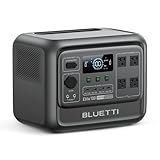
Bluetti Elite 100 V2 · 90/100 in our scoring
1,024 Wh · 1,800W AC · 25 lb · 1,000W solar · LiFePO4
Same maker and the same size class as BLUETTI’s sodium-ion station, so it is the cleanest like-for-like: more capacity and less weight on our product data.
Fast-charging 1 kWh LiFePO4
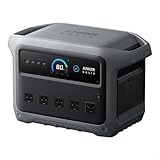
Anker SOLIX C1000 Gen 2 · 92/100 in our scoring
1,024 Wh · 2,000W AC · 24.9 lb · 600W solar · LiFePO4
Price: $469.99
A 1 kWh LiFePO4 station with 2,000W output and a roughly 49-minute AC recharge (maker figure), for buyers who want lithium iron phosphate in a portable size.
Expandable LiFePO4 for home backup

EcoFlow Delta 3 · 88/100 in our scoring
1,024 Wh · 1,800W AC · 27.6 lb · 500W solar · LiFePO4
Price: $599.00
A 1 kWh LiFePO4 station that expands to about 5 kWh with an extra battery and switches over in under 10 ms, the closer fit if you came here looking for a sodium-ion home battery.
Buy LiFePO4 now if…
- You want outage backup, camping or RV power this year
- Weight and size matter to you
- You want the widest choice of models, expansion batteries and accessories
- You charge indoors or above freezing
Look at sodium-ion if…
- You must recharge outdoors well below 32°F, such as an unheated cabin or ice-fishing shelter
- You can accept a heavier unit for the same energy
- You are comfortable relying on maker cold-weather claims that have little independent data behind them yet
Verdict: sodium-ion is coming, but slowly and from cold-climate niches. The LiFePO4 Elite 100 V2 is the like-for-like alternative available today.
Check Price on Amazon →Save to cartSodium-Ion Battery FAQ
What is a sodium-ion battery?
A rechargeable battery that stores energy by moving sodium ions between a cathode and an anode, the same way a lithium-ion battery moves lithium ions. The anode is usually hard carbon rather than graphite, and the cathode is typically a layered sodium metal oxide, a phosphate-type compound or a Prussian blue analogue. It needs no lithium.
Is sodium-ion better than LiFePO4?
Not overall, yet. The best sodium-ion cells reach about 175 Wh/kg against about 205 Wh/kg for LFP cells, per the IEA, and the one sodium-ion power station on sale is heavier per watt-hour than its LiFePO4 sibling. Sodium-ion’s advantage is cold weather: makers claim it charges and discharges at temperatures where standard LiFePO4 cannot be charged.
Can you buy a sodium-ion power station in the US?
Yes, one: BLUETTI’s Pioneer Na, a 900 Wh, 1,500W station sold through BLUETTI’s own store since October 2025. It is the only portable power station we found whose maker says it uses sodium-ion cells. Every other mainstream model from Jackery, EcoFlow, Anker and BLUETTI uses LiFePO4.
Do sodium-ion batteries work in cold weather?
That is their main selling point, though the figures are maker claims. BLUETTI says the Pioneer Na charges at -15°C (5°F), discharges at -25°C (-13°F) and keeps 80% of its discharge capacity there, but recharges only to 60% below -10°C and charges slowly in the cold. CATL says its Naxtra cell keeps 90% usable power at -40°C. Consumer lithium-ion, by contrast, should not be charged below 0°C (32°F).
Are sodium-ion batteries safer than lithium-ion?
They have one clear safety advantage: they can be discharged to zero volts for storage and shipping, which the US DOT’s hazmat agency says greatly reduces the hazard. But regulators still apply lithium-ion rules to them because tests found similar thermal-runaway gases, and maker claims of superior safety have not been independently compared with LiFePO4 power stations. Treat both chemistries with the same care.
How long do sodium-ion batteries last?
Maker ratings vary widely. BLUETTI rates the Pioneer Na for more than 4,000 cycles and a 10-year lifespan, and CATL claims over 10,000 cycles for its passenger-car cell. LiFePO4 power stations are typically rated for 3,000 to 6,000 cycles to 80% capacity. There is little long-term field data on sodium-ion power stations yet.
Are sodium-ion batteries cheaper than lithium?
Not yet at the system level. Wood Mackenzie’s November 2026 analysis puts sodium-ion grid storage at about $229/kWh versus $200/kWh for LFP, with cell-level parity expected around the end of 2026 and system parity after 2030. The materials are more abundant, but the leading chemistries still use nickel and manganese, and nearly all production is in China.
Is there a sodium-ion home battery?
Announced, but not yet installed in US homes as far as we could confirm. Unigrid’s 9.25 kWh Na+Casa was unveiled in July 2026 with UL 9540 and UL 1973 listings still pending and a US launch expected by the end of 2026. For home backup today, an expandable LiFePO4 power station or home battery is the practical choice.
Should I wait for sodium-ion before buying a power station?
Usually no. Sodium-ion power stations are heavier for the same energy, there is only one model, and price parity with LFP is a forecast. A LiFePO4 station bought now should last thousands of cycles. The exception is someone who must recharge outdoors well below freezing, where a sodium-ion model or a LiFePO4 station with a battery heater is worth a look.
Sources
Cell, cycle-life and cold-weather figures are the makers’ and analysts’ published numbers, dated where the source is dated; maker claims are labelled. Runtimes and Wh-per-pound are our arithmetic on those figures and on our product database. Nothing here was measured by us. Last reviewed November 18, 2026.
- Pacific Northwest National Laboratory, Omenya, Xiao, Reed and Li, “Sodium-ion Battery” (Encyclopedia of Energy Storage chapter; PNNL publication page, April 28, 2023)
- Özsin, G., “An overview of sodium-ion batteries as next-generation sustainable electrochemical devices beyond the traditional lithium-ion framework,” Turkish Journal of Chemistry 49(1), 2025 (peer-reviewed review, PMC full text)
- Argonne National Laboratory via Brookhaven National Laboratory newsroom, “A New Era for Batteries: Argonne Leads $50M Sodium-Ion Innovation Push” (DOE LENS consortium), November 2024
- IEA, “Sodium-ion battery momentum grows, but challenges remain” (commentary), February 17, 2026
- Canal Solar, summary of the IEA sodium-ion analysis (energy density: about 175 Wh/kg sodium-ion vs 205 LFP and 255 NMC; capacity concentrated in China), February 18, 2026
- Society of Chemical Industry, “Growth in batteries is strong – but global supply chains must diversify to mitigate risk says IEA” (no lithium or graphite; nickel and manganese in leading chemistries; under 1% of lithium-ion output in 2025), February 2026
- CATL press release, “Naxtra Battery Breakthrough & Dual-Power Architecture” (175 Wh/kg, over 10,000 cycles, 90% usable power at -40°C), April 21, 2025 (Kyodo News PR Wire copy)
- CnEVPost, “CATL’s sodium-ion batteries begin deployment in production-ready passenger vehicles” (Changan, mid-2026 launch), February 5, 2026
- Wood Mackenzie, “Sodium-ion batteries establish a foothold as a lithium alternative” (over 70 GWh of supply agreements; $229/kWh vs $200/kWh LFP upfront), November 5, 2026
- Energy-Storage.news, “BYD launches sodium-ion grid-scale BESS product” (MC Cube-SIB, 2.3 MWh per container), November 27, 2024
- SMM News, “BYD Launches World’s First High-Performance Sodium-Ion Battery Energy Storage System: MC Cube-SIB ESS”, November 2024
- BLUETTI, Pioneer Na sodium-ion portable power station product page (900 Wh, 1,500W, 35 lb, 4,000+ cycles, charge at -15°C, discharge at -25°C)
- ESS News, “Bluetti debuts world’s first sodium-ion portable power station” (IFA 2025; availability from October 15, 2025), September 8, 2025
- ESS News, “Can sodium-ion beat lithium-ion in portable power? The Bluetti Pioneer Na gives it a try” (NaFeMnO₂ cathode, hard-carbon anode; BLUETTI’s cold-charging table), February 13, 2026
- TechRadar Pro, “Bluetti unleashes world’s first sodium-ion portable power station capable of charging your electronics in extreme cold”, September 6, 2025
- Battery University, BU-410: Charging at high and low temperatures (no charge permitted below freezing for consumer lithium-ion; lithium plating)
- US DOT PHMSA, Notice of proposed rulemaking HM-215R, “Hazardous Materials: Harmonization with International Standards” (UN3551/UN3552 sodium ion battery entries), Federal Register document 2026-02575, February 10, 2026
- J. J. Keller, “Proposed HM-215R rule updates HMR with international standards”, February 16, 2026
- Faradion, “Superior safety” (maker claim: cells can be discharged to zero volts for storage and transport)
- ESS News, “US sodium ion specialist Natron Energy ceases operations”, September 3, 2025
- CleanTechnica, “Natron closes its doors, ending job opportunities in Michigan & North Carolina”, September 5, 2025
- pv magazine, “Unigrid unveils sodium-ion residential energy storage systems” (9.25 kWh Na+Casa; UN 38.3 held, UL 9540 and UL 1973 pending; US launch expected by end of 2026), July 8, 2026
- Solar Power World, “UNIGRID unveils 9.25-kWh sodium-ion battery for residential applications”, July 8, 2026
Want LiFePO4 with room to grow? The EcoFlow Delta 3 is currently $599.00 on Amazon and expands to about 5 kWh.
Check Price on Amazon →Save to cart