
Buying Guide · Updated September 2026
Can a Solar Generator Run a Sump Pump? Complete Guide
Yes, but the startup surge is the challenge. Sump pumps draw moderate power while running but spike to 2–3x their rated wattage on startup. A 1/3 HP sump pump needs 800–1,050W running but surges to 1,300–2,500W for a split second. If your generator cannot handle that surge, the pump will not start even if the running wattage is well within spec. This guide covers sump pump wattage by HP rating, surge requirements, runtime during storms, and the best solar generators for keeping your basement dry.
 By
By Sump Pump Wattage: Running vs Surge by HP Rating
The startup surge is the critical number when choosing a power station for sump pump backup. Here is the breakdown by pump size:
| Pump Size | Running Watts | Startup Surge | Min Gen Surge Rating | Min Gen Capacity |
|---|---|---|---|---|
| 1/4 HP | 500–800W | 1,000–1,800W | 2,000W | 1,000 Wh |
| 1/3 HP | 800–1,050W | 1,300–2,500W | 2,500W | 1,500 Wh |
| 1/2 HP | 1,000–1,500W | 2,000–4,000W | 4,000W | 2,000 Wh |
| 3/4 HP | 1,500–2,200W | 3,000–5,500W | 5,500W | 3,000 Wh |
The startup surge lasts 1–3 seconds. Your generator must be rated for the surge, not just the running watts.
⚠️ Critical: Surge Is the Gatekeeper
The most common mistake homeowners make is checking only running watts. A 1/3 HP sump pump running at 900W seems fine for a 1,000W generator — until the pump tries to start and the 2,000W+ surge trips the inverter. Always compare the generator's peak/surge output against the pump's startup surge, not the running watts.
How Long Will a Solar Generator Run a Sump Pump?
Sump pumps run intermittently based on water level, not continuously. During a typical storm, a pump might run for 10–20 seconds every 2–5 minutes. This duty cycle dramatically extends runtime compared to a continuous-draw estimate:
| Scenario | 1,500 Wh | 3,000 Wh | 5,000 Wh |
|---|---|---|---|
| Light rain (cycles every 5 min) | 8–12 hours | 16–24 hours | 28–40 hours |
| Moderate storm (cycles every 2 min) | 3–5 hours | 6–10 hours | 10–18 hours |
| Heavy continuous rain (runs 50% of time) | 1–2 hours | 2–4 hours | 4–7 hours |
Estimates assume a 1/3 HP sump pump at ~900W running. Adding a 200W+ solar panel extends runtime indefinitely during daylight hours.
The duty cycle is your friend here. A sump pump that runs for 15 seconds every 3 minutes has a duty cycle of ~8%. This means your generator's runtime is roughly 12x longer than a continuous-draw calculation would suggest. During light rain, a 1,500 Wh generator can keep a sump pump running through an entire storm cycle.
Best Solar Generators for Sump Pump Backup
These generators have the surge capacity to start a sump pump and enough capacity to run through a storm:
EcoFlow Delta Pro 3
4,000W continuous output (8,000W surge capable) runs any residential sump pump with ease. 4,096 Wh capacity handles a full day of storm pumping. Smart Home Panel provides automatic backup switching — if the power goes out during a storm, the sump pump never stops. Expandable to 48 kWh for multi-day storm coverage.

Anker SOLIX F3000
3,600W output (4,860W surge) easily handles 1/2 HP and most 3/4 HP sump pump startup surges. 3,072 Wh capacity runs a sump pump through moderate storms. 6,000W hyper-fast AC recharge tops up between storm bands. Expandable to 24 kWh.

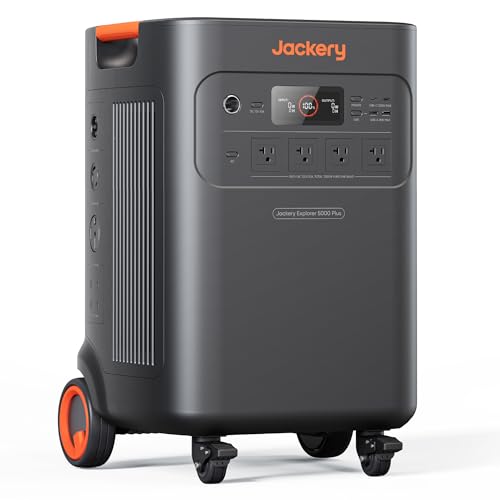
Jackery Solar Generator 5000 Plus
7,200W output handles even the largest 3/4 HP and 1 HP sump pumps with massive margin. 5,040 Wh capacity provides extended storm coverage. 240V split-phase for connecting to home transfer switch.
Sump Pump Power Requirements: What You Need to Know
Why sump pumps are different from other appliances. Unlike a refrigerator (which cycles gently) or a CPAP (which has no surge), sump pumps have a demanding startup characteristic. The water column inside the discharge pipe creates back-pressure that the pump must overcome, and the motor torque required to start spinning under load creates the surge spike. This is why a generator might run a fridge fine but fail to start a sump pump of similar running wattage.
Water-powered backup vs solar generator. Many homes have water-powered sump pump backups that use municipal water pressure. These work without electricity but consume significant water (typically 1–2 gallons of water for every gallon pumped). A solar generator paired with your existing electric pump is more efficient for extended outages and does not waste water.
Battery backup sump pumps vs solar generators. Dedicated battery backup sump pumps (like the Basement Watchdog or Wayne systems) are designed specifically for sump pump use and include a built-in battery. However, they typically provide only 4–8 hours of runtime and the batteries wear out every 2–4 years. A solar generator is a more versatile solution: it powers the sump pump during storms and can also run your fridge, lights, and other essentials during the same outage.
More Storm & Outage Resources
Best Solar Generators for Power Outages
Top picks for storm backup and essential circuit coverage
Solar Generators for Hurricanes
Hurricane-specific preparedness and equipment recommendations
Can a Solar Generator Power a House?
Home backup capacity guide with appliance wattage tables
What Size Solar Generator Do I Need?
Step-by-step sizing guide for any appliance load
Frequently Asked Questions
What size solar generator do I need to run a sump pump?
For a standard 1/3 HP sump pump (800–1,050W running, 1,300–2,500W surge), you need a generator rated for at least 2,500W peak surge output and 1,500 Wh capacity. The EcoFlow Delta Pro 3 (4,000W, 4,096 Wh) or Anker SOLIX F3000 (3,600W, 3,072 Wh) are excellent choices. Smaller 1/4 HP pumps may work with a 2,000W surge-rated generator, but always check your specific pump's startup surge.
How long will a solar generator run a sump pump during a storm?
During light rain where the pump cycles every 5 minutes, a 3,000 Wh generator runs a 1/3 HP sump pump for 16–24 hours. During heavy continuous rain, runtime drops to 2–4 hours. Adding a 200W+ solar panel extends runtime indefinitely. The pump's intermittent duty cycle (typically 5–15% runtime) means real-world storm coverage is 6–12x longer than continuous-draw estimates.
Will a Jackery 1000 V2 run a sump pump?
No, the Jackery Explorer 1000 V2 (1,500W continuous, 3,000W surge) may start a small 1/4 HP sump pump under ideal conditions, but it does not have enough sustained capacity or surge margin for reliable sump pump operation. Sump pumps need a generator with at least 2,500W surge and preferably 1,500+ Wh capacity. The Jackery 1000 V2 is better suited for fridge, CPAP, and electronics backup during outages.
Can a solar generator replace my battery backup sump pump?
A solar generator can serve as sump pump backup but is not a direct replacement for a dedicated backup system. A solar generator is more versatile (it powers other appliances too) and lasts longer per charge, but it requires manual setup during a storm. Dedicated battery backup sump pumps activate automatically when power fails. The best approach: keep your existing backup battery system and add a solar generator for extended outage coverage that also powers other essentials.
What happens if my generator's surge rating is too low for my sump pump?
The generator's inverter will trip or shut down when the pump tries to start. This usually triggers an overload protection circuit, and the generator may need to be manually reset. The pump will not run, and if this happens during a storm, your basement could flood. Always choose a generator with a surge rating at least 20–30% above your pump's measured startup surge. When in doubt, size up.
Do I need a pure sine wave generator for my sump pump?
Yes. Sump pump motors need clean sine wave power to run efficiently and reliably. Modified sine wave inverters can cause pump motors to overheat, run at reduced speed, or fail to start. All modern solar generators use pure sine wave inverters, so this is not a concern with any of the recommended models above.