SolarGenAdvisor SolarGenAdvisor

Guide · Last checked October 31, 2026

Plug-In Solar & Balcony Solar: Is It Legal in Your State?

Plug-in solar (also called balcony solar) has its own state law in 10 states as of October 31, 2026: Utah, Maine, Virginia, Colorado, Maryland, Connecticut, New Hampshire, Vermont, New Jersey and California. Most cap a system at 1,200 watts (Colorado allows 1,920) and require a lab-certified device that shuts off in an outage. The rules are already in force in six of them; New Hampshire, New Jersey and California start in 2027, and sources differ on Virginia’s start date. New York’s bill passed but is not signed. Everywhere else there is no plug-in law yet.

As an Amazon Associate, SolarGenAdvisor earns from qualifying purchases made through links on this page, at no additional cost to you.

By Taylor Kim Reviewed & approved by Juhi Sahni Published: October 31, 2026 Updated:

Last checked: October 31, 2026

This Is Not Legal Advice — Check With Your Utility

This page summarizes state laws as we read them on the date above, using each legislature’s own bill text wherever we could get it, and named news sources where we could not. Laws change, regulators write rules that add detail, and your utility, landlord, HOA and local building department can each have a say. Before you connect anything to your home’s wiring, confirm with your utility and read the law for your state using the source link in the table.

The Short Answer by Status

In force now

Utah, Maine, Colorado, Maryland, Connecticut, Vermont

A certified device within the state’s wattage cap can be plugged in without a utility interconnection agreement. Some states still require a notice to the utility, and Maine requires an electrician above 420W (see the table).

Signed, starts later

California, New Hampshire (Jan 1, 2027); New Jersey (Mar 1, 2027); Virginia (sources differ)

The law exists, but the protections are not active until the effective date. Until then, normal utility interconnection rules apply.

Pending

New York, Massachusetts, Illinois

New York’s bill passed both chambers but is unsigned. Massachusetts is in conference committee; Illinois stalled in the Senate.

Everywhere else

No plug-in solar law

Anything that sends power into your home wiring generally falls under the utility’s normal interconnection rules. A power station charged by a portable panel needs no permission anywhere.

US Balcony Solar Legislation: State-by-State Table

Enacted laws, in the order they were signed. “Cap” is the maximum output the law allows. “Utility notice” is whether you have to (or may be asked to) tell your utility; none of these states lets the utility demand approval or an interconnection agreement for a compliant device. Last checked October 31, 2026.

State & law Status & dates Cap Certification Utility notice Source
Utah
HB 340 (2025)
In force since May 7, 2025 1,200W; standard 120V outlet UL or equivalent NRTL; must not energize the building in an outage None required; no utility approval or fees Enrolled bill
Maine
LD 1730 (P.L. 2026, ch. 644)
In force; signed Apr 6, 2026. Non-emergency law effective 90 days after adjournment (summer 2026; sources give mid- or late July) Up to 420W per address as-is; 421–1,200W only if installed by a licensed electrician on a dedicated single-outlet circuit UL 3700, a comparable NRTL listing, or configured per the NEC Required within 30 days if over 420W Chaptered law
Virginia
HB 395 (Acts 2026, ch. 1052)
Signed Apr 22, 2026. Sources differ on the start date: VPM and the bill tracker say Jan 1, 2027; some outlets say July 1, 2026 1,200W Nationally recognized lab certification per bill summaries; a state work group is reviewing safety standards Required, on a form from the State Corporation Commission LIS bill page; VPM
Colorado
HB26-1007
In force; signed May 7, 2026, effective Aug 12, 2026. HOA/landlord protections and the UL sales rule start Jan 1, 2027 1,920W to the grid; one system per address, one device per outlet Labeled and listed by an NRTL; from 2027, units over 391W must be UL listed to be sold Utility may require notice of presence and size Bill page & text
Maryland
HB 1532 (2026 ch. 353)
In force; signed and effective May 12, 2026 (emergency bill) 1,200W; one per meter; residential only UL or equivalent NRTL; units up to 391W exempt from listing rules that would require wiring changes Required before installing, with a certification of safety features and capacity MGA bill page
Connecticut
HB 5340 (P.A. 26-127, §9)
In force; approved June 4, 2026, effective Oct 1, 2026 1,200W; one per meter; 120V outlet UL or equivalent NRTL, plus UL 1741, NEC and IEEE 1547 None required; no approval or fees Public Act text
New Hampshire
SB 540 (2026 ch. 262)
Signed July 2, 2026; effective Jan 1, 2027. The building-code section waits until the Department of Energy certifies a national standard exists 1,200W AC; one per metered customer NRTL-certified to national safety standards Utility may set up an after-install notice (informational only) Chaptered text
Vermont
S.202 (Act 149)
In force; signed June 16, 2026, effective July 1, 2026 1,200W combined per meter; smart meter required UL 3700 or equivalent NRTL; IEEE 1547-2018 None to the utility; tenants give the landlord 10 days’ notice Bill status & Act
New Jersey
S2368/A4836, Garden State Balcony Solar Act
Signed Sep 1, 2026; effective Mar 1, 2027 1,200W UL 3700 or a comparable listing (reported); sources differ on what the 400W small-unit exemption covers No utility approval or permit; renters notify the landlord or HOA pv magazine; Solar Power World
California
SB 868
Signed Sep 30, 2026; effective Jan 1, 2027. Interconnection exemption sunsets Jan 1, 2030 1,200W AC per dwelling UL or equivalent lab; state and national electrical codes Utility may ask you to notify it (free online form) Governor’s office; pv magazine USA

NRTL = nationally recognized testing laboratory (UL Solutions, Intertek, CSA and others). Where a row links a legislature page, we read the bill or chaptered text itself; New Jersey and the California details are from the named news reports because the statute text was not available to us. Some outlets list Connecticut as signed May 20, 2026; the Public Act itself records the governor’s approval on June 4, 2026.

Pending or Stalled Bills

State & bill Where it stands Source
New York
SUNNY Act, A9111C / S8512C
Passed both chambers May 28, 2026 with a 1,200W cap. Not signed as of our check; the governor has not acted. NY Senate
Massachusetts
H.5175 energy affordability bill
House and Senate versions both address plug-in solar but differ; a conference committee was appointed July 16, 2026, with no final action recorded. MA Legislature
Illinois
SB 3104
Cleared the Senate energy committee in March 2026 but was re-referred to Assignments on May 22 without a floor vote. Reporting says it may return in the fall veto session. NPR Illinois
Oklahoma
HB 4060
Passed the House 88–4 on March 24, 2026; referred to the Senate Energy committee with no further action listed. OK Legislature
Hawaii
SB 2902
Advanced through the Senate and a House committee in 2026 (that version limited devices to condominiums) but was not enacted. House committee report

State Notes: The Details That Trip People Up

Is balcony solar legal in California?

From January 1, 2027, yes. SB 868 was on the governor’s September 30, 2026 list of signed bills. According to pv magazine USA and Solar.com, a dwelling can run devices with up to 1,200W of combined AC output, they must be certified by UL or an equivalent lab and shut off automatically in a grid outage, and utilities cannot charge fees or require permission. The interconnection exemption is set to expire on January 1, 2030 unless extended. Solar.com’s October 2026 summary lists California among the states whose law adds no renter or HOA protection, so your lease and HOA rules still apply. If you are in a PSPS area, note that a plug-in kit shuts off with the grid; see our California PSPS backup guide for what does keep running.

Utah balcony solar

Utah was first. HB 340 took effect May 7, 2025 and defines a “portable solar generation device” as up to 1,200W, connected through a standard 120V outlet, meeting the current National Electrical Code and certified by UL or an equivalent NRTL. It must include a feature that keeps it from energizing the building during an outage, and it is excluded from net metering. The law came before a certification existed for these products: Grist reported that no plug-in system had been UL-certified when it covered the law in 2026, so check that a product’s certification covers plug-in use, not just one component.

Balcony solar in Colorado

Colorado has the highest cap in our table: 1,920W to the grid, one system per address, and never more than one device on a single wall outlet. The law took effect August 12, 2026. From January 1, 2027, landlords, HOAs and covenants cannot unreasonably ban a device, though they can set reasonable rules on notice, location and fire or overload risk, and units over 391W sold in the state must be UL labeled and listed.

NJ balcony solar

New Jersey’s Garden State Balcony Solar Act was signed September 1, 2026 and takes effect March 1, 2027, giving the Board of Public Utilities time to implement it. pv magazine reports a 1,200W cap, a UL 3700 (or comparable) listing requirement, no permit or utility approval, and that landlords and HOAs cannot prohibit compliant devices but may set reasonable rules on size and placement. Reports differ on exactly what a 400W-and-under exemption waives, so wait for the BPU’s implementation before relying on it.

Balcony solar in Maryland

Maryland folded plug-in solar into a larger utility bill, HB 1532, which took effect on enactment, May 12, 2026. The text allows one system of up to 1,200W per electric meter for residential use, certified by UL or an equivalent lab. Unlike most states, Maryland requires you to notify your utility before installing and to give it a certification of the system’s safety features and maximum capacity; if the system needs an automatic locking disconnect switch, you pay for it.

Maine, Virginia, Connecticut, New Hampshire and Vermont

Maine is the only state with a two-tier cap: 420W is plug-and-go, while anything up to 1,200W needs a licensed electrician, a dedicated single-outlet circuit and a notice to the utility within 30 days. Virginia requires a notice on a State Corporation Commission form and, per VPM, bars localities and landlords from banning the panels outright. Connecticut’s law requires a warning that generation above your use is billed as usage unless you have a net meter. New Hampshire’s law starts January 1, 2027 and directs the Department of Energy to publish consumer guidance, including meter compatibility. Vermont requires a smart meter and gives landlords 10 days to respond with reasonable conditions.

What Is Plug-In Solar?

A plug-in solar kit is one to a few solar panels wired to a microinverter that turns their DC output into household AC power and feeds it into your home through an ordinary wall outlet. The power is used by whatever is running in your home at that moment, which lowers what you draw from the grid. That is the whole idea, and it is why the state laws define these devices by the outlet connection and an output cap rather than by panel size.

Panels

Usually 400–1,200W total, hung on a railing, set on a patio or mounted on a wall.

Microinverter

Converts DC to grid-synchronized AC and must shut off when the grid goes down.

Outlet

The cord plugs into a standard 120V receptacle; some states require a dedicated circuit above a lower threshold.

How it differs from a solar generator. A portable power station with a portable panel never connects to your home wiring. The panel charges the battery, and you plug appliances into the battery. Nothing flows back into your walls, so no plug-in law, utility notice or interconnection rule applies. Our solar panel setup guide covers how those systems are wired.

Is Plug-In Solar Safe? The Three Real Risks

Home branch circuits were designed for power that flows one way, from the breaker panel to your appliances. A plug-in kit sends power the other way, and that creates specific risks that UL Solutions and the state laws address.

1

Hidden circuit overload

The breaker only measures current coming from the panel. With a plug-in kit feeding the same circuit, UL warns that “the combined current from the utility and PIPV source can exceed conductor ratings without tripping the circuit breaker” (UL Solutions; pv magazine USA). That is why the output caps exist, and why Maine requires a dedicated circuit above 420W.

2

Backfeed during an outage

If a kit kept producing power while the grid was down, it could energize lines that crews believe are dead. Utah, Colorado, Connecticut, Vermont and California write an outage shutoff directly into the law, and Maine’s requires inverters that shut off after 0.2 seconds. This is the same anti-islanding rule that makes rooftop systems go dark in a blackout, explained in do solar panels work in a power outage?

3

Live plug prongs and GFCI blind spots

UL notes that on uncertified designs “accessible plug blades can become energized when exposed to sunlight,” and that two-way current can keep a GFCI from detecting a fault on outdoor circuits. Certified equipment is designed to keep the plug dead when unplugged. Never build a “suicide cord” (male-to-male plug) setup.

UL 3700: The New Certification, and Why So Few Products Have It

UL 3700 is the Outline of Investigation for Interactive Plug-In PV (PIPV) Equipment and Systems. Its first edition is dated December 11, 2025 (ANSI webstore listing), and UL Solutions launched a certification program around it in January 2026. It covers protection against overloads, reverse current and contact with live parts, plus installation and labeling.

Certifications have been slow to arrive. In September 2026, Solar.com listed three: the Hoymiles HiFlow Pro microinverter (July 2026), the APsystems EZ1 microinverter (CSA certified to UL 3700) and the Mango Power S kit, which pv magazine USA reports was certified by Intertek. Two of those are inverter components, not complete kits. If a listing claims UL 3700, look the exact model up in the certifier’s public directory (UL, Intertek or CSA) rather than trusting the seller’s description.

Renters, Landlords and HOAs

A state law that exempts you from the utility does not automatically override your lease or HOA rules. Only some states address that directly:

  • •Colorado (from Jan 1, 2027): unreasonable bans are void; reasonable restrictions on notice, location and safety are allowed.
  • •Vermont: tenants give 10 days’ notice; landlords may set reasonable conditions but are not required to pay for electrical work. Deed restrictions cannot prohibit the devices.
  • •New Jersey (from Mar 1, 2027) and Virginia: landlords cannot ban compliant devices outright but can limit size and placement (Virginia’s rule is reported to apply to larger landlords).
  • •Maine: on a building you do not own, you must not compromise the structure or break building, fire or zoning codes, and you must restore it when you remove the system.
  • •Utah, Maryland, Connecticut, New Hampshire, California: no renter or HOA protection in the law, per Solar.com’s October 2026 summary. Get permission in writing.

How Much Power Does a Plug-In Kit Really Make?

Less than the label suggests, because balconies are rarely ideal. Using NREL’s PVWatts calculator, Solar.com estimated a south-facing, unshaded 800W kit at:

City Hung on a railing (kWh/yr) Tilted 30° (kWh/yr)
Los Angeles7941,366
Denver8891,316
Salt Lake City8001,219
Baltimore7451,139
Newark, NJ7111,072

Shade from a balcony above or the railing itself lowers those numbers. What it is worth depends on your rate and on using the power as it is produced: Utah, Maine and Vermont exclude these devices from net metering, and Connecticut’s law says excess generation is billed as usage without a net meter. We do not publish a savings figure because it varies too much by home.

Should You Buy a Plug-In Solar Kit Now? Our Verdict

We are not recommending any plug-in kit yet. The kits we found on Amazon that mention UL 3700 do so only in the seller’s own listing copy, and we could not match them to an entry in a certifier’s directory. Since most state laws make certification the condition for the exemption, an uncertified kit may not be legal to connect even in a state with a law. We will add kit picks here once certified products are listed on Amazon.

What works in every state today is a portable power station charged by a portable panel. It is not grid-tied plug-in solar: it does not reduce your meter reading directly, and nothing feeds back into your home wiring. It does store the solar energy, so you can use it in the evening or during an outage, which a plug-in kit without a battery cannot do. It also needs no landlord wiring work and moves with you. The quick math: usable energy is roughly capacity × 0.85 ÷ load in watts.

Power station Capacity Solar input Fridge (190W avg) Router + laptop (60W) Price
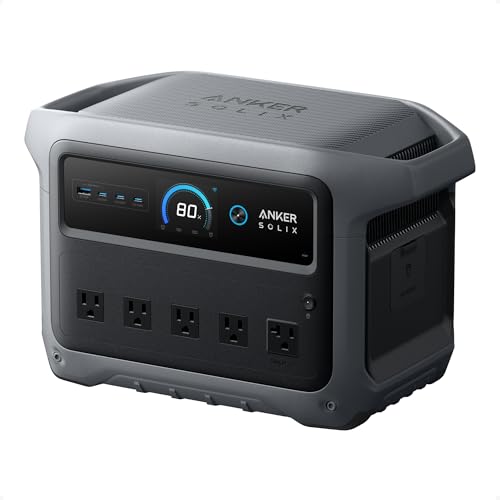
Anker SOLIX C1000 Gen 2 1,024 Wh 600W ~4.6 h ~14.5 h $529.99
Jackery Explorer 1000 V2 1,070 Wh 400W ~4.8 h ~15.2 h $559.00
EcoFlow Delta 3 Plus 1,024 Wh 1,000W ~4.6 h ~14.5 h $719.00

Runtimes are estimates from rated capacity with ~15% conversion loss; real fridge draw varies with model and temperature. A single 100W panel adds roughly 0.4–0.5 kWh on a good day, so it extends runtime rather than replacing a wall charge. Compare more panels in our best portable solar panels guide.

Our pick for the every-state alternative

Anker SOLIX C1000 Gen 2 + Anker SOLIX PS100 Bifacial Solar Panel

Anker’s published figure is a roughly 49-minute wall charge, and 2,000W of output covers a fridge, microwave or coffee maker. It pairs with the lightest panel we track. Read the full Anker SOLIX C1000 Gen 2 review.

None of these connect to your home’s wiring. Panels charge the station; you plug appliances into the station. That is why they need no plug-in solar law, no utility notice and no landlord wiring work. Specs and ratings come from our product database; prices are live.

Anker SOLIX C1000 Gen 2
Best all-round alternative

Anker SOLIX C1000 Gen 2

92/100
1,024 Wh 2,000W output 3,000W surge 600W solar in 24.9 lb

1,024 Wh of LiFePO4 storage with 2,000W of AC output and up to 600W of solar input. Unlike a plug-in kit it stores what the panel makes, so the energy is there after dark and during an outage. Pair it with the PS100 below or another compatible panel.

$529.99Current price on Amazon
Check Price on Amazon →
Lowest we’ve logged: $499.98 (Oct 24) · our log since Oct 13
Anker SOLIX PS100 Bifacial Solar Panel
Lightest panel to pair

Anker SOLIX PS100 Bifacial Solar Panel

78/100
100W panel IP68 6.2 lb

100W bifacial folding panel with an XT60 output, made for Anker SOLIX stations. It sits on a balcony or patio and charges the station, not your wall outlet, so no state plug-in law applies. One 100W panel is a top-up, not a full daily refill.

$249.99Current price on Amazon
Check Price on Amazon →
At our lowest logged price — $249.99 · our log since Oct 19
Jackery Explorer 1000 V2
Simplest to live with

Jackery Explorer 1000 V2

93/100
1,070 Wh 1,500W output 3,000W surge 400W solar in 23 lb

1,070 Wh with 1,500W of output and 400W of solar input at 23 lb. A good fit for renters who want solar-charged backup for a fridge, router and lights without asking a landlord or utility for anything.

$559.00Current price on Amazon
Check Price on Amazon →
Lowest we’ve logged: $469.00 (Oct 6) · our log since Sep 18
EcoFlow Delta 3 Plus
Most solar input in this group

EcoFlow Delta 3 Plus

89/100
1,024 Wh 1,800W output 2,400W surge 1,000W solar in 26 lb

1,024 Wh with 1,800W of output and up to 1,000W of solar input, expandable with extra batteries. The extra solar headroom matters if you plan to grow from one balcony panel to several.

$719.00Current price on Amazon
Check Price on Amazon →
Lowest we’ve logged: $654.00 (Sep 24) · our log since Sep 18

Prices shown are the current Amazon price. Badges come from our own daily price log — see the solar generator price tracker; they describe what we observed on the listing, not a manufacturer claim or a prediction.

How We Checked This Page

We read the enrolled or chaptered bill text from the Utah, Maine, Colorado, Maryland, Connecticut, New Hampshire and Vermont legislatures; used the California governor’s signed-bill list with pv magazine USA and Solar.com for SB 868; used VPM and the bill’s tracker record for Virginia because the state’s bill site did not load the text for us; and used pv magazine and Solar Power World reporting for New Jersey. Pending-bill status comes from each legislature’s bill page or, for Illinois, NPR Illinois reporting. Where sources disagreed, the table says so. Last checked October 31, 2026.

Plug-In Solar FAQ

Is plug-in solar legal in my state?

As of October 31, 2026, ten states have a law specifically allowing plug-in (balcony) solar: Utah, Maine, Virginia, Colorado, Maryland, Connecticut, New Hampshire, Vermont, New Jersey and California. The rules are already in force in Utah, Maine, Colorado, Maryland, Connecticut and Vermont. New Hampshire, New Jersey and California take effect in 2027, and sources differ on whether Virginia's device rules started July 1, 2026 or start January 1, 2027. New York's SUNNY Act has passed the legislature but is not signed. Everywhere else there is no plug-in-specific law, so check with your utility before connecting anything.

Is balcony solar legal in California?

Yes, starting January 1, 2027. Governor Newsom signed SB 868 on September 30, 2026. It allows plug-in devices with a combined AC output of up to 1,200 watts per dwelling, requires certification by UL or an equivalent testing laboratory, and exempts compliant devices from interconnection agreements. Utilities can ask owners to notify them. The interconnection exemption sunsets on January 1, 2030 unless lawmakers extend it.

What is UL 3700 and do I need it?

UL 3700 is the safety outline for interactive plug-in PV equipment and systems, published in December 2025. Vermont and Maine name it in their laws, New Jersey requires it or a comparable listing, and most other states require certification by UL or another nationally recognized testing laboratory. Very few products had earned it by fall 2026: Solar.com lists the Hoymiles HiFlow Pro microinverter, the APsystems EZ1 microinverter and the Mango Power S kit. Check the certifier's public directory for the exact model before you buy.

Can I plug a solar panel into a wall outlet in a state without a plug-in solar law?

Not without talking to your utility first. Without a specific law, a device that sends power into your home wiring is generally treated like any other grid-connected generator, which normally needs an interconnection agreement. A portable power station charged by a portable panel is different: it never connects to your home wiring, so it can be used in every state.

How much electricity does an 800W plug-in solar kit produce?

Solar.com's PVWatts-based estimates for a south-facing 800W kit range from about 670 to 890 kWh a year hung on a railing, and about 1,050 to 1,370 kWh a year tilted at 30 degrees, depending on the city and assuming no shade. Savings depend on using that power as it is produced, because most of these state laws give no credit for power sent back to the grid.

Will a plug-in solar kit power my home during a blackout?

No. Plug-in kits are built to stop energizing the building's wiring when the grid goes down so line workers are not put at risk, and the Utah, Maine, Colorado, Connecticut, Vermont and California laws require it. A plug-in kit without its own battery goes dark in an outage. For outage power, use a portable power station that you charge from the wall or from portable panels.

Solar that works in every state ★
Check Amazon →