SolarGenAdvisor SolarGenAdvisor
Award · Best High-Capacity Solar Generator 2026

Pecron F5000LFP — Best High-Capacity Solar Generator 2026

The Pecron F5000LFP delivers 5,120 Wh of LiFePO4 storage with a massive 7,200W dual-voltage (120/240V) inverter and 6,400W solar input — all at a price that undercuts premium competitors by hundreds to thousands of dollars. After evaluating every 5,000+ Wh unit in our database through the 6-Dimension Weighted Scoring Matrix, it scored 93/100 — the highest in the high-capacity category.

AwardBest High-Capacity 2026
Score93 / 100
Capacity5,120 Wh
Output7,200 W

Proprietary Award Program — The SolarGenAdvisor Awards are the exclusive proprietary intellectual property of SolarGenAdvisor.com. Reproduction or imitation without written consent is strictly prohibited. © 2026 SolarGenAdvisor.com.

By Morgan Chen Published: July 10, 2026 Updated: Methodology

Quick Answer

The Pecron F5000LFP is SolarGenAdvisor's Best High-Capacity Solar Generator 2026, scoring 93/100 on our 6-Dimension Weighted Scoring Matrix. At 5,120 Wh with a 7,200W dual-voltage (120/240V) inverter and 6,400W of solar input, it delivers more capacity and output per dollar than any other unit in the 5,000+ Wh class we track — the deciding factor once Value is weighted at 15 of the 100 available points.

Award Overview

The Pecron F5000LFP has been awarded Best High-Capacity Solar Generator 2026. It achieved a composite score of 93 out of 100 — the highest in the high-capacity category. The F5000LFP earns this specifically because it delivers 5,120 Wh of LiFePO4 storage and a 7,200W dual-voltage inverter without the premium-brand markup that typically defines this price bracket, making it the standout choice for buyers who need serious whole-home-scale capacity but don't want to pay $4,000–$6,000+ to get it.

The "High-Capacity" award specifically rewards capacity-per-dollar in the largest Wh class we track (5,000+ Wh) — it is a distinct category from our Best Overall award, which weights build quality and brand ecosystem more heavily across all capacity classes, and from our Off-Grid Living award, which weights Expandability & Feature Set more heavily to reward systems built for permanent stacking into multi-day, multi-user off-grid setups. That distinction matters here: the Anker SOLIX E10 Prime Off-Grid Kit stores a massive 12,000 Wh — more than double the F5000LFP — but it carries a $$$$$ price tier and is purpose-built as a stackable, expandable off-grid system. It wins the separate Off-Grid Living category instead, where its expansion ceiling is worth more points. In the High-Capacity category, where Capacity & Power carries the single highest weight (35 of 100 points) but Value still counts for 15, the F5000LFP's combination of strong capacity and dramatically lower cost-per-Wh wins out.

In practice, this category exists for a specific buyer: someone who needs enough stored energy to back up most or all of a home's circuits, or to run job-site and workshop tools all day, but who has already decided that a 5,000+ Wh purchase is a serious expense and wants the best return on that spend. For the full methodology and how weights differ across all 14 SolarGenAdvisor categories, see our Awards Methodology page.

Who This Award Winner Is For

A 5,000+ Wh, 120-lb power station isn't an impulse buy. Here's how the F5000LFP's profile maps to the buyers we evaluated it against:

Whole-home backup on a budget relative to capacity

At roughly $0.39–$0.40 per watt-hour of capacity, the F5000LFP delivers 5,120 Wh and 7,200W of 120/240V output for meaningfully less than the Jackery Solar Generator 5000 Plus or Anker's larger systems, without giving up the 240V split-phase capability that whole-home backup circuits often need.

Workshop & job-site heavy power draw

The 7,200W continuous rating handles table saws, compressors, welders, and simultaneous power-tool loads that would trip a smaller unit's inverter, and 6,400W of solar input means a full day's draw can be replenished from a portable array before the next shift.

Maximum Wh without premium-brand pricing

Buyers who've compared spec sheets from Jackery, EcoFlow, and Anker and concluded the 5,000+ Wh tier is overpriced relative to component cost will find the F5000LFP delivers equivalent or better core specs — capacity, output, and solar input — from a challenger brand at a lower price tier.

Who should look elsewhere

Buyers who want to expand a single system into a true multi-battery off-grid array should read our Off-Grid Living award (won by the Anker SOLIX E10 Prime), and anyone prioritizing brand-name support infrastructure over raw capacity-per-dollar should check our Home Backup award instead.

How We Evaluated the High-Capacity Category

Every solar generator in the 5,000+ Wh class in our database is scored against the same 6-Dimension Weighted Scoring Matrix used across all 14 SolarGenAdvisor Awards categories: Capacity & Power Output, Value for Money, Solar Charging Performance, Portability & Build Quality, Expandability & Feature Set, and Battery Chemistry & Longevity. What changes per category is the weighting — not the criteria themselves.

For High-Capacity, Capacity & Power Output carries the single highest weight of any dimension at 35 of 100 points — this is, after all, a category defined by raw Wh and output. Value for Money, Solar Charging Performance, and Battery Chemistry & Longevity each hold 15 points, and Expandability & Feature Set also holds 15 points, reflecting that stackable, multi-battery systems still matter at this scale even though they matter even more in our dedicated Off-Grid Living category. Portability & Build Quality carries the lowest weight of any dimension at just 5 points — a deliberate choice, since a 100+ lb power station is, almost by definition, not something buyers in this category are carrying to a campsite.

Every score below is built from manufacturer specifications, cross-referenced against verified buyer review data, and normalized against every other product tagged for large-capacity, home-backup, or off-grid use in our database — not just the units shown in the comparison table on this page. That's what lets us say with confidence the F5000LFP's 93/100 is the highest in the high-capacity category, not just higher than the handful of competitors listed here.

Score Breakdown: How the Six Dimensions Evaluated the Winner

Composite score: 93/100 under High-Capacity category weighting — Capacity & Power at 35 points (highest), Value at 15, Solar Charging at 15, Expandability at 15, Battery Chemistry at 15, and Portability & Build Quality at just 5 points (lowest), reflecting what actually matters when evaluating a 5,000+ Wh system.

99

Capacity & Power Output (weight: 35pts — highest in category)

Score: 99/100 — Near-perfect capacity and output for the class.

5,120 Wh of LiFePO4 storage paired with a 7,200W continuous, dual-voltage (120/240V) inverter puts the F5000LFP at or above every other unit in our high-capacity comparison set on raw output. The 240V split-phase capability — needed to run well pumps, electric dryers, and EV chargers — is a feature typically reserved for systems costing thousands more.

Key data point: 7,200W continuous output matches the Jackery Solar Generator 5000 Plus's rated output while exceeding the OUPES Guardian 6000 (6,000W) and Anker SOLIX F3000 (3,600W) by a wide margin.

Vs. the field: Only the 12,000 Wh Anker SOLIX E10 Prime Off-Grid Kit exceeds the F5000LFP on raw capacity, but its category home is Off-Grid Living, not High-Capacity, where Expandability is weighted more heavily than here.

94

Value for Money (weight: 15pts)

Score: 94/100 — The decisive dimension that separates the F5000LFP from bigger, pricier units.

At its $$$$ price tier, the F5000LFP costs roughly $0.39–$0.40 per watt-hour of capacity — well below the Jackery Solar Generator 5000 Plus's $$$$$ tier for essentially equivalent 5,040 Wh capacity and identical 7,200W output. This is the single biggest reason a challenger brand can out-score established names in this category.

Key data point: The F5000LFP sits one full price tier below the Jackery Solar Generator 5000 Plus and Anker SOLIX E10 Prime despite matching or beating their core output specs.

Vs. the field: No other unit in the high-capacity comparison set matches this combination of capacity, output, and price tier — it's the widest scoring gap of any dimension in this award.

94

Solar Charging Performance (weight: 15pts)

Score: 94/100 — Industry-leading solar input for this capacity class.

With 6,400W of maximum solar input, the F5000LFP can recharge a large portion of its 5,120 Wh capacity in roughly an hour of strong peak sun with a full solar array — more than double the input ceiling of the Jackery Solar Generator 5000 Plus (3,000W) and the Anker SOLIX F3000 or OUPES Guardian 6000 (2,400W each).

Key data point: 6,400W of solar input is more than 2x faster than the Jackery Solar Generator 5000 Plus's 3,000W ceiling, meaningfully shortening the time to full recharge during a multi-day outage.

Vs. the field: Only the Anker SOLIX E10 Prime's 9,000W input ceiling exceeds the F5000LFP's — unsurprising given its larger 12,000 Wh capacity and stackable off-grid design.

60

Portability & Build Quality (weight: 5pts — lowest in category)

Score: 60/100 — Middling, and it barely matters at this weight.

At 123.9 lb, the F5000LFP is not something one person moves without wheels or a hand truck — it's lighter than the 190.6 lb Anker SOLIX E10 Prime, but heavier than the Jackery Solar Generator 5000 Plus (105 lb) or Anker SOLIX F3000 (91.5 lb). Because this category deliberately weights Portability at only 5 of 100 points, this middling score has almost no effect on the composite total.

Key data point: A 12-point swing in this dimension changes the composite score by only 0.6 points — a reminder that High-Capacity buyers are not choosing based on how easy a unit is to carry.

Vs. the field: Every unit in this comparison set weighs 90+ lb; this dimension is essentially a wash within the category, which is exactly why it carries the lowest weight of the six.

90

Expandability & Feature Set (weight: 15pts)

Score: 90/100 — Strong expansion ceiling backed by dual-voltage output.

The F5000LFP expands up to 35.8 kWh with additional battery packs — well beyond what a single unit's base capacity suggests — and its 120/240V dual-voltage inverter is itself a feature-set differentiator most competitors in this price tier lack. It falls short of the Anker SOLIX E10 Prime's 90 kWh expansion ceiling and the Jackery Solar Generator 5000 Plus's 60 kWh ceiling, which is why Off-Grid Living (where Expandability is weighted even more heavily) crowns a different winner.

Key data point: 35.8 kWh of expandable capacity is enough to cover several days of whole-home backup for most households without a generator refuel.

Vs. the field: Trails the Jackery Solar Generator 5000 Plus (60 kWh) and Anker SOLIX E10 Prime (90 kWh) on maximum expansion ceiling, but leads the Anker SOLIX F3000 (24 kWh), with the OUPES Guardian 6000 (41 kWh) close behind at a lower price tier.

91

Battery Chemistry & Longevity (weight: 15pts)

Score: 91/100 — Solid LiFePO4 chemistry with a strong cycle-life rating.

The F5000LFP uses LiFePO4 cells rated for 3,500+ charge cycles to 80% capacity. For a household using it as a standby home-backup system with periodic exercise cycling, that translates to many years of reliable service before meaningful degradation. Every unit in this category comparison uses LiFePO4 chemistry, so this dimension came down to stated cycle-life ratings.

Key data point: 3,500+ rated cycles at this capacity means a full-depth cycle roughly once a week would still leave the battery well within its rated life after a decade.

Vs. the field: Competitive with, though not decisively ahead of, the other LiFePO4 systems in this comparison — this dimension was the closest-scored of the six.

Pecron F5000LFP Power Station
2026 Award Winner

Pecron F5000LFP Power Station

Best High-Capacity Solar Generator 2026 · Score: 93/100

Capacity

5,120 Wh

AC Output

7,200 W

Weight

123.9 lb

Solar Input

6,400 W

How the Winner Compares to Other High-Capacity Units

The F5000LFP won on value at scale, not on being the biggest battery available. Here's how it stacks up against the other large-Wh units in our database, including the honorable mentions below:

Generator Capacity AC Output Weight Solar Input Price Tier High-Capacity Score
Pecron F5000LFP 🏆 5,120 Wh 7,200 W 123.9 lb 6,400 W $$$$ 93 / 100
Anker SOLIX E10 Prime Off-Grid Kit 12,000 Wh 7,680 W 190.6 lb 9,000 W $$$$$ 90 / 100
Jackery Solar Generator 5000 Plus 5,040 Wh 7,200 W 105 lb 3,000 W $$$$$ 88 / 100
OUPES Guardian 6000 4,608 Wh 6,000 W 95 lb 2,400 W $$$$ 85 / 100
Anker SOLIX F3000 3,072 Wh 3,600 W 91.5 lb 2,400 W $$$ 82 / 100

Reading the table: the Anker SOLIX E10 Prime has more than double the F5000LFP's capacity and a higher solar-input ceiling, but its $$$$$ price tier and 190.6 lb weight mean it's built as a permanent, stackable off-grid installation rather than a value-optimized single unit — which is exactly why it wins our separate Off-Grid Living category instead. Bigger Wh alone doesn't win High-Capacity once Value is weighted at 15 of 100 points: the Jackery Solar Generator 5000 Plus matches the F5000LFP's core capacity and output but at a full price tier higher, and the OUPES Guardian 6000 and Anker SOLIX F3000 trail on both raw capacity and solar-input speed. Note the F3000's 3,072 Wh sits below the 5,000+ Wh threshold this award targets; it's included here for value contrast rather than as a direct category competitor.

Real-World Scenarios

Specs only tell part of the story. Here's how the F5000LFP's 5,120 Wh and 7,200W output play out across the use cases our high-capacity scoring is designed around:

Whole-home multi-day backup

A refrigerator (~150W running, spikes to 800W), a handful of LED lights (~60W total), a router and a few device chargers (~50W), and a well pump (~1,000W intermittent) average roughly 600–800 Wh per hour of active use. At 5,120 Wh, the F5000LFP covers a full day of essential-circuit backup on a single charge, and its 240V split-phase output means it can be wired into a transfer switch for well-pump or dryer circuits that 120V-only units can't reach.

Workshop power tools + lighting

A table saw (1,800W running, up to 4,500W startup surge), shop lighting (~150W), and a shop vac (~1,000W) draw heavily but intermittently. The F5000LFP's 7,200W continuous rating comfortably absorbs simultaneous tool startup surges that would trip a 3,000–3,600W inverter, and 6,400W of solar input means a job-site array can replenish a full day's draw before the next shift starts.

Large RV or converted van full living load

A rooftop AC unit (1,200–1,500W running), a residential-size fridge (~150W average), lighting, water pump, and device charging together can draw 2,500–3,000 Wh across a hot day. The F5000LFP's 5,120 Wh capacity covers roughly a day and a half of that load on battery alone, and expansion to 35.8 kWh with additional packs extends that to a full week without shore power.

Why It Won

No single spec decided this award — it was the F5000LFP's combination of near-top-of-class capacity and output with a decisive value advantage that separated it from bigger or better-known competitors.

  • Best value-per-Wh in the class — roughly $0.39–$0.40 per watt-hour, undercutting premium brands
  • 7,200W dual-voltage output — 120/240V capability rare at this price tier
  • 6,400W solar input — among the fastest recharge ceilings in the comparison set
  • Expandable to 35.8 kWh — room to grow beyond the base unit
  • 3,500+ cycle LiFePO4 — solid longevity for standby backup duty

What You'll Get

Practically, these are the day-to-day outcomes that translated into the scores above — what owning this specific unit actually changes for a high-capacity buyer.

  • Whole-home essential-circuit backup — fridge, lighting, router, and well pump on one charge
  • 240V appliance capability — run dryers, well pumps, and EV chargers without an adapter
  • Fast solar recharge — a full array can top the unit up in about an hour of peak sun
  • Room to expand later — add battery packs up to 35.8 kWh as needs grow
  • Thousands saved — equivalent core specs to premium 5,000+ Wh systems at a lower price tier

Honorable Mentions

These units also performed strongly in the high-capacity category:

Anker SOLIX E10 Prime Off-Grid Kit

Anker SOLIX E10 Prime Off-Grid Kit

Score: 90/100 · The largest capacity in our database at 12,000 Wh, expandable to 90 kWh — wins our separate Off-Grid Living category outright.

View on Amazon →
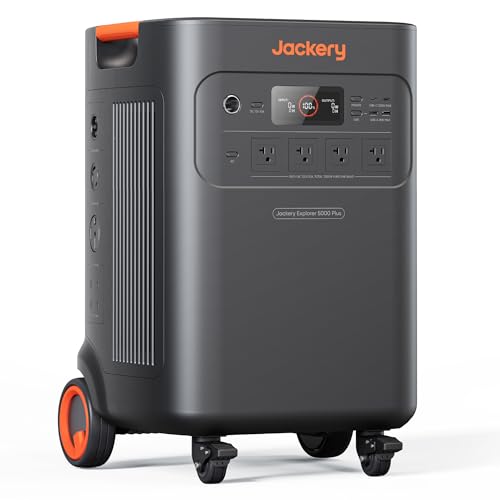
Jackery Solar Generator 5000 Plus

Jackery Solar Generator 5000 Plus

Score: 88/100 · Nearly identical core specs to the F5000LFP (5,040 Wh, 7,200W) from an established brand, at a $$$$$ price tier.

View on Amazon →
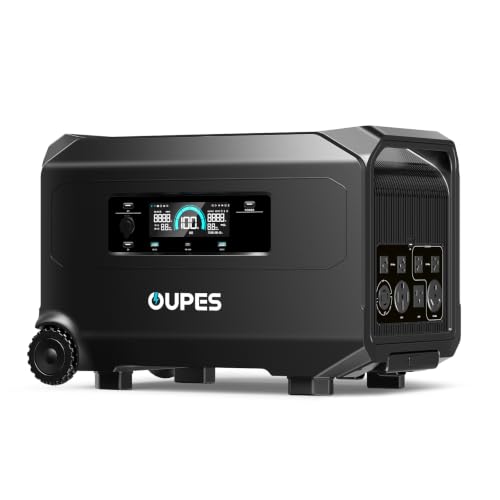
OUPES Guardian 6000

OUPES Guardian 6000

Score: 85/100 · 4,608 Wh with 6,000W output and a transfer-switch-ready design, expandable to 41 kWh — another challenger-brand value option at a $$$$ price tier, one notch below the F5000LFP on capacity and solar input.

View on Amazon →

Why Trust This Award

No pay-to-win

SolarGenAdvisor Awards accept no payment for award outcomes. Manufacturers — including challenger brands like Pecron — cannot buy or influence a category win; scores are generated entirely by the 6-Dimension Weighted Scoring Matrix.

Recalculated quarterly

This award is rescored every quarter against every 5,000+ Wh product in our database, not just the units featured on this page. If a competitor overtakes the F5000LFP's score, the award updates at the next cycle.

Transparent scoring

Every dimension score above is shown with its weight and the underlying reasoning — not just a final number. See the full Awards Methodology for how high-capacity-category weights were set.

Frequently Asked Questions

Why did the Pecron F5000LFP win Best High-Capacity?

It achieved the highest score in the 5,000+ Wh class due to its combination of near-top-tier capacity and output (5,120 Wh, 7,200W dual-voltage), industry-leading 6,400W solar input, and a value advantage over premium-brand competitors that carries real weight (15 of 100 points) in this category's scoring.

Can the Pecron F5000LFP power a whole house?

Yes, for essential circuits. With 5,120 Wh capacity, 7,200W output, and 240V split-phase capability, it can power most whole-home essential loads including refrigerators, well pumps, furnaces, window AC units, and select 240V appliances. It's expandable to 35.8 kWh for extended outages.

Why doesn't the 12,000 Wh Anker SOLIX E10 Prime win this category instead?

Raw capacity alone doesn't win High-Capacity — Value for Money and the category's weighting matter too. The E10 Prime's $$$$$ price tier and design as a permanent, stackable off-grid installation make it the winner of our separate Off-Grid Living category, where Expandability is weighted more heavily. In High-Capacity, where Value still counts for 15 of 100 points, the F5000LFP's lower cost-per-Wh wins out.

How does the Pecron F5000LFP compare to the Jackery Solar Generator 5000 Plus?

They're close on core specs: the Jackery has slightly less capacity (5,040 Wh vs. 5,120 Wh) but matches the F5000LFP's 7,200W output. The F5000LFP pulls ahead on solar input (6,400W vs. 3,000W) and sits a full price tier lower ($$$$ vs. $$$$$). The Jackery brings a longer brand history and more established support network, which is why it remains a strong honorable mention rather than falling out of contention.

Is the Pecron F5000LFP heavy enough that portability is a concern?

At 123.9 lb, it's not portable in the camping sense — it's designed to be positioned once, typically on wheels or with a hand truck, and used as a stationary backup or workshop power source. Our scoring reflects this reality by weighting Portability at only 5 of 100 points in the High-Capacity category, the lowest of any dimension.

Can the F5000LFP run 240V appliances like a well pump or electric dryer?

Yes. The 7,200W inverter supports dual-voltage (120/240V) output, which is what makes 240V-only appliances like well pumps, electric dryers, and some EV chargers usable — a capability typically reserved for systems costing significantly more.

How fast can the F5000LFP recharge from solar?

With its 6,400W maximum solar input, a full-size solar array in strong peak sun can replenish a large share of the 5,120 Wh capacity in roughly an hour — more than double the recharge speed of the Jackery Solar Generator 5000 Plus's 3,000W input ceiling.

How long will the battery last before it degrades?

The F5000LFP uses LiFePO4 cells rated for 3,500+ charge cycles to 80% capacity. For a household using it as standby backup with occasional exercise cycling rather than daily deep discharges, that translates to many years of reliable service before noticeable capacity loss.

The Bottom Line

The Pecron F5000LFP wins Best High-Capacity Solar Generator 2026 because it delivers the specific thing this category is designed to reward: strong capacity and output at the best price in the 5,000+ Wh class. Its 93/100 score reflects a unit with near-top-tier Capacity & Power (99/100), a decisive Value advantage (94/100), and industry-leading Solar Charging (94/100) — with only its low-weighted Portability score (60/100) trailing the field, which barely matters at a 5-point weight. Buyers who need a true stackable off-grid system should consider the Anker SOLIX E10 Prime; those who prioritize an established brand's support network over cost-per-Wh should look at the Jackery Solar Generator 5000 Plus. For the majority of buyers this award is built for — those who need serious whole-home or workshop-scale capacity without premium-brand pricing — the F5000LFP remains the best-value pick in 2026.

Written by Morgan Chen · Updated · Senior Technology Analyst
Pecron F5000LFP Power Station
Check Price →