
Guide · Updated July 2026
Solar Generator Tax Credit 2026: Can You Claim the 30% ITC?
The Inflation Reduction Act extended a 30% federal tax credit for battery storage through 2032. But does your solar generator qualify? The answer depends on how you use it, what you pair it with, and whether it meets the IRS requirements. This guide covers everything you need to know to claim the credit — and save thousands on your purchase.

Does a Solar Generator Qualify for the Federal Tax Credit?
Short answer: Standalone solar generators generally don't qualify on their own. But when purchased with solar panels as part of a home energy storage system, the battery storage component can qualify for the 30% federal Investment Tax Credit (ITC).
⚠ Important Disclaimer
This guide summarizes publicly available IRS guidance. Tax laws are complex and subject to change. We recommend consulting a qualified tax professional before claiming the credit for your specific situation.
The rule (IRS Section 25D): The ITC covers "battery storage" technology with a capacity of 3 kWh or more, installed in a US residence, and charged primarily by solar panels. The credit is 30% of eligible costs with no dollar cap (the cap was removed by the Inflation Reduction Act).
What qualifies: The battery storage component itself when it meets the 3+ kWh threshold and is paired with or primarily charged by solar panels. This includes the battery cells, battery management system, and necessary electrical equipment.
What doesn't qualify: Standalone generators purchased without solar panels. The AC inverter/charger portion when not part of a solar charging system. Generators used exclusively for camping, RV, or portable applications without a home installation. Gas generators of any type.
Key requirement: The system must be installed at a US residence you own. Primary homes and secondary homes qualify. Rental properties have different rules under Section 48.
Which Solar Generators Qualify (and Which Don't)
The eligibility of a solar generator depends on three factors: battery capacity (3+ kWh), use case (home energy storage vs. portable camping), and solar pairing.
Likely Qualifies (When Paired With Solar)
These systems have 3+ kWh LiFePO4 batteries designed for solar charging and home backup. When installed with solar panels at a residence, the battery component likely qualifies for the 30% ITC.
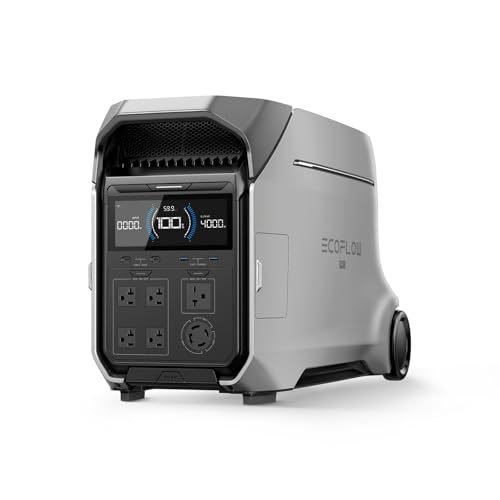
EcoFlow Delta Pro 3
4,096 Wh · 1,600W solar input
4,096 Wh LiFePO4 with 1,600W solar input — strong candidate for ITC when paired with solar panels. Expandable to 48 kWh.
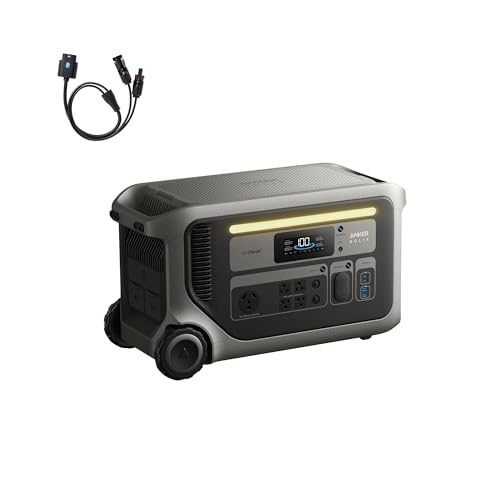
Anker SOLIX F3000
3,072 Wh · 2,400W solar input
3,072 Wh expandable to 24 kWh with 2,400W solar input. 240V split-phase for whole-home backup.
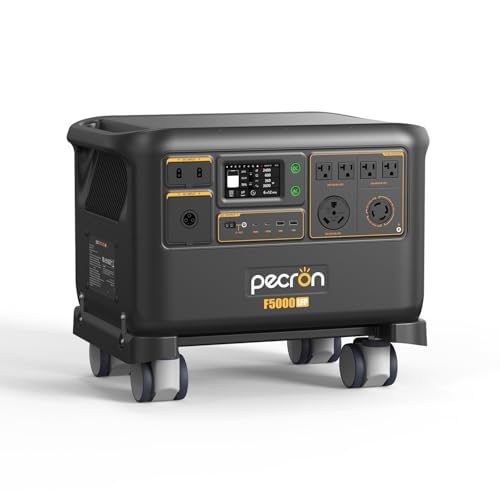
Pecron F5000LFP Power Station
5,120 Wh · 6,400W solar input
5,120 Wh with massive 6,400W solar input — excellent value for maximizing the ITC benefit. Expandable to 35.8 kWh.
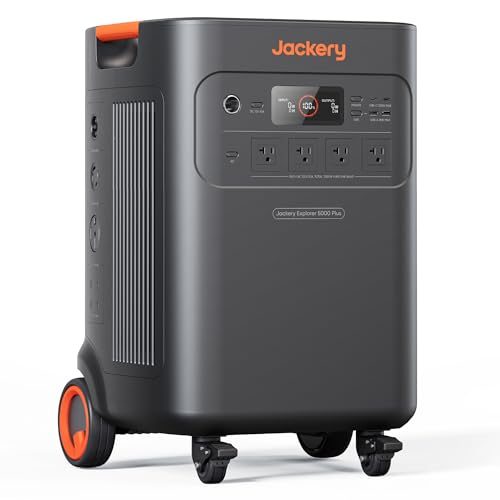
Jackery Solar Generator 5000 Plus
5,040 Wh · 3,000W solar input
5,040 Wh with 3,000W solar input and 10-year LiFePO4 lifespan. Jackery's flagship eligible system.
Grey Area (Less Likely to Qualify)
Smaller portable units under 3 kWh technically meet the 3 kWh threshold for some models, but the IRS expects the system to function primarily as home energy storage. Camping-oriented units without a permanent home installation are less likely to pass IRS scrutiny.
⚠ Caution
The Anker SOLIX C1000 Gen 2 (1,056 Wh) and Jackery Explorer 1000 V2 (1,070 Wh) have excellent solar input capability but are below the 3 kWh threshold that the IRS generally considers "battery storage." Most tax professionals would advise against claiming the credit on sub-3 kWh portable units.
Does Not Qualify
- Gas generators of any kind
- Solar generators used exclusively for camping or RV without a home installation
- Battery systems under 3 kWh capacity
- Standalone generators purchased without solar panels
- Systems installed on rental properties (different rules under Section 48 apply)
How to Claim the Solar Generator Tax Credit
Purchase Eligible Equipment
Buy a battery system with 3+ kWh capacity and compatible solar panels. The battery and solar panels should be designed to work together as a home energy system. Keep all receipts and product documentation.
Install at Your Residence
The system must be installed at a US residence you own. Professional installation is recommended (and may be required by your state for interconnection). Some DIY installations may qualify if they meet local electrical code.
Fill Out IRS Form 5695
Complete IRS Form 5695 (Residential Energy Credits) with your annual tax return. Line 13 covers battery storage. Enter the eligible costs on the appropriate line. The form calculates your credit automatically.
Calculate Your Credit
The credit is 30% of eligible costs with no maximum limit. If your eligible costs are $5,000, your credit is $1,500. The credit is non-refundable — it reduces your tax bill but you won't receive a refund if the credit exceeds what you owe. However, any unused credit carries forward to future tax years.
File With Your Tax Return
Attach Form 5695 to your annual federal tax return. The IRS matches against manufacturer records, so ensure all documentation matches your purchase. Keep records for at least 3 years after filing.
What Costs Are Eligible?
When you purchase a solar generator system, not every cost qualifies for the 30% credit. Here's what's typically eligible:
✓ Eligible Costs
- Battery storage unit (the generator itself)
- Solar panels used to charge the battery
- Inverter / charger components
- Wiring, conduit, and electrical connections
- Electrical panel upgrades required for the system
- Installation labor and permits
✗ Not Eligible
- Extended warranties and service plans
- Financing charges and interest
- Maintenance and repair costs
- Systems on rental or investment properties
- Gasoline generators or hybrid fuel systems
- Portable use without home installation
Pro tip: Ask your installer to itemize the bill so battery storage, solar panels, and installation labor are listed separately — this makes Form 5695 easier to complete.
How Much Can You Actually Save?
The table below shows real-world savings for popular eligible systems when paired with solar panels. Your actual savings depend on system cost, eligible expenses, and additional state incentives.
| System | System Cost | 30% ITC | Est. Net Cost |
|---|---|---|---|
| EcoFlow DP3 + 1,600W solar | $4,699 | $1,410 | ~$3,289 |
| Anker F3000 + 2,400W solar | $4,299 | $1,290 | ~$3,009 |
| Pecron F5000LFP + 3,200W solar | $3,999 | $1,200 | ~$2,799 |
| Jackery 5K Plus + 3,000W solar | $6,999 | $2,100 | ~$4,899 |
* Estimated system bundle costs (generator + solar panels) as of July 2026. Prices subject to change. Use our pricing tools above for current Amazon pricing on individual components.
State and Local Incentives (2026)
Many states offer additional incentives on top of the federal tax credit. Here are some of the most notable programs for 2026:
| State | Program | Incentive |
|---|---|---|
| California | SGIP | Up to $1,000/kWh for battery storage in high-fire/threat areas |
| New York | NY-Sun + Storage | Up to $5,000 for paired solar + storage systems |
| Massachusetts | ConnectedSolutions | Annual payments for discharging during peak events |
| Colorado | State Tax Credit | 10% state tax credit on top of the federal 30% |
| Hawaii | Self-Supply Program | Bill credits for solar + battery exports to grid |
| Texas | Utility Rebates | Varies by utility — some offer rebates for battery storage |
For a complete state-by-state lookup, visit the DSIRE Database maintained by the NC Clean Energy Technology Center.
Common Mistakes That Invalidate Your Tax Credit Claim
Claiming credit for portable generators used only for camping
The ITC is for home energy storage, not portable camping equipment. The IRS expects the system to be installed at a residence and primarily used for home energy.
Not having solar panels paired with the battery
The credit requires the battery to be primarily charged by solar. A generator that's only charged from wall outlets does not qualify.
Installing without meeting local electrical code
Inspectors may flag non-code-compliant installations. Always use a licensed electrician for panel connections.
Claiming credit for systems under 3 kWh
The 3 kWh threshold is a common interpretation of "battery storage." Smaller units rarely pass IRS scrutiny.
Filing without Form 5695 or missing documentation
The credit requires Form 5695 attached to your tax return. Keep purchase receipts, installation contracts, and product specs.
IRA / ITC Timeline
The Inflation Reduction Act set a clear schedule for the credit rate. Don't wait too long if you want the full 30%.
| Period | Credit Rate |
|---|---|
| 2023–2032 | 30% |
| 2033 | 26% |
| 2034 | 22% |
| 2035 onward | Credit expires unless Congress extends |
Bottom line: Install by 2032 to lock in the full 30%. Every year you wait after 2032, you lose 4 percentage points of the credit.
More Buying Guides
Best Whole-Home Solar Generators
Premium systems eligible for the ITC
Can a Solar Generator Power a House?
Sizing guide with real appliance wattage tables
What Size Solar Generator Do I Need?
Detailed sizing calculator for every use case
LiFePO4 Solar Generator Guide
Why lithium iron phosphate is the standard
Frequently Asked Questions About the Solar Tax Credit
Does the federal tax credit cover portable solar generators?
Generally, no. The ITC is designed for home energy storage systems installed at a residence. Portable generators used primarily for camping or RV travel without a home installation typically don't qualify. However, if you use a portable generator as part of a home solar battery system with 3+ kWh capacity, the battery component may qualify — consult a tax professional.
Can I claim the tax credit if I already own solar panels?
Yes. If you already have solar panels and add a battery storage system (solar generator) that is primarily charged by those panels, the battery storage component qualifies for the 30% ITC. This is one of the most common scenarios for claiming the credit on a standalone battery purchase.
Is there a maximum dollar limit for the tax credit?
No. The Inflation Reduction Act removed the previous dollar cap on the residential battery storage credit. You can claim 30% of eligible costs with no upper limit. If the credit exceeds your tax liability, the unused portion carries forward to future tax years.
What if I install the system myself?
DIY installations may still qualify for the credit if the system meets all other requirements (3+ kWh, solar-charged, at a residence). However, the installation must meet local electrical code. Some states require licensed professional installation for interconnection or permit approval. Keep detailed records of your DIY installation for IRS documentation.
Does the credit cover the cost of solar panels too?
Yes. Solar panels purchased alongside the battery storage as part of a home energy system are eligible for the 30% ITC. This includes the panels themselves, mounting hardware, wiring, and installation labor. The total eligible cost (battery + solar + installation) all qualify at the 30% rate.
Do state incentives affect the federal credit calculation?
Generally, state rebates and incentives are subtracted from the eligible cost before calculating the federal credit. For example, if your system costs $10,000 and you receive a $1,000 state rebate, your eligible cost for the federal credit would be $9,000. State tax credits may be treated differently — consult a tax professional for your specific situation.